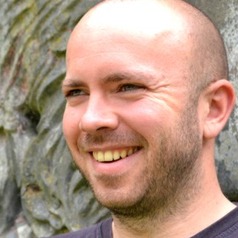
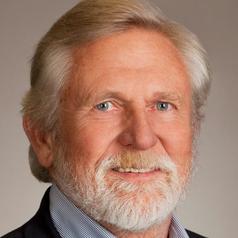
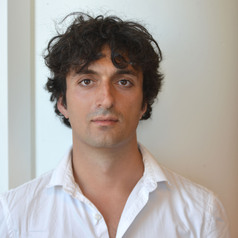
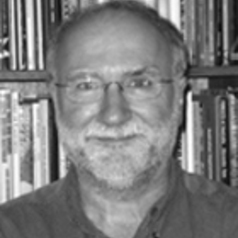
John Park is an adjunct lecturer at the Harvard Kennedy School and a research associate at MIT. He is also a faculty affiliate with the Project on Managing the Atom at the Harvard Kennedy School's Belfer Center for Science and International Affairs. He was the 2012–2013 Stanton Nuclear Security Junior Faculty Fellow at MIT's Security Studies Program. He previously directed Northeast Asia Track 1.5 projects at the U.S. Institute of Peace in Washington, D.C. These initiatives include the U.S.-China Project on Crisis Avoidance & Cooperation, the U.S.-ROK-Japan Trilateral Dialogue in Northeast Asia, and the U.S.-China-Japan Dialogue on Risk Reduction & Crisis Prevention. He advises Northeast Asia policy-focused officials at the Departments of Defense, State, and the Treasury, as well as on the National Security Council and congressional committees. Dr. Park worked at Goldman Sachs, where he specialized in U.S. military privatization financing projects. Prior to that, he was the project leader of the North Korea Analysis Group at the Harvard Kennedy School's Belfer Center. He earlier worked in Goldman Sachs' M&A Advisory Group in Hong Kong and the Boston Consulting Group's Financial Services Practice in Seoul. Dr. Park's publications include: "Assessing the Role of Security Assurances in Dealing with North Korea" in Security Assurances and Nuclear Nonproliferation (Stanford University Press, 2012); "North Korea, Inc.: Gaining Insights into North Korean Regime Stability from Recent Commercial Activities" (USIP Working Paper, May 2009); and "North Korea's Nuclear Policy Behavior: Deterrence and Leverage," in The Long Shadow: Nuclear Weapons and Security in 21st Century Asia (Stanford University Press, 2008). His current research focuses on the North Korean regime's accumulated learning in evading targeted sanctions. Dr. Park received his M.Phil. and Ph.D. from Cambridge University and completed his pre-doctoral and post-doctoral training at the Harvard Kennedy School's Belfer Center.
My research interests fall within the International Relations of the Middle East and are driven by the interaction of three themes: Religion and Legitimacy; Contested Sovereignty; and Political Violence. I am especially interested in the following areas: Islam, the state and umma 'Soft power' security dilemmas Gulf politics Internal-external security dilemmas Re-conceptualising sovereignty Irredentist and secessionist movements Gulf security Hizballah The Internet and 'cyber sovereignty'
Robert Nelson worked in the Office of the Secretary of the U.S. Department of the Interior from 1975 to 1993 and is a professor at the School of Public Policy at the University of Maryland. He is the author of Public Lands and Private Rights: The Failure of Scientific Management. Dr. Nelson is the author of more than 100 journal articles and edited book chapters. He is also the author of eight books: The New Holy Wars: Economic Religion versus Environmental Religion in Contemporary America (Penn State University Press, 2010); Private Neighborhoods and the Transformation of Local Government (Urban Institute Press, 2005); Economics as Religion: From Samuelson to Chicago and Beyond (Penn State University Press, 2001); ); A Burning Issue: A Case for Abolishing the U.S. Forest Service (Rowman & Littlefield, 2000); Public Lands and Private Rights: The Failure of Scientific Management (Rowman & Littlefield, 1995); Reaching for Heaven on Earth: The Theological Meaning of Economics (Rowman & Littlefield, 1991); The Making of Federal Coal Policy (Duke University Press, 1983); and Zoning and Property Rights (MIT Press, 1977). The New Holy Wars was the 2010 Winner of the Grand Prize of the Eric Hoffer Book Award for the best book of the year by an independent publisher; and also silver medal winner for “Finance, Investment, Economics” of the 2010 Independent Publisher Book Awards (the “IPPYs”). Dr. Nelson has written widely in publications for broader audiences, including Forbes, The Weekly Standard, Reason, The Washington Post, Wall Street Journal, Financial Times, Los Angeles Times, Baltimore Sun, Atlanta Journal-Constitution, and Denver Post. He worked in the Office of Policy Analysis of the Office of the Secretary of the Interior from 1975 to 1993. He has served as the senior economist of the Congressionally chartered Commission on Fair Market Value Policy for Federal Coal Leasing (Linowes Commission) and as senior research manager of the President's Commission on Privatization. He has been a visiting scholar at the Brookings Institution; visiting senior fellow at the Woods Hole Oceanographic Institution; research associate at the Center for Applied Social Sciences of The University of Zimbabwe; visiting professor at Keio University in Tokyo; visiting professor at the Universidad Torcuato Di Tella in Buenos Aires; visiting professor at the School of Economics of the University of the Philippines in Manila; and senior fellow of the Collegium for Advanced Studies of the University of Helsinki. He was also previously a senior fellow at the The Independent Institute, a nonprofit, nonpartisan, scholarly research and educational organization that sponsors in-depth studies of critical social and economic issues. He holds a Ph.D. in economics from Princeton University (1971).
Mark Graham is an Associate Professor and Senior Research Fellow at the OII, a Research Fellow at Green Templeton College, and an Associate in the University of Oxford’s School of Geography and the Environment. He has published articles in major geography, communications, and urban studies journals, and his work has been covered by the Economist, the BBC, the Washington Post, CNN, the Guardian, and many other newspapers and magazines. He is an editorial board member of Information, Communication, and Society, Geo:Geography, and the Environment, and Big Data and Society. He is also a member of DFID’s Digital Advisory Panel and the ESRC’s Peer Review College. In 2014, he was awarded a European Research Council Starting Grant to lead a team to study 'knowledge economies' in Sub-Saharan Africa over five years. This will entail looking at both low-end (virtual labour and microwork) and high-end (innovation hubs and bespoke information services) in fifteen African cities. Research interests Internet Geography, ICT for development, globalization, economic geography, transportation and communications, social theory, transparency, user-generated content, Southeast Asia, East Africa, zombies You can follow him on Twitter at @geoplace
Originally trained as a structural engineer (with a Master's from the University of Melbourne), Robert completed a PhD in economics at Stanford. He was a founding faculty member at the Australian Graduate School of Management, where he taught economics, game theory, and ethics from 1977 to 2006, when it was dissolved. Since then he has been a professor (full, visitor, and emeritus) of economics at UNSW, and latterly a professorial fellow at his alma mater, involved with the Centre for Ethical Leadership. For thirteen years he was the General Editor of the Australian Journal of Management. His research interests range from energy and environmental policy, drugs policy, to oligopolistic behaviour and the validation of simulation models. He has been involved in many consulting projects with private and government bodies. In 1997 an entry of his won the Second M.I.T. Competitive Strategy Tournament. He presented the Fourth Herbert Simon Seminar Series, on Agent-Based Computational Economics and Market Design, in Taiwan in 2005.
Marc C-Scott is a lecturer in screen media and coordinator for both the Bachelor of Screen Media at Victoria University (https://www.vu.edu.au/courses/bachelor-of-screen-media-absn). Prior to his position, Marc taught at many institutions in the areas of digital media, video production, motion graphics, visual effects, web technologies along with project and research methodologies. He has been active in the area of digital media since 1996, completing a Bachelor of Design (Multimedia) with Honors at Swinburne’s National School of Design in 2004. Marc is currently completing a PhD, which uses a historical comparative approach, in investigating the changes of the television industries within Australia, United Kingdom and United States. His research interests are within television (history, institutions and new broadcast methods), cross-media, cross-platform media and the use of new digital media services.