

 Menu
Menu

 Search

- News

- Economy

- Central Banks
- Investing
- Research
- Roundups
- Digital Currency
- Insights
- Technical Analysis
- Technology
- Business
- Law
- Health
- Nature
- Fintech
- Science
- Topic
- Opinions
- ©Econometrics LLC . All Rights Reserved.

Mhairi Morris
Senior Lecturer in Biochemistry, Loughborough University
Mhairi (“Vari”) Morris graduated from the University of Glasgow with a degree in Medical Biochemistry in 2004, then took up a PhD scholarship with Professor Lawrence Young at the University of Birmingham, investigating the role of the viral oncoprotein, latent membrane protein 1 (LMP1), in modulating epithelial cell invasion and metastasis. On completion of her PhD in 2008, Mhairi continued her LMP1 research at Birmingham.
Following a brief career break from 2010-2013, Mhairi returned to academia as a Lecturer at De Montfort University, Leicester, where she attained her Postgraduate Certificate in Higher Education (PGCertHE) with distinction. Mhairi was promoted to Senior Lecturer in 2014, and awarded DMU Teacher Fellow status in 2016, prior to joining Loughborough University in the School of Sport, Exercise and Health Sciences in February 2017.
Mhairi currently supervises 2 PhD students at Loughborough University. She previously held an Eric Reid Methodology Award from The Biochemical Society, and currently sits on the editorial board for the Pathogens and Frontiers in Physiology journals.
Her current research interests include understanding the interactions between cancer cells and stromal cells in the tumour microenvironment, and how exercise may impinge on these interactions. In particular, Mhairi has an interest in using a novel 3D model system developed by her recently qualified PhD student for investigating the interactions between mesenchymal stem cells and 3D tumour spheroids.

Less 
Mia Cobb
Research Fellow, Animal Welfare Science Centre, The University of Melbourne
Dr Mia Cobb is an animal welfare scientist, science communicator and research fellow at the University of Melbourne's Animal Welfare Science Centre in Victoria. Her research explores human attitudes, housing and management practices, animal behaviour, stress physiology and how animal welfare relates to the sustainability of animal-based industries. Mia is also active in the exciting domains of science communication, emerging technologies, citizen science, welfare auditing, and all things dog.
Following an undergraduate science degree majoring in animal behaviour, she worked in animal welfare shelter and working dog industry for over a decade. In 2012, she founded a popular collaborative blog (Do You Believe In Dog?) with fellow canine scientist, Julie Hecht, who is based in New York.
Mia led the Australian Animal Welfare Strategy's working dog initiatives to advance the welfare of Australia's iconic working dogs and is a Director of the Australian Working Dog Alliance, a registered non-profit organisation that works with industry to improve the welfare of Australia's working and sporting dogs.
Less
Mia Edwards
PhD candidate in History, University of Warwick
Mia Edwards is an AHRC-funded PhD student at the University of Warwick. Her research focuses upon exploring the intersections between masculinity, disability, and physicality for enslaved men within the 19th century U.S. South. In particular, her research explores the lives of enslaved men who were physically disabled, whether congenitally or from age, sickness, or injury, within a range of contexts such as labour, community cohesion, and interpersonal conflict. This research seeks to understand how these men were treated and viewed by others, how they viewed themselves, and how their experiences of disability interacted with conceptions of masculinity during the period. This work is framed within wider discussions and conceptions about disability, race, and masculinity that were occurring during the antebellum period.
Less
Mia Momberg
Postdoctoral research fellow, Department of Plant and Soil Science, University of Pretoria
Less
Mia Strand
Ocean Nexus Postdoctoral Research Fellow, Institute for Coastal and Marine Research, Nelson Mandela University
Mia Strand is an Nippon Foundation Ocean Nexus Postdoctoral Research Fellow at Nelson Mandela University, who’s research centres around socio-cultural and equity dimensions of ocean governance and conservation. Her research has largely explored the value of arts-based participatory research for more inclusive and equitable ocean governance in South Africa, specifically emphasising the need to better recognise Indigenous and local knowledge systems in decision-making processes
Less
Mia Angelica Powell
PhD Student in Department of Political Science, Penn State
Mia A. Powell is a doctorate student at Penn State University's political science program. She studies American politics, and her research focuses on racial/ethnic politics, political behavior, and voting systems. Powell previously earned her bachelor's in Sociology with a minor in Political Science from California State University, Fullerton.
Less

Mia Chen Ma
Research Fellow in Medical Humanities, China and the UK, University of Strathclyde
Dr Mia Chen Ma received her BA and MA in Chinese Literature and Language from Wuhan University and University of Illinois Urbana-Champaign respectively.
She then earned her PhD in Chinese Literature and Culture from SOAS in 2022. She is currently revising her PhD thesis into a book, tentatively entitled Ecocriticism in Chinese Science Fiction: Risk, Failure, and Solastalgia (Brill). Her research interests include modern and contemporary Chinese literature, speculative fictions, and ecocriticism.
Her research articles and book chapters have appeared or are forthcoming in a number of scholarly journals and edited volumes, including Ecocriticism and Chinese Literature: Imagined Landscapes and Real Lived Spaces, The Edinburgh Companion to Science Fiction and the Medical Humanities, Extrapolation, Prism: Theory and Modern Chinese Literature, SFRA Review, Vector, Bochum Yearbook of East Asian Studies, etc. Her most recent research project focuses on cultures of care, and explores the intersection between medical and environmental humanities.
Research interests:
Modern and Contemporary Chinese Literature
Ecocriticism and Speculative Fiction
Risk discourse and Contemporary Chinese Society
Literature and Medical Humanities
Posthumanism and Taoism
Less

Mia-Marie Hammarlin
Senior Lecturer in Media and Communication Studies, Associate Professor of Ethnology and fellow at The Birgit Rausing Centre for Medical Humanities, Lund University
My 4-year research project 2020–2023, financed by Riksbankens Jubileumsfond, concerns the anti-vaccination movement. The growing vaccination hesitancy characterized by extensive discussions on the internet, constitutes the empirical focus. The project also has a method developing purpose in examining how quantitaive (language technology) and qualitative (ethnographic) methods can be combined to an effective tool for exploring how arguments are established, emitted and circulated on the internet.
Since 2009 I have been employed as Senior Lecturer in Media and Communication Studies and Journalism, and was Head of Department for four years. I am a trained ethnographer with a theoretical interest in phenomenology. For many years I have studied mediated scandals with focus on the emotions these moral moments of drama arouse, both in the individual and in society. I am also a trained journalist, and have worked for the Swedish Public Service Radio and Television.
Less
Miao Yu
Professor of Chemical and Biological Engineering, University at Buffalo
Dr. Yu Joined the Department of Chemical and Biological Engineering at the State University of New York at Buffalo as an Empire Innovation Professor in January 2021. He was an Associate Professor in the Department of Chemical and Biological Engineering at Rensselaer Polytechnic Institute (RPI) from August 2017 to January 2021. He was an Assistant Professor in Chemical Engineering at the University of South Carolina (UofSC) between 2012 and 2017. Before joining UofSC, he was an assistant research professor in Chemical Engineering at the University of Colorado, Boulder (CU-Boulder) from 2010 to 2012. He obtained B.S. (1998) and M.S. (2002) degrees from Tianjin University, China. He earned his Ph.D. degree from CU-Boulder in 2007, and subsequently worked in the same department as a postdoctoral researcher from 2007 to 2010. Dr. Yu has published >60 peer-reviewed papers, with two in Science and others in Nature Communications, Advanced Materials, JACS, Nano Letters, Angewandte Chemie International Edition, ACS Catalysis, Chemical Communications, etc. He is a recipient of 2015 NSF Career Award.
Less

Micah English
PhD Candidate, Political Science, Yale University
Micah is a fourth year PhD candidate at Yale University studying American politics. Micah researches Black politics, social movement mobilization, and the politics of gender and sexuality. Micah is also working on a project that locates hip-hop music and culture as a site for conservative politics. Micah currently serves as the graduate student representative on the APSA Sexuality & Politics research section. Prior to starting graduate school, Micah served as a non-profit consultant, a film publicist, and conducted research in the Sociology department at Georgetown University. Micah received her undergraduate degree in Political Science from Duke University.
Less
Micah Lucy Abigaba
Energy Economics Lecturer, Makerere University
Micah Lucy Abigaba is an energy economist and lecturer in the Business School at the Makerere University, Kampala, Uganda. She successfully defended her PhD thesis "Four essays on oil price uncertainty, optimal investment strategies and cost transmission of an oil price shock" at the Norwegian University of Life Sciences.
Less
Michael A. Livermore
Michael A. Livermore joined the faculty as an associate professor of law in 2013. His primary teaching and research interests are in administrative law, computational analysis of legal texts, environmental law, cost-benefit analysis and regulation. He has published numerous books, chapters and articles on these topics, with a special focus on the role of interest groups and public-choice dynamics in shaping the application and methodology of cost-benefit analysis.
Prior to joining the faculty, Livermore spent five years as the founding executive director of the Institute for Policy Integrity at New York University School of Law, a think tank dedicated to improving the quality of government decision-making through advocacy and scholarship in the areas of administrative law, cost-benefit analysis and regulation. During his time there, the institute participated in dozens of regulatory proceedings on a diverse set of issues ranging from climate change to prison safety.
Livermore earned his J.D. magna cum laude from NYU Law, where he was a Furman Scholar, was elected to the Order of the Coif, and served as a managing editor of the Law Review. After law school, he spent a year as a fellow at NYU Law's Center on Environmental and Land Use Law before clerking for Judge Harry T. Edwards on the U.S. Court of Appeals for the D.C. Circuit.
Less
Michael Adams
Professor Michael Adams is an internationally recognised specialist in corporate law, corporate governance, securities markets regulation (insider trading and market manipulation) and legal education (especially e-learning). Michael has been writing, teaching and regularly presenting on all these topics for over 25 years. He is a Fellow of the Australian College of Educators (FACE), as well as the Australian Academy of Law (FAAL), and is also a Fellow of the Governance Institute of Australia (FCIS/FGIA-Life). Professor Adams is formerly President of the Australasian Law Teachers Association, the Corporate Law Teachers Association and Chartered Secretaries Australia (now Governance Institute). He is Deputy Chair of the Council of Australian Law Deans (CALD) and a director of the Australian Academy of Law, director of Australian Pro Bono Centre, and the charity, FreedomHub. He is the co-author of ten books and chapters, 50 articles and over 180 conference/seminar presentations. In 2000 he was the recipient of the Australian University Teacher of the year for Law and Legal Studies.
Less
Michael Anenburg
Research Fellow in Earth Sciences, Australian National University
I am a Research Fellow at the Research School of Earth Sciences at the Australian National University. My main research focus is on the deep geological processes that lead to the formation of critical metal deposits. I also have broad interests in science policy and science communication.
Less
Michael Arntfield
Associate Professor of Criminology & English Literature, Western University
Former police detective turned award-winning university professor, author of 10 books on criminal investigation, television host and true crime broadcaster, founder of the Western Cold Case Society & director of the Murder Accountability Project (murderdata.org) in Washington DC. Also an associate with the Center for Homicide Research in Minneapolis and senior member of the Atypical Homicide Research Group in Boston. Scholarly book series editor for the Criminal Humanities collection with Peter Lang Publishing in NYC and previous Fulbright Scholar & Visiting Chair at Vanderbilt U in Nashville. Winner of Western's 2017 Humanitarian of the Year for my research on unsolved murders & victim narratives.
michaelarntfield.com
@mikearntfield
Less
Michael Banissy
Professor of Psychological Science, University of Bristol
An expert in the science of social connection and interaction, Michael has worked as a social neuroscientist for over ten years, producing over 100 publications that have been featured in many media outlets. He studies affection, communication, emotion, empathy, and touch. He has received awards from the British Psychological Society and the European Society of Cognitive Psychology for outstanding contributions to psychological research.
Less
Michael Beckley
Michael Beckley is an associate professor of political science at Tufts University and a Jeane Kirkpatrick Visiting Scholar at the American Enterprise Institute.
His research on great power competition has received awards from the American Political Science Association and the International Studies Association and been featured by numerous media including the Financial Times, Foreign Affairs, Foreign Policy, the New York Times, NPR, and the Washington Post.
Previously, Michael worked for Harvard's Kennedy School of Government, the U.S. Department of Defense, the RAND Corporation, and the Carnegie Endowment for International Peace. He continues to advise offices within the U.S. Intelligence Community and U.S. Department of Defense.
Michael holds a PhD in political science from Columbia University. His first book, Unrivaled: Why America Will Remain the World’s Sole Superpower, was published in 2018 by Cornell University Press.
Less
Michael Bonshor
Course Director, Music Psychology in Education, Performance and Wellbeing, University of Sheffield
I received my PhD and MA in Music Psychology from the University of Sheffield, where I am currently the Course Director of the MA in Music Psychology in Education, Performance and Wellbeing, and an Honorary Research Fellow. I am a longstanding Fellow of the Incorporated Society of Musicians (recently renamed as the Independent Society of Musicians), a registered trainer for the British Association of Performing Arts Medicine, and a Fellow of the Higher Education Academy.
After an early career as a professional singer with international contracts, I developed a diverse portfolio of work as a performer, teacher, conductor, choral arranger, director and workshop leader. I have run my own professional theatre company, opera group and jazz ensemble, alongside maintaining a well-established private teaching practice. I have also taught extensively in primary and secondary schools, Further Education colleges and Higher Education institutions, including York St John University and the Royal Welsh College of Music and Drama.
My research interests include performance anxiety management; confidence building for performers; music and wellbeing; ensemble leadership; and group dynamics in musical contexts. I have a special interest in the practical applications of research, and regularly lead public engagement and training events based on my research, teaching and professional experience.
My participatory workshops have included voice training for transgender and non-binary people; group singing for people who self-identify as ‘non-singers’; using singing-related skills to support people with respiratory conditions and vocal disorders; music and wellbeing sessions for mental health service users; practical applications of performance psychology for singers, conductors and choir leaders; and developing confident performance in a wide range of musical and non-musical settings.
Less

Michael Brear
Director, Melbourne Energy Institute, The University of Melbourne
Michael Brear is the Director of the Melbourne Energy Institute at the University of Melbourne. His own research concerns the technical, economic and environmental analysis of transport and energy systems, reciprocating engines and gas turbines, and combustion of conventional and alternative fuels.
Less
Michael Brennan
Professor of Sociology, Liverpool Hope University
Michael Brennan is Professor of Sociology and Deputy Head of the School of Social Sciences at Liverpool Hope University, UK.
My research is focused around the social aspects of dying, death and bereavement, where I have authored, edited and published numerous books, journal articles and pieces written for educational and professional publications.
I have previously served as Director of the Center for Death Education and Bioethics at the University of Wisconsin-La Crosse, USA.
Less
Michael Brenner
Professor of Jewish History and Culture at Ludwig Maximilian University and Abensohn Chair in Israel Studies, American University
Michael Brenner is the Seymour and Lillian Abensohn Chair in Israel Studies and Director of American University’s Center for Israel Studies and Professor of Jewish History and Culture at Ludwig Maximilian University, Munich. He received his PhD at Columbia University and taught previously at Indiana and Brandeis Universities. Since 1997 he has been Professor of Jewish History and Culture at the Ludwig-Maximilians University of Munich. He had visiting appointments at numerous universities, including Haifa, Paris, Budapest, Vienna, Stanford, Berkeley, and Johns Hopkins.
Professor Brenner is an elected fellow of the Bavarian Academy of Sciences, the American Academy for Jewish Research and the Accademia Nazionale Virgiliana in Mantua. He is the International President of the Leo Baeck Institute for the Study of German-Jewish History and serves on many academic boards, including the Jewish Museum of Berlin, the Israel Institute, the Center for European Studies of the University of Haifa and is board chair of the Franz Rosenzweig Research Center of the Hebrew University in Jerusalem. His nine books have been translated into ten languages and include In Search of Israel: The History of an Idea; A Short History of the Jews; Prophets of the Past: Interpreters of Jewish History; Zionism: A Brief History; The Renaissance of Jewish Culture in Weimar Germany, After the Holocaust: Rebuilding Jewish Lives in Postwar Germany and, most recently, In Hitler’s Munich: Jews, the Revolution, and the Rise of Nazism. He is co-author of the four-volume German-Jewish History in Modern Times, for which he was awarded a National Jewish Book Award, and editor of nineteen books.
Professor Brenner was awarded with the Order of Merit of the Federal Republic of Germany in 2014. In 2020 he was the first recipient of the Salo W. and Jeannette M. Baron Award for Scholarly Excellence in Research on the Jewish Experience.
Michael Brenner publishes widely in international media, including the Washington Post, the Times of Israel, and the Spiegel. His voice is heard frequently on PBS and international radio and TV stations.
Less
Michael Brown
Conservation Science Fellow, Smithsonian Institution
I am a conservation ecologist interested in developing applied solutions to conservation challenges rooted in scientific understandings of population ecology and movement ecology. Examining these processes through the lens of spatial interactions over time, I hope to better understand how individuals and populations respond to changing environments - from seasonal variation in resource distribution to large scale human-driven disturbances- and exploring how an understanding of these interactions across spatiotemporal scales might be used to craft creative and meaningful conservation strategy.
I am committed to translating scientific findings into meaningful conservation strategy. As such, I work collaboratively with conservation organizations, government agencies and academic institutions to better understand and implement solutions to contemporary issues in biodiversity conservation. Conservation solutions are rooted in trust and understanding across cultural and political divides so I strive to integrate diverse perspectives of thinking and doing in collaborative conservation initiatives.
Less
Michael Brundage
Professor Emeritus of Oncology and Public Health Sciences, Queen's University, Ontario
Michael Brundage, MD MSC FRCP(C) is a Professor Emeritus of Oncology and of Public Health Sciences at Queen’s University in Kingston. His research focuses on patient-reported outcomes and quality of life measurement (both in clinical practice and in clinical trials) and on quality of cancer care, with an emphasis on quality initiatives in oncology. He has enjoyed the privilege of working with many national and international organizations including the International Society for Quality of Life Research, the Canadian Cancer Trials Group (for which he was a long-standing chair of the PRO outcomes group), and Cancer Quality Council of Ontario. He is the Past-President of the Canadian Association of Radiation Oncology, and former director of Cancer Care and Epidemiology at Queen’s University. He is co-PI for the PROTEUS Consortium (with the PI Dr. Claire Snyder) which promotes quality of PROs both in clinical practice and clinical trials internationally.
Less
Michael Byers
Professor, Political Science, University of British Columbia
Michael Byers holds the Canada Research Chair in Global Politics and International Law at the University of British Columbia. He also co-directs the Outer Space Institute, a global network of space experts united by their commitment to transdisciplinary research that addresses grand challenges in the use and exploration of space. Together with astrophysicist Aaron Boley, Professor Byers is the co-author of a new book – Who Owns Outer Space? – that will soon be published by Cambridge University Press.
Less
Michael Carrafiello
Professor of History, Miami University
Michael L. Carrafiello is Professor of History at Miami University, Ohio. He holds a B. A. from Rollins College (Honors), and his graduate degrees (M. A., Ph. D.) are from Vanderbilt University. He has published and spoken widely on early modern English history and antebellum American history. Dr. Carrafiello’s articles have appeared in the Historical Journal, the Catholic Historical Review, and Pennsylvania History, among other periodicals. From 2000-09, he served as inaugural director of Miami University’s Michael J. Colligan History Project. His current long-term project concerns the administration of President James Buchanan and its role in fostering Southern secession during the winter of 1860-61.
Less

Michael Cheng
Dean of hospitality management, Florida International University
Dr. Michael Cheng is the Dean of Hospitality Management at Florida International University. He has expertise in competency-based learning, hospitality management & Culinology®. Cheng received both his B.S. and M.S. from the Univ of Nebraska-Lincoln, and his Ph.D. in Hospitality Management from Iowa State Univ. He has been in higher education for 20+ years and established Culinology® degree—the blending of culinary arts & food science. He led and set new benchmarks for partnerships and fundraising, creating the 1st Endowed Professor of DEI in hospitality and the world’s only Bacardi Center of Excellence. Cheng is a published author of several peer-reviewed articles on Culinology® competencies. He is currently the co-author of the top-selling textbook, Hospitality Today: An Introduction.
Less

Michael Childress
Associate Professor of Biological Sciences & Environmental Conservation, Clemson University
Michael Childress, Ph.D., is an evolutionary behavioral ecologist studying the impact of climate change and behavioral adaptations in marine animals. His research has explored the impacts of (1) mass sponge mortality on the social behaviors of juvenile Caribbean spiny lobsters, (2) drought on blue crab habitat use and disease, and (3) marine heat waves on the interactions between coral health and coral reef fishes. He teaches courses in marine ecology and climate sustainability and supervises a marine science research program for graduate and undergraduate science divers in the Florida Keys National Marine Sanctuary. He created a marine science - musical theatre STEAM program called Something Very Fishy to engage elementary school children in the wonders of our oceans and to raise awareness and interests in marine conservation.
Less
Michael Collyer
Professor of Geography, University of Sussex
Michael Collyer is Professor of Geography at the University of Sussex. He is a political geographer with an interest in the relationship between people on the move and state institutions. His books include Migration (with Michael Samers) and Emigration Nations. He has held visiting fellowships around the world and was a Fulbright Scholar at the University of Washington. He currently chairs the Independent Advisory Group on Country of Origin Information, within the Office of the UK's Chief Inspector of Borders and Immigration. He also chairs Sanctuary on Sea, Brighton's City of Sanctuary group.
Less
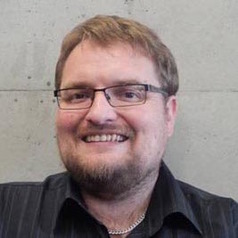
Michael Cowling
Dr Michael A. Cowling is an information technologist with a keen interest in educational technology and technology ubiquity in the digital age, especially as it relates to International students and those from non-English speaking backgrounds.
He is currently a Visiting Project Scientist in the Department of Informatics at University of California Irvine (UCI), where he is on sabbatical from his substantive position as a Senior Lecturer in Educational Technology at CQUniversity Australia.
Dr Cowling is the recipient of three CQUniversity Learning and Teaching grants related to teaching technology and was a 2015 recipient of the Vice-Chancellors Award for Outstanding Contribution to Learning & Teaching; as well as a 2007 recipient of the CQUniversity Award for Excellence in Learning & Teaching (International Campuses).
He is actively researching in the area of educational technology and technology ubiquity and has conducted numerous radio and print media interviews on the topic.
He was also a member of the Vice-Chancellors Excellence in Teaching Committee at CQUniversity and has written oped opinion pieces for The Courier Mail, Campus Review and Education Review.
Less
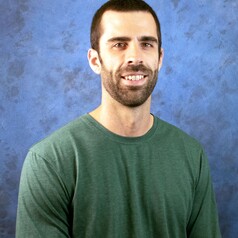
Michael Crossley
Assistant Professor / Agricultural Entomologist, University of Delaware
Dr. Crossley is an agricultural entomologist and molecular ecologist who integrates eco-informatics and population genomics approaches to understand how changing agricultural landscapes and management practices affect insect ecology and evolution. His research specifically explores the role of rapid evolution in driving pest success and seeks to develop and refine innovative pest management strategies that benefit growers, the environment and society.
Less
Michael Cunliffe
Professor of Marine Microbiology, School of Biological and Marine Sciences, University of Plymouth
Less


- Market Data




