

 Menu
Menu

 Search

- News

- Economy

- Central Banks
- Investing
- Research
- Roundups
- Digital Currency
- Insights
- Technical Analysis
- Technology
- Business
- Law
- Health
- Nature
- Fintech
- Science
- Topic
- Opinions
- ©Econometrics LLC . All Rights Reserved.

Naomi Levy
Associate Professor of Political Science, Santa Clara University
Naomi Levy is Associate Professor of Political Science at Santa Clara University, a faculty affiliate at the Possibility Lab, and is a member of the Everyday Peace Indicators board of directors. Dr. Levy’s research centers on the relationships between ordinary citizens and the state. She employs community-based participatory methods to understand how the state can legitimize itself vis-à-vis the people and what might interrupt this process. With her work, she seeks to facilitate government responsiveness to community needs by amplifying the voices that are best placed to guide public servants.
Levy received her PhD from the Department of Political Science at the University of California, Berkeley, and also holds an MA in Social Sciences of Education from Stanford University School of Education. Her scholarship has been published in a broad range of academic journals, and she has received funding for her work from the American Council of Learned Societies, the Minerva Initiative, the Carnegie Corporation of New York, and the California Community Foundation / California 100 Initiative.

Less 
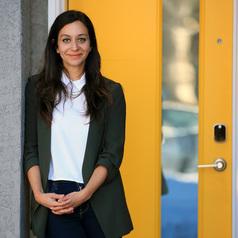
Naomi Lightman
Associate Professor of Sociology, Toronto Metropolitan University
Naomi Lightman is Associate Professor of Sociology at Toronto Metropolitan University. Her areas of research expertise include migration, care work, gender, inequality, and research methodology. Her academic work has been published in journals including European Sociological Review, Journal of European Social Policy, International Migration Review and the Social Politics. In addition, she is the co-author of the second edition of the textbook Social Policy in Canada. Dr. Lightman has collaborated on research focused on immigration, race, and inequality with various social agencies and government bodies including Social Planning Toronto, the Wellesley Institute, the Calgary Local Immigration Partnership and the Calgary Immigrant Women’s Association.
Less

Naomi Pullin
I am a historian of the early modern British Atlantic, with specific interests in the place of women within dissenting communities. I am currently adapting my PhD thesis (obtained from the University of Warwick in 2014) into a monograph titled: 'Female Friends and the early Quaker Community: Gender and Identity in the Atlantic Age, 1650-1750'. It advances existing knowledge on the experiences and social interactions of Quaker women in England and the colonies between 1650 and 1750 by reconceptualising the relationship between female identity and domesticity.
I am developing an innovate new research project on female enmity and conflict, entitled 'Making Enemies: Conflict, Disputes and the Cultivation of Female Identity in the early modern British Atlantic'. This project will provide the first in-depth study of female enmities in the 17th and 18th centuries and will question whether female antagonisms had a distinctly gendered dimension and how this transformed as it crossed the Atlantic.
I am currently working as a Teaching Fellow in Early Modern British History at the University of Warwick. In 2014-2015 I worked as a programme co-ordinator at the University of Oxford for the interdisciplinary research Centre Women in the Humanities (WiH), led by Dr Selina Todd and Dr Senia Paseta and co-ordinated the History Faculty’s Centre for Gender, Identity and Subjectivity (CGIS). I also acted as the Senior Editor for the Interdisciplinary Research Journal 'Exchanges: the Warwick Research Journal' at the Institute of Advanced Study at the University of Warwick and am also on the Steering Committee of the Women’s History Network and will be acting as Committee Liaison Editor for their journal Women’s History.
Less
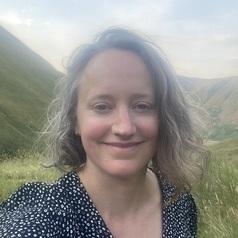
Naomi Richards
Senior Lecturer in Social Science, University of Glasgow
Dr Naomi Richards is Director of the End of Life Studies Group at the University of Glasgow. She is a Senior Lecturer in Social Science and is a social anthropologist by training. She specialises in dying and death, ageing and old age, and visual and ethnographic methods.
Dr Richards has published over 30 peer-reviewed articles in a variety of social science and clinical journals, in addition to 6 book chapters. Over the last decade she has been funded to undertake empirical and theoretical investigations into: the UK’s assisted dying debate; the phenomenon of old age rational suicide; the relationship between assisted dying and palliative care internationally; and the international Death Café movement.
Between 2019-23, she led the Dying in the Margins study - a qualitative visual methods study which aimed to uncover the reasons for unequal access to home dying for people experiencing poverty and deprivation. This lead to the Cost of Dying exhibition. She continues to work on experiences of financial hardship at end life, specifically in rural Scotland, through the Marie Curie-funded Unreached study. She also co-leads the DeathWrites research network, supporting creative writers based in Scotland to write and publish powerful, accessible work on the subject of dying, death, grief and loss.
Dr Richards teaches multiple courses on the University of Glasgow’s End of Life Studies Programme (PGCert/PGDip/MSc) and pioneered a partnership with the Royal College of Physicians of Edinburgh to produce a unique microcredential on End of Life Challenges and Palliative Care, introducing social science theories and ways of thinking to health and social care professionals.
Less
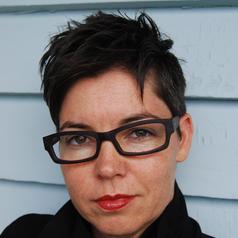
Naomi Stead
Director of the Design and Creative Practice Enabling Impact Platform, RMIT, RMIT University
Professor Naomi Stead is Director of the Design and Creative Practice Enabling Capability Platform at RMIT. With a long commitment to research-based advocacy in architecture, she was a co-founder of Parlour – now an internationally-recognized organization advocating for gender equity in the profession – and led the initial Australian Research Council project which underpinned it. More recently she led a major investigation of mental health and wellbeing among architecture students and practitioners. She has co-edited six books, including the award-winning Speaking of Buildings: Oral History in Architectural Research (Princeton Architectural Press 2019) with Janina Gosseye and Deborah van der Plaat; and After the Australian Ugliness (NGV & Thames and Hudson, 2020) with Tom Lee, Ewan McEoin, and Megan Patty. She was Contributing Editor to Architecture Australia (2005-2009), Editor of Architectural Theory Review (2011-2013), President of the Society of Architectural Historians of Australia & New Zealand (2017-2019), Head of Architecture at Monash University (2018-2020), and a Board Member of Open House Melbourne (2020-2023). She is widely published as an architecture critic – including currently for The Saturday Paper. In 2023 she was (state) winner of the Bates Smart Award for Architecture in the Media. She holds a Bachelor of Architecture (UniSA) and a PhD (UQ).
Less
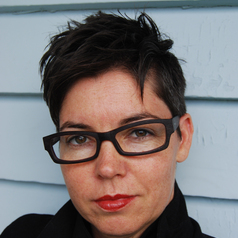
Naomi Stead
Dr Naomi Stead is Associate Professor in the School of Architecture at the University of Queensland, and Deputy Director of the research centre ATCH (Architecture | Theory | Criticism | History). Her research interests lie in the cultural studies of architecture - in its production, reproduction, and reception, and the place of architecture in the broader cultural imaginary. Current research projects examine experimental writing practices in architecture, and the representation of architecture and architects in popular media. She was a co-investigator on the ARC Discovery project 'The Cultural Logic of Queensland Architecture: Place, Taste and Economy' (2011-2014) with Prof John Macarthur and Dr Deborah van der Plaat, and was the leader of the ARC Linkage project ‘Equity and Diversity in the Australian Architecture Profession: Women, Work and Leadership’ (2011-2015) which led to the founding of the award-wnning website Parlour: Women, Equity, Architecture, edited by Justine Clark.
Having been trained as an architect at the University of South Australia, Stead received her PhD from the University of Queensland, and has taught at the University of Technology Sydney, and the University of Queensland. Her doctoral thesis, ‘On the Object of the Museum and its Architecture’ (2004), examined the cultural politics of architecture in recent, purpose-built social history museums.
Stead edited the 2012 book Semi-Detached: Writing, Representation and Criticism in Architecture (Uro, Melbourne, 2012). She was from 2012-2015 co-editor of Culture Unbound: Journal of Current Cultural Research (Norrkoping, Sweden), and from 2011-2014 editor of Architectural Theory Review (Sydney).
Stead has been a visiting postdoctoral fellow at the Advanced Cultural Studies Institute of Sweden, and a UQ Postdoctoral Research Fellow. Her scholarly work has been published in anthologies such as Critical Architecture (Jane Rendell et al. eds, Routledge, London, 2007), Architecture and Authorship (Katja Grillner et al. eds, Black Dog, London, 2007) and Architecture, Disciplinarity and Art (Andrew Leach and John Macarthur eds, A & S Books, Ghent, 2009), and Mongrel Rapture (Mark Raggatt and Matiu Ward eds, Uro, Melbourne, 2015). She has published in journals including the Journal of Architecture, Volume, OASE, Performance Research, JAS: Journal of Australian Studies, Fabrications, and Critical Studies in Television. She is a past Editorial Board member of the Society of Architectural Historians of Australia and New Zealand, and has edited three volumes of conference proceedings. She has supervised eleven PhD and research Masters students to completion, and been a keynote at Australian and international conferences.
Stead also maintains a number of ‘para-academic’ writing, exhibition, and art projects. These include the 2009 exhibition ‘Mapping Sydney: Experimental Cartography and the Imagined City’ at the UTS DABLab; the 2015 exhibition 'Hung Out to Dry: Space, Memory, and Domestic Laundry Practices,' with Kelly Greenop and Allison Holland at the UQ Art Museum; the 2015 exhibition 'Portraits of Practice: At Work in Architecture' with Justine Clark, Maryam Gusheh and Fiona Young at the Tin Sheds Gallery, Sydney. In 2009 Stead made a series of short films for the UTS Equity and Diversity Unit in collaboration with Sam Scotting; she has an ongoing writing collaboration with Dr Katrina Schlunke of UTS; and continues an ongoing visual research project Documentation: The Visual Sociology of Architects.
Stead is widely published as an art and architectural critic, having written more than fifty commissioned feature and review articles in industry magazines. These include Places Journal (for which she is a columnist), Architecture Australia (of which she was a contributing editor 2003-2012), Architectural Review Asia Pacific, Monument, Artichoke, Pol-Oxygen, and [Inside]: Australian Design Review. In 2008 she was awarded the Adrian Ashton Prize for architectural writing by the NSW chapter of the Australian Institute of Architects.
Less

Naomi F. Sugie
Associate Professor of Sociology, University of California, Los Angeles
I study the relationship between criminal legal contact and inequality across various domains, including crime, health, families, employment, welfare, and voting. Across these areas, I use diverse methodological approaches for data collection and analysis. I am particularly interested in understanding how mobile phones can be used as social science tools and how technology can facilitate data access, replication, and transparency.
Alongside my research, one of my primary projects is helping to create PrisonPandemic, a digital archive of personal stories contributed by people incarcerated in California prisons, jails, and immigration detention facilities during the COVID-19 pandemic.
Less
Naomi Ruth Pendle
Lecturer in International Development, University of Bath
Naomi is a Lecture in International Development in the Social and Policy Science Department at the University of Bath. She was formerly an Assistant Professor at the Firoz Lalji Institute for Africa at the London School of Economics and Political Science. Since 2010, she has carried out ethnographic and qualitative research in South Sudan on governance during war and peace. This has included research on patterns of violence, public authority, revenge, peace meetings, armed mobisations, humanitarian protection, Nuer prophets and famine. Her book 'Spiritual Contestations – The Violence of Peace in South Sudan' will be published in 2023.
Less

Naomie Gendron
Medical Student, McGill University
I am a 4th year medical student at McGill. My research interests are suicide prevention and knowledge translation.
Less
Napoleon Katsos
Senior Lecturer Department of Theoretical and Applied Linguistics, University of Cambridge
Napoleon Katsos is interested in how experimental research in language acquisition and processing can inform theoretical linguistic inquiry and vice versa. His particular focus is in the area of semantics and pragmatics, especially implicature, presupposition and quantification. Together with colleagues, he has been awarded grants by the AHRC, the British Academy, the ESRC, and other funding bodies to work on aspects of experimental pragmatics with typically- and atypically-developing children and adults.
Napoleon is also interested in bilingualism, and is a founder member of the Cambridge Bilingualism Network.
Less

Nara Monkam
Associate Professor of Public Economics, Chair in Municipal Finance within the Department of Economics, and Head of the Public Policy Hub at the University of Pretoria, University of Pretoria
Less
Narcisa Pricope
Professor of Geography and Land Systems Science and Associate Vice President for Research, Mississippi State University
Less

Nareg Seferian
Ph.D. Candidate, School of Public and International Affairs, Virginia Tech
Nareg Seferian defended his dissertation at the School of Public and International Affairs, Virginia Tech in February, 2023. His doctoral research focussed on the province of Siunik in southern Armenia, using it as a case in investigating changes in geographical imaginations and the geopolitical culture of the country following the Second Karabakh War of 2020. From 2013 to 2016, he served on the faculty at the American University of Armenia. Nareg Seferian has conducted research, run courses, and delivered talks in Armenia, Turkey, Austria, and the United States. He holds a master's in international affairs from the Fletcher School of Law and Diplomacy at Tufts University and the Diplomatic Academy of Vienna and a bachelor's in classical liberal arts from St. John's College in Santa Fe, New Mexico. His published writings are available at naregseferian.com.
Less

Narelle Hopkin (Towie)
Academic chair of journalism, Murdoch University
Narelle is a journalism lecturer and investigative journalist who has worked for leading news websites and newspapers. Her two-decade journalistic career began at Nature Magazine and she have worked across a range of media in TV news, online and print.
As Academic Chair of journalism at Murdoch University, Narelle runs the course across two countries and has been awarded a Fellowship with the Higher Education Academy.
As a freelance reporter, Narelle regularly reports on breaking WA news in politics, courts, health and police for publications, such as The Guardian. She specialises in environment, science and social equity issues and has investigated asbestos contamination in Wittenoom, groundwater mining, live export and state homelessness.
Less
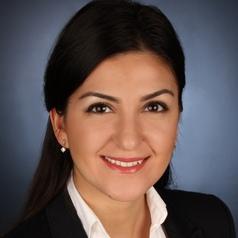
Nargiz Travis
Project Director, Cancer Prevention and Control Program, Lombardi Comprehensive Cancer Center, Georgetown University
I hold a master’s degree in Public Health with a focus on Epidemiology from Freie University Berlin, Germany. I have over nine years of research experience in cardiovascular epidemiology and healthcare research, with main research areas in the epidemiology of chronic cardiovascular diseases, risk prediction algorithms, health promotion and interventions, health outcomes and health systems research, quality and efficiency in healthcare, and health technology assessment. I joined the Tobacco Regulatory Science field four years ago as a Project Director at the Department of Oncology at Georgetown University managing multiple federally-funded multi-site research projects. My research areas include health effects and use patterns of novel nicotine delivery systems with a focus on the use of simulation modeling for regulatory science. My research focuses on developing data inputs for state and federal policy simulation models by conducting systematic literature reviews, meta-analyses, and expert panels. My work intends to provide evidence to inform federal and policy decision-making.
Less
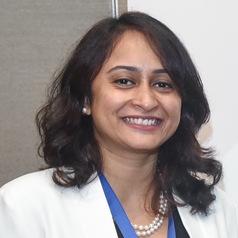
Narmin Tartila Banu
PhD Candidate, Marketing, Carleton University
I worked for 5 years in brand management at Reckitt Benckiser, and 3 years as a Consultant in SAP. Currently I'm pursuing a PhD in Marketing at the Sprott School of Business, Carleton University.
Less
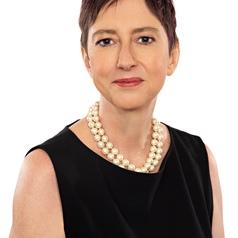
Narnia Bohler-Muller
Divisional Executive, Developmental, Capable and Ethical State research division, Human Sciences Research Council
Professor Narnia Bohler-Muller holds the degrees of BJuris LLB LLM (UPE) LLD (UP). Previously she was Professor of law at Vista University and Nelson Mandela Metropolitan University (NMMU) before joining Africa Institute of South Africa (AISA) as research director of social sciences in 2011.
Currently Prof Bohler-Muller is Divisional Executive of the Developmental, Capable and Ethical State research division at the HSRC. a former Adjunct Professor of the Nelson R Mandela School of Law at the University of Fort Hare and a Research Fellow at the Centre for Gender and Africa Studies at the University of the Free State.
Prof. Bohler-Muller has over 100 peer reviewed publications and has co-edited five books on gender violence; human trafficking, the dynamic of BRICS, the evolution of the Constitution and the Blue Economy. She is an admitted Advocate of the High Court of the Republic of South Africa and served as presiding officer for the Private Security Industry Regulatory Authority (PSIRA) in Port Elizabeth for 7 years. Amongst others she has completed research consultancy work for the Department of Justice and Constitutional Development on HIV/AIDS, human rights and access to justice; and the Institute for Child Witness Research and Training on gender-based violence.
She has completed research fellowships at Griffith University?s law faculty in Brisbane, Australia; Birkbeck School of Law in London, UK; and the BRICS Policy Centre in Rio de Janeiro, Brazil. Prof Bohler-Muller represents South Africa as the head of the Indian Ocean Rim Association (IORA) Academic Group.
Her research interests include international and constitutional law; human rights, democracy and social justice.
Less
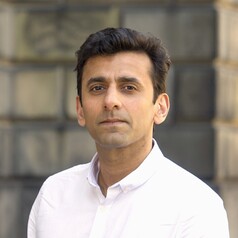
Nasar Meer
Professor in Social and Political Sciences, University of Glasgow
Nasar Meer is Professor of School & Political Science at the University of Glasgow.
He has been co-Investigator of The Impacts of the Pandemic on Ethnic and Racialized Groups in the UK (UKRI, 2021-2023) and Principal Investigator of the Governance and Local Integration of Migrants and Europe's Refugees (GLIMER) (JPI ERA Net / Horizon-2020).
He was a Commissioner on the Royal Society of Edinburgh’s (2020-2021) Post-COVID-19 Futures Inquiry, a Member of the Scottish Government COVID-19 and Ethnicity Expert Reference Group and the British Council's Outreach Program, and formerly elected co-Chair of Young Academy of Scotland (YAS), and elected Trustee of the British Sociological Association (BSA) and the Social Policy Association (SPA).
He is an elected Fellow of the UK Academy of Social Sciences (FAcSS), a Fellow of the Royal Society of Edinburgh (FRSE), and Trustee and Academic Committee Chair of the Stuart Hall Foundation.
He is currently co-Editor of Identities: Global Studies in Culture and Power; co-Editor of 21st Century Standpoints (BSA and Policy Press) and co-Editor of Palgrave Politics of Identity and Citizenship Series (PPICS).
Less
Nassim Jalali
Final year PhD student researching Sylvia Plath's nature poetry, University of Huddersfield
I have a BA Honours in English and MA in Twentieth Century Literature from the University of Leeds. I am currently in my final year of PhD research at the University of Huddersfield. I am researching ecological readings of Sylvia Plath's poetry. I am also a qualified English teacher; I spent 12 years working as Head of Literature at a prestigious sixth form college in Yorkshire. I currently work part time in a high school in London, whilst I complete my doctorate.
Less

Nasya Bahfen
Senior Lecturer, Department of Media and Communication, La Trobe University
Nasya Bahfen is a senior lecturer in the Department of Media and Communication at La Trobe University. She has taught at Monash University, UNSW, and RMIT and was previously a a radio and online journalist and producer for ABC Radio Australia and SBS. Her freelance writing and commentary includes feature articles and opinion pieces for the Age, Daily Life, the Far Eastern Economic review, and the Brunei Times; and hour-long radio documentaries for ABC Radio National and ABC Grandstand Digital. Nasya has postgraduate qualifications (PhD) in the sociology of the media, and extensive media and communications teaching and research experience. She has a first class honours degree in media from LaTrobe University and an undergraduate degree in journalism from RMIT.
Research Summary
Nasya's doctoral dissertation and research activity reflects the theme of internationalisation and diversity in the media and online, including the media of southeast Asian (Indonesia, Malaysia and Singapore) and Australia.
Teaching
Nasya teaches subjects in the coursework Master of Journalism and supervises higher degree by research students.
Less

Natalee Garrett
Lecturer in History, The Open University
I was awarded a PhD in Modern History from the University of St Andrews in July 2021, graduating in June 2022. My area of specialism is 18th-century European history, focussing on popular culture and questions of identity (gender, social, national). I was awarded an MA (Hons) in History from Queen's University Belfast in 2016 and a BA (Hons) in English and History from Queen's University Belfast in 2015.
At present, my research is focussed on the British monarchy in the 18th century, and I am currently writing a biography of Queen Charlotte for Routledge's Queens of England monograph series.
Less
Natalia Gurgacz
Graduate Student, University of Victoria
I completed my Master of Science in Earth and Ocean Sciences at the University of Victoria. During that time I used the UVic ESCM to model the global impact of carbon leaching from marine plastic pollution on different oceanic and atmospheric variables.
I am generally interested in studying plastic pollution and the effects of pollutants on ecosystems and its' processes.
Less
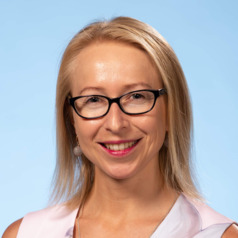
Natalia Jevglevskaja
Research Fellow on the ARC Laureate Project on the data revolution (www.fintechrevn.org), UNSW Sydney
Natalia Jevglevskaja is a Research Fellow at the Faculty of Law and Justice of the University of New South Wales (UNSW Sydney, Australia) and an Associate Fellow of the Higher Education Academy, UK.
In her role as a Research Fellow at the Australian Research Council Laureate Project ‘The Financial Data Revolution: Seizing the Benefits, Controlling the Risks’, she looks at how data and technology are transforming financial services in Australia and abroad and what measures may be required in the area of data and technology governance to facilitate innovation in finance.
Natalia’s broader research and teaching interests include general international law, comparative law, and the law of armed conflict.
Less
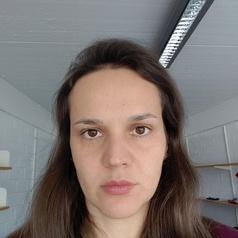
Natalia Kogut
Languages, Cultures, Art History and Music - Research Fellow, University of Birmingham
Natalia Kogut graduated from Taras Shevchenko National University in 2005, PhD in Law was awarded at Institute of State and Law named after V. Korezkiy of NAS (Ukraine). From 2009 till 2012 she was employed on different positions as a lawyer – from leading council to head of legal department of the Research Institute. She was combining legal practise with teaching.
After fleeing the war in Ukraine Dr Natalia Kogut held position of the research fellow in the University of Birmingham at the Department of Modern Languages, Cultures, Art, History and Music.
Sphere of scientific interests of Dr Natalia Kogut include: right to life and health, healthcare systems, ecological law, migrants’ rights, historical memory of migrants. The project with which she is dealing now is a Post Socialist Britain, where research is being conducted in the sphere of migrants and refugees’ welcoming, historical memory of migrants, aspiration and hopes of migrants. Also, Natalia Kogut is a specialist in human rights, right to health, comparative analyse of health care systems in different countries, she published quite a few articles in the sphere in scientific journals.
Less
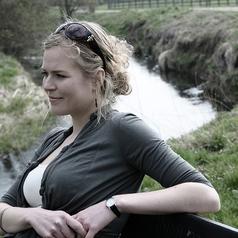
Natalia Kucirkova
Professor of Reading and Children’s Development, The Open University
Natalia Kucirkova researches innovative ways of supporting children’s reading engagement with digital books and the role of personalisation in early years.
Her research takes place collaboratively across academia, commercial and third sectors. She developed an award-winning app ‘Our Story’ for children's story-making and has widely published on early literacy and children’s use of technology.
Natalia is a Fellow of the Royal Society for Arts, Governor for Swallowfield Lower School, Chair of the judging panel for the UKLA Children's Digital Book Awards, Co-Chair of the WG3 COST Action and Advisory Board Member for Save The Children. She has been commended for her engagement with teachers and parents at a national and international level.
Previous roles include:
- Senior Lecturer in Childhood Studies & Early Years, Manchester Metropolitan University
- Lecturer in Developmental Psychology, Open University
-Visiting academic at Massachusetts Institute of Technology, Boston, USA
- Knowledge Transfer Partnership Associate, Booktrust and Open University, UK
-Visiting Pre-doctoral Fellow, Department of Education, Harvard University, USA
Less

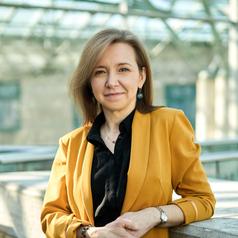
Natalia Letki
Associate professor, University of Warsaw
I have trained as a sociologist, but my research falls at the intersection of sociology, political science and psychology, as I research attitudes and behaviour towards public goods, including tax and pro-environmental behaviour and co-production, as well as policy preferences, discriminatory behaviour, social capital, social trust and corruption. I have an extensive experience in research on ethnic minorities, and party policy and electoral strategy in post-Communist countries. I am particularly interested in the conditioning effect of social and spatial context.
Methodologically, I specialize in quantitative survey research, including survey experiments. I am widely experienced in working with cross-national survey data, including survey design and implementation.
Less
Natalia López-Hornickel
Postdoctoral researcher, Department of Education, University of Bath
Less

Natalia Piotrowska
PhD Candidate in International Relations, University of Kent
Natalia Piotrowska is a PhD Candidate in International Relations at the University of Kent. Her research areas include international security, foreign policy analysis and Turkish foreign and security policy (with a special focus on Turkish-Israeli relations). Natalia adopts an interdisciplinary approach to her research, and draws from psychology and sociology in order to further the understanding of domestic and foreign policy of states. In her PhD project, the role of friendship in International Relations is explored through the theoretical prism of ontological security.
Prior to beginning her PhD, Natalia was awarded a Bachelor’s and Master’s degree in Political Sciences (focus: foreign services) from the University of Wroclaw (Poland). During this time, she was also an exchange student at the Yeditepe University in Turkey (2008/2009) and the Belgrade University in Serbia (2010/2011). Natalia was awarded the Scholarship for Academic Achievements by the Institute of Political Sciences at the University of Wroclaw, the Scholarship for Academic Merit by the Polish Minister of Science and Higher Education and the University of Kent 50th Anniversary PhD Scholarship.
Less

Natalia Przelomska
Research Associate in Archaeogenomics, National Museum of Natural History, Smithsonian Institution
Less

Natalia Soares Quinete
Assistant Professor of Chemistry, Florida International University
Dr. Natalia Soares Quinete's specialities include: Environmental and Bioanalytical Chemistry, Mass Spectrometry, PFAS analysis, Emerging Contaminants, Metabolites and Biomarkers. Her areas of reserach include: Method development based on mass spectrometry for targeted and non-targeted approaches with applications in environmental (exposomics) and bioanalytical chemistry (lipidomics and metabolomics); Monitoring and assessment of the occurrence, fate and transport of PFAS in environmental and biological samples
Biomonitoring of endocrine disruptor contaminants such as phthalates, hormones, PFAS, PCB metabolites, and other emerging compounds; and Study of biomarkers of exposure to a variety of environmental organic contaminants.
Less

Natalia Szura
Research Assistant in Psychiatry, Wayne State University
Natalia Szura is a Research Assistant at the Wayne State University Department of Psychiatry. She is based in Detroit, Michigan.
She graduated from the University of Michigan–Ann Arbor in 2022 with a BA in the English and Film, Television, and Media majors, as well as two minors, Writing and German.
During her time as an undergraduate student, she wrote for, and was promoted to Editor for, both the acclaimed
satirical newspaper, The Every Three Weekly, and feminist publication What the F magazine. Natalia has
over 30 written articles published by the former.
Natalia currently collaborates with scientists and doctors for academic and research writing for Wayne State University. Despite this, she holds experience writing for a range of audiences and contexts, including comedic writing, essay writing, persuasive writing, copywriting, blogging, and more.
Less


- Market Data




