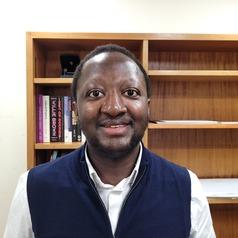
Emmanuel Kwaku Siaw
Lecturer in International Relations, Swansea University
Lecturer in International Relations, Swansea University
1 articlesOur contributors
Meet the researchers, writers and practitioners bringing perspective to the global conversation.
Join the conversation14545 contributors
Lecturer in International Relations, Swansea University
Lecturer in International Relations, Swansea University
1 articles
Postdoctoral Research Associate, University of Oxford
Postdoctoral Research Associate, University of Oxford Following completion of an undergraduate degree in Chemistry at the University of Warwick I undertook an MSc and PhD in Interdisciplinary Biomedical Research. My work focused on understanding the enzymes involved in the production of natural products. In 2022 I joined the Ineos Oxford Institute (IOI) and the Schofield Group at the University of Oxford where my research involves the application of biochemistry to help identify novel antibacterials which target enzymes involved in formation of the bacterial cell wall.
1 articles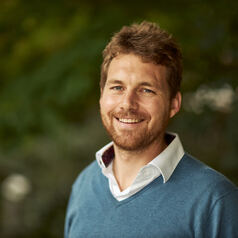
Science Lead, University of Oxford
Science Lead, University of Oxford From a young age, I have been curious about the physical and natural world that surrounds us. This broad interest across physics and biology led me to study chemistry, as the central science, at Wadham College at the University of Oxford where I stayed for my MChem and PhD degrees. During my PhD, I developed a new family of catalysts – substances that speed up a reaction – and investigated their application in a range of industrially relevant processes. These catalysts do not contain metals, are cheap, generate less waste, and work under milder conditions than metal catalysts, and therefore offer a more sustainable approach to chemical processes. After this, I became interested in applying chemistry and chemical principles to address biological questions and in particular to the issue of Antimicrobial Resistance (AMR). My interdisciplinary team and I, as part of the Ineos Oxford Institute, try to understand the mechanisms of bacterial resistance to antibiotics. We then develop new molecules and combinations of molecules that are active against the bacteria. Tackling AMR is a challenge and requires interdisciplinary research involving policy makers, health economists, chemists, microbiologists, biochemists and others to advance. Good science with direct societal benefit and the diversity of people make this a great area to work in. I am a strong advocate for the use of science to better inform policy and policymakers. I have had the opportunity to present my research at the Houses of Parliament and to shadow parliamentarians and policymakers as part of the Royal Society Pairing Scheme. Advances in science and innovation are fundamental in improving the general wellbeing of society.
1 articles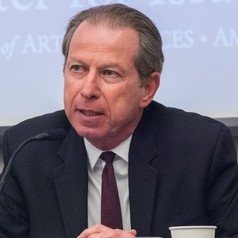
Professor of Business, American University Kogod School of Business
Professor of Business, American University Kogod School of Business Professor Carmel teaches Information Technology (I.T.) at the Kogod School of Business at American University in Washington D.C. He studies or has studied various technology-related topics. He is currently studying the future of identity technologies. He has also studied the globalization of technology work: crowdsourcing, impact sourcing, global software teams, offshore outsourcing,
1 articles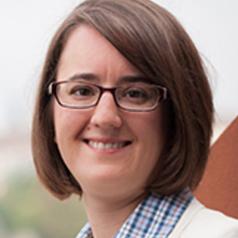
Associate Professor of Thomistic Studies, University of Notre Dame
Associate Professor of Thomistic Studies, University of Notre Dame I work on medieval theories of mind, cognition, and personhood, with special focus on the thought of Thomas Aquinas and his thirteenth-century interlocutors. Themes that animate my research include, e.g., the nature of consciousness, the history of the self/person and concepts of subjectivity, what it means exactly to be "immaterial," Aristotelian hylomorphism and how it applies to mind, and problems connected with mental representation and intentionality, the relationship of imagination and intellect, and medieval theories of light and vision. In approaching these themes, I'm particularly interested in uncovering different ways of "modeling" the mind and its activities. I am engaged in a research cluster funded by Notre Dame's Office of Research, titled "Modeling the Mind in the European History of Philosophy" (2020-2023). I also direct the History of Philosophy Forum and The Jacques Maritain Center at Notre Dame. Another central research interest of mine is how Islamic philosophers--such as al-Farabi, Averroes, Avicenna, and the author of the "Liber de causis"--shaped Scholastic thought in medieval Christian Europe. Getting into the mindset of medieval philosophers, on my view, requires a scholarly community that is committed to rediscovering the broader shared philosophical tradition that connects Muslim, Jewish, and Christian thinkers in the Middle Ages, and tracing its patterns of development from late antiquity. To that end, I serve on the executive committee of the "Aquinas and the Arabs Project." I am also a member of the Pontifical Academy of St. Thomas Aquinas.
1 articles
Assistant Professor of Cardiology, University of Colorado Anschutz Medical Campus
Assistant Professor of Cardiology, University of Colorado Anschutz Medical Campus Chris Knoepke is an Instructor in the Division of Cardiology at the University of Colorado, having joined ACCORDS and the Shared Decision Making Core in 2015 as a Postdoctoral Fellow. His research investigates means by which to improve the inclusion of patient values and voice in medical decisions, especially those which are technologically complex, emotionally burdensome, or for stigmatized conditions. He holds a bachelor’s degree in psychology from Monmouth College, a Masters of Social Work from Washington University in St. Louis, and a PhD in Social Work from the University of Denver. His work is currently supported by three NIH-funded trials of decision support materials (two from NHLBI and one from NIMH), pilot project funding from both the Palliative Care Research Collaborative and the Colorado Center for Women’s Health Research, and a career development award from the American Heart Association. As a Ludeman Family Center for Women's Health Research seed grantee, Dr. Knoepke works in collaboration with Drs. Prateeti Khazanie and Sarah Perman to better understand seeming structural disparities in the reception of lifesaving care, including why women make up only 15-20% of patients in the US who receive ventricular assist devices (VADs), and why women are less likely to receive bystander CPR during an out-of-hospital cardiac arrest. Knoepke has also published on extreme risk protection orders.
0 articles