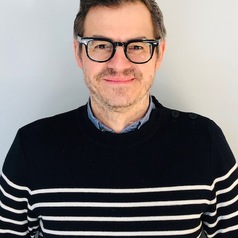
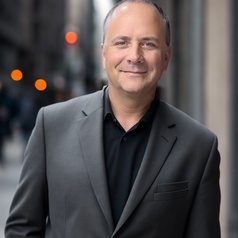
Professor and Department Director, School of Criminology, Université de Montréal Full Professor at the School of Criminology at the Université de Montréal, Samuel Tanner is also a regular researcher at the Observatoire International sur les Impacts Sociétaux de l’IA et du Numérique (OBVIA) and a member of CÉRIUM. He is the founder and head of the research laboratory on technology, activism, and security, LarTAS. His recent research interests focus on digital vigilantism, as well as the role of digital platforms in the production and dissemination of far-right discourses.
Professor, School of Social Work and Criminology, Université Laval Professor of Criminology, Laval University. Over the last 25 years I have published books, papers and chapters on state and mass crime, extremism and terrorism, policing, national security, intelligence, technology and surveillance.
Associate Professor of African and Atlantic History, University of Bristol PhD, 2001, University of Birmingham (Thesis title: ‘Inculturation Problematic: Historical, Sacrificial and Literary Traditions from Guinea-Bissau and Christian Theology’) MPhil, 1997, University of Birmingham (Thesis title: Historical, Sacrificial and Literary Traditions and Postcolonial Theory) Bachelor of Divinity (BD), 1993, University of London José Lingna Nafafé is an associate professor of African and Atlantic history, Department of Hispanic, Portuguese and Latin American Studies, University of Bristol, and was the first director of the MA in Black humanities. His academic interests embrace inter-related areas linked by the overarching themes of: the Black Atlantic abolitionist movement in the 17th century; the Lusophone Atlantic African diaspora; wage-labour, 1792-1850; race, religion and ethnicity; Luso-African migrants; ‘Europe in Africa’ and ‘Africa in Europe’; and the postcolonial theory. His recent publications include the award-winning book, Lourenço da Silva Mendonça and the Black Atlantic Abolitionist Movement in the 17th Century, Cambridge University Press, 2022. He is currently writing a third monograph on: Beyond Wilberforce’s Experiment in Abolitionism: Yellow Fever Epidemic, Unfree Labour and the Market, 1792-1870.
Practice to Research Associate, UNSW Institute for Global Development , UNSW Sydney Somali is a gender equality expert with an international profile with over 15 years experience in research and policy in Australia, the UK at the OECD and United Nations. Some key career achievements include: - Leading the 20 and 25 year global review of implementation of the Beijing Declaration and Platform for action for UN Women and the UN Secretary General - Developing and co-authoring the first global monitoring report for the Sustainable Development Goals from a gender perspectives - Leading the review and analysis for the 2012 OECD Social Institutions and Gender Index, measuring gender inequality in over 100 countries and working with national statistical offices in India, South Africa and Uganda to tailor the index to their specific contexts. At UNSW, Somali is leading a project on Gender and Just Transitions which aims to envision how a transition to a carbon neutral future can also accelerate progress on gender equality. Somali is also an Adjunct Associate Lecturer in the Faculty of Arts & Social Sciences at the University of Sydney, and a board member of ACON. She has a BA (UTS) and a Master of Science (Human Rights) (London School of Economics and Political Science).