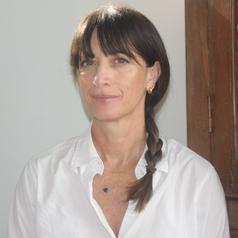
Associate Professor of Anthropology, University of Miami Pamela L. Geller is an associate professor of anthropology at the University of Miami. Over the years, she has conducted fieldwork in Hawaii, Belize, Honduras, Perú, and Haiti. Her intellectual interests include archaeology and bioarchaeology, feminist and queer studies, materiality of identity, the sociopolitics of the past, and bioethics. Based on her research, she has authored several books: The Bioarchaeology of Social-Sexual Lives (2017), Theorizing Bioarchaeology (2021), and Becoming Object: The Sociopolitics of the Samuel George Morton Cranial Collection (2024). Edited volumes include Feminist Anthropology: Past, Present, and Future (2006) and The Routledge Handbook of Feminist Anthropology (2025). More recently, she has wondered, “What does it mean to be human in an age of unprecedented anthropogenic impact on this planet?” The question is a longstanding one for anthropology; it seeks to address how the human condition shifts with technological innovation and socioeconomic interaction, as was the case during the Neolithic or Industrial Revolutions. Yet rather than look to ancient periods, she is undertaking an archaeology of the contemporary that focuses on plastics as material culture in the 21st century. She is particularly intrigued by the cultural maladaptability, ontological and biophysical implications, and future history of plastics. On this subject, her writings have appeared in scholarly publications and mainstream ones, such as Slate, Miami Herald, and The New York Times. Geller currently serves as the Specialty Chief Editor of Human Bioarchaeology and Paleopathology for the open-access journal Frontiers in Environmental Archaeology. She is also Series Editor for “Archaeology of Gender and Sexuality,” a book series with Routledge Press. Feel free to reach out with questions about submitting proposals or publications to either forum.
Research Fellow in Logic or Applied Logic, UCL I hold an MMath in Mathematics from the University of Warwick and a PhD in Computer Science from University College London (UCL) . I am a member of the London Mathematical Society and an associate member of the Institute of Mathematics and its Applications. I am currently Research Fellow in Logic or Applied Logic at UCL. I have published several articles in leading conferences and journals on logic and its applications, across mathematics, computer science, and philosophy. I am the founder of the international symposium on Proof-theoretic Semantics.
Lecturer in Social Sciences, Cardiff University I am a lecturer and qualitative researcher in Social Sciences, with a PhD in Psychology. I have worked in Healthcare Sciences, Social Sciences, and the Medical School. I have also worked in the third sector in mental health services and in research and policy roles. My areas of interest are: Neurodiversity, particularly autism and ADHD Identities, especially minoritised and stigmatised identity management I have a longstanding interest in mental health and wellbeing. I work mainly in qualitative methods. I conduct qualitative interviews and am developing ways to work with creative methods.
Senior Lecturer in Social Policy and Practice, Cardiff Metropolitan University I am a Senior Lecturer in Social Policy and Practice at Cardiff Met, and the Programme Director for the Health and Social Care programme, having completed my PhD at Cardiff Uni in 2020. I have a third sector background (housing, homelessness and welfare), moving to academia in 2017. My areas of interest are: - Homelessness and ‘precarious’ housing / housing insecurity (including squatting, property guardianship, and the private rented sector). - Neurodiversity and housing, especially ADHD/ autism and housing/ homelessness (currently recruiting for our ADHD/ Autism housing survey here (https://cardiff.qualtrics.com/jfe/form/SV_bHfPaswbBVMjWD4) - LGBTQ+ homelessness – recently completed the largest UK-based survey to date of LGBTQ+ homelessness. - Welsh housing and homelessness. I have published widely within critical social policy, sociology and geography. I am especially interested in using critical theory (e.g. Queer and Crip theory) to understand and address issues within social policy. I am also involved in running the Queer Populations and Policies Network (https://sites.google.com/view/qpapnetwork/about-qpap).
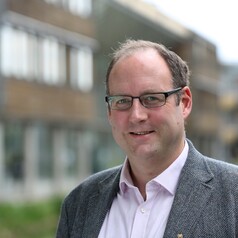
Lecturer, Lancaster Environment Centre, Lancaster University Andrew has been teaching at Lancaster University for over twenty years while running a microfarm and raising five children. His research draws on his background in systems dynamics, which he has applied to a range of fields including systems biology, ecology, metreology, climate and economics. His current interests are around radical simplification from emergence in complex systems.
Lecturer in Finance, Risk and Banking, University of Nottingham Sam undertook his Ph.D., entitled ‘Foreign Investors in the Chinese Stock Market’ at Nottingham University, during which he won several scholarships. He is now an award-winning business school lecturer at Nottingham, in addition to being a recipient of a Lord Dearing prize. He has taught Masters Students, including MBA students in empirical methods, corporate governance, quantitative approaches to research in business and finance, in addition to personal professional development, corporate risk and consumer ethics. He was formerly a module convenor and teaching fellow at King's College London's Lau China Institute where he was complimented on many occasions for his contribution to the China and Globalisation programme. Sam has advised and led projects as a specialist in economic and social research to a number of UK Government departments and arms-length bodies, across a number of high profile national and international policy programmes. Prior to this he was awarded a business and international relations degree with Chinese language at the Sheffield School of East Asian Studies. Sam specializes in bringing advanced analytical economic and financial skills and capabilities to complex, data- and policy- driven projects in multi-disciplinary teams, requiring project management, research, teamworking, stakeholder engagement and delivery to tight timescales.