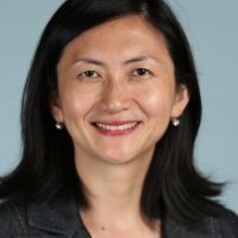
Associate Professor in Political Science and International Relations, UNSW Sydney Fengshi Wu is an Associate Professor in Political Science and International Relations at the School of Social Sciences, University of New South Wales (UNSW), Sydney, Australia. She is a world leading scholar in environmental politics, state-society relations, and global governance with the empirical focus on the Asia Pacific region (esp. East Asia, Southeast Asia, and Central Asia). Her recent research and teaching interests highlights the global transformation of the energy system rapidly accelerated by the challenges and geo-politics of climate change.A graduate of the University of Maryland (PhD in political science) and Beijing University (BA Hons International Relations), she has been a Visiting Professor at the Harvard-Yenching Institute (2008-2009) and the Sciences Po, Paris (Nov. 2024).
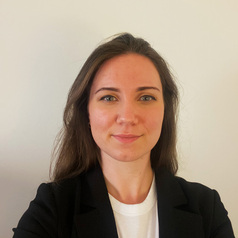
PhD Candidate in Social and Political Sciences, University of Sydney Kate Scott is a PhD candidate in Social and Political Sciences at the University of Sydney. Her current research focuses on deradicalisation within the manosphere, specifically examining the processes that enable or hinder individuals in disengaging from extreme Red Pill Communities. She is interested in the intersection of violent extremism, radicalisation, and gender within digital spaces. Prior to their doctoral studies, Kate completed their honours at the University of Sydney, focusing on online hate speech, U.S. security, and reproductive rights.
PhD Candidate and Associate Lecturer in Criminology and Justice, School of Law and Society, University of the Sunshine Coast Bricklyn Priebe is an Associate Lecturer in the Bachelor of Criminology and Justice. Bricklyn has an extensive teaching history, and has been closely involved in the development of the Bachelor of Criminology and Justice program since its inauguration at UniSC in 2015. She is currently completing her PhD with the Sexual Violence Research and Prevention Unit (SVRPU); her research focuses on understanding, preventing and responding to child sexual abuse perpetrated by females. She is currently a professional member of the SVRPU and works as an administration and communications officer within this unit.
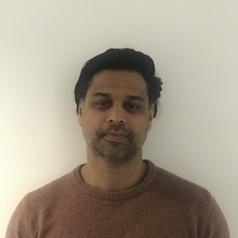
Research associate UK in a Changing Europe, King's College London Zain Mohyuddin is a Research Associate at UK in a Changing Europe. He has PhD in Political Science from the University of Toronto. His research focuses on electoral behavior in advanced democracies.
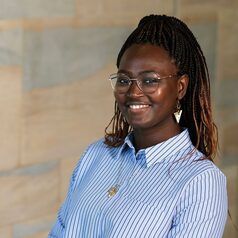
PhD Candidate, Department of Government and PhD Fellow UNU-WIDER, University of Essex I research post-revolutionary violence, ethnic representation, public opinion, democratisation and foreign policy in Sub-Saharan Africa. My thesis looks into the role of expectations in shaping political violence in a post-revolutionary context. Using survey data after Burkina Faso's latest uprising in 2014, I argue that post-revolutionary political discontent can lead to the increase and diffusion of violence. My doctoral research is funded by the South East Network for Social Sciences (SeNSS).
Director, Institute of Cancer Policy, King's College London Richard Sullivan is a Cancer & Global Health Professor at King’s College London and Guy’s Hospital Comprehensive Cancer Centre. At King’s, he is the Director of the Institute of Cancer Policy and Director of the Centre for Conflict & Health Research. Richard is the NCD advisor to the World Health Organisation, a Fellow at the Centre for Global Development, and a UK representative to the WHO IARC Scientific Governing Council. His global cancer research programs cover cancer systems strengthening, political economy (value & affordability), pharmaceutical policy, and global cancer surgery, with a special interest in cancer care in conflict. He directs several major research programs in conflict and health, focusing on the Middle East and Sub-Saharan African regions, specifically in health security intelligence and health systems strengthening in conflict. Professor Sullivan was trained in surgical oncology and had a PhD in biochemistry from University College London. He has published over 500 articles, including seventeen Lancet & Lancet Oncology Commissions, and has written extensively on cancer systems strengthening and matters relevant to global health security. Richard was previously Clinical Director of Cancer Research UK for over ten years, a board member of UICC, and past Director of the Council for Emerging National Security Affairs.