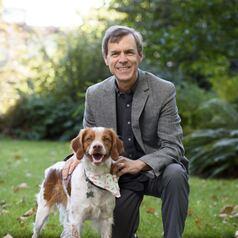
Senior Climate and Disaster Risk Finance Specialist, ODI Vikrant is a Senior Climate and Disaster Risk Finance Specialist in ODI’s Global Risks and Resilience programme, working primarily on disaster and climate risk financing and economics of disasters and climate change. He has experience in researching macro-fiscal implications of disasters and other climate risks at sovereign and sub-sovereign levels, including estimation of direct and indirect economic and non-economic impact of disasters and physical climate risks, and econometric analysis and actionable research on risk financing and DRM. He has experience of working with government institutions in developing countries and private sector organisations operating in the risk finance and resilient infrastructure space. Vikrant has a doctoral degree in economics with specialisation in estimating macro-fiscal impacts of disasters and policy research on disaster risk financing strategy. He also carries a Master’s degree with finance major. Vikrant has multiple publications under his name published in peer-reviewed journals and books.
Research Fellow, School of Medicine and Dentistry, Griffith University Dr. Zhiwei Xu is a mid-career researcher and co-leads the Ethos project (https://www.griffith.edu.au/research/climate-action/climate-transitions/health/ethos-project). His primary research interest is to identify and quantify the health impacts of heat and develop accessible and sustainable adaptation strategies. Dr Xu is among the top 2% most-cited scientists worldwide in Environmental Sciences (https://elsevier.digitalcommonsdata.com/datasets/btchxktzyw/6). As of September 2024, he has a Google Scholar H-index of 46 and has been cited over 7,000 times, including citations in the latest United Nations (UN) IPCC report (ISBN 9781009325844) and over 100 policy documents from the UN, WHO, World Bank, European Union, governments of Australia, Brazil, Canada, Finland, Germany, Nepal, and USA, and think tanks. The citations in the IPCC report and policy documents have led to his research being used to inform policies. For instance, the EKLIPSE report (ISBN 978-1-906698-62-1) has informed the planning of nature-based solutions for building climate-resilient cities in Europe; the AIHW report (ISBN 978-1-922802-07-1) is informing the development of environmental ecosystem accounts for protecting the health of Australians.
Associate Professor, School of SHS – Human Services and Social Work, Griffith University Steven Baker is a dynamic researcher and educator in the School of Health Sciences and Social Work and Creative Arts Research Institute at Griffith University. His research centres on how technology can be used to support human flourishing and address social issues such as; poverty and disadvantage, financial and physical abuse, and the impacts of a warming planet. Steven's research is distinguished by its innovation, interdisciplinarity, and commitment to cross-sector partnerships drawing on his background as a social worker and Human-Computer Interaction (HCI) researcher. He is currently a chief investigator on the $2.3 million Extreme Heat and Older Adults (Ethos) project, a transdisciplinary research effort to develop an early warning system to protect older adults from the health impacts of extreme heat events. His research has been published in high ranking journals and conferences spanning computer science, gerontology and social work. Steven's learning and teaching is focussed on transforming the ways that social work and human services students view social disadvantage, address inequality and advocate for positive change. He received a 2022 student experience of teaching commendation for his commitment to learning and teaching. In 2022, he also led a teaching and learning grant examining how the emerging technology of social virtual reality might play a role in supporting student learning. Steven is committed to supporting higher degree by research students via his work on the Griffith Human Ethics Committee and the School of Health Services and Social Work Research Committee. He lives on the Gold Coast on the lands of the people of the Yugambeh language region with his wife and daughters.
Senior Research Assistant, Ethos Project, School of Medicine and Dentistry, Griffith University Mehak Oberai, an emerging public health researcher with a strong foundation in Microbiology, is dedicated to advancing her expertise in Public Health Promotion and Healthy Ageing. Her strategic utilization of current knowledge and skills reflects her commitment to fostering effective and efficient contributions to these fields. Mehak's overarching goal is to narrow the gap between research and the public, ensuring that academic findings are communicated in an accessible manner. Proficient in engaging with stakeholders and users, she possesses a unique ability to convey complex information in a comprehensible way. With a focus on project planning and management, Mehak is continuously honing her monitoring and project evaluation skills.
PhD Candidate, School of Medicine and Dentistry, Griffith University Ella is a PhD Candidate in the School of Medicine and Dentistry at Griffith University, overseeing communications for the Ethos Project. Her primary focus in this role is to engage the community and key stakeholders using various communication channels. Ella develops Ethos-focused editorials, manages the Ethos Newsletter, and creates visually appealing materials such as posters and flyers. Most recently, she led the production of the Ethos heat communication videos and the Ethos Policy Report. Currently pursuing a PhD focused on heat communication, Ella's research interest is in driving behaviour change among older adults through innovative heatwave communication strategies. Her academic background includes a Master of Public Health, a Bachelor of Medical Science, and an honours degree in Environmental Science. Additionally, she studied Fine Art at the Pennsylvania College of Art and Design, which helps her communicate health issues through a creative lens.
Professor of Political Science and Director, Elections & Voting Infomation Center, Reed College Paul Gronke is a Professor of Political Science at Reed College who studies American politics, specializing in convenience and early voting, election administration, public opinion, and elections. Additionally, Paul serves as Director of the Elections & Voting Information Center (EVIC), an election science research center he founded two decades ago. His researchers are co-located at Reed College and Portland State University (PSU). Under Paul’s leadership, EVIC has become a national center of excellence for policy research and publicly engaged scholarship into election administration, election reform, and electoral integrity. Paul has published dozens of peer-reviewed articles, monographs, and reports on topics ranging from public opinion and trust in government, public opinion about government use of torture, congressional elections, early and no-excuse absentee voting, and automatic voter registration. Paul is regularly featured in national and regional media outlets as a commentator on politics and elections. He also serves on the Advisory Board for the MIT Election Data Science Lab (MEDSL) and the National Vote at Home Institute‘s Circle of Advisors, and he was awarded an Andrew Carnegie Fellowship in 2020. Paul received his PhD in political science from the University of Michigan and has held academic positions at Duke University and Appalachian State University in addition to Reed College. Paul’s academic credentials–including his curriculum vita, courses taught, and other research papers, can be found at his personal Reed web page.https://blogs.reed.edu/paul-gronke/