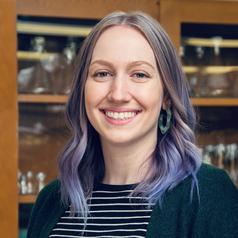
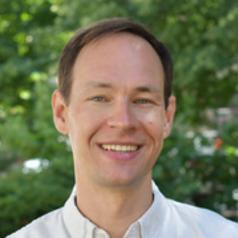
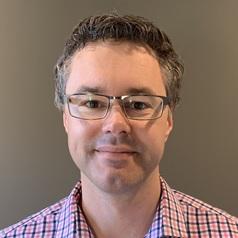
Assistant Professor of Entomology & Plant Pathology, University of Tennessee Hi! I’m an Assistant Professor in the Department of Entomology & Plant Pathology at the University of Tennessee Institute of Agriculture. I study insect viruses – specifically those viruses that have evolved to be beneficial to their hosts, which has repeatedly occurred within insects called parasitoid wasps. Viruses are primarily considered to be pathogenic entities that exploit host organisms for their own gain. However, increasing evidence suggests that viruses often evolve to persist within hosts, and some are even beneficial for their hosts. The best-studied examples of ‘good’ viruses are found within parasitoid wasps, in which viruses are inherited by wasp offspring and act as biological weapons that incapacitate insect hosts of the wasps during parasitism. A growing number of heritable viruses have been identified in various parasitoid wasp lineages, including wasps that serve as important biological control agents used to suppress agricultural pest populations. Very little is known about most of these viruses, even though some are pivotal for parasitoid wasp success. These viruses could therefore represent hidden aspects of natural biological systems that are used to mitigate pest species. My lab group uses a combination of molecular biology, manipulative genetics, and genomic sequencing techniques to explore these novel insect-virus interactions and aims to use this knowledge in the future to develop innovative biological control strategies that promote sustainable agriculture.
Assistant Professor of Psychology, University of Wisconsin-Madison Our lab uses a socioecological approach to understand contemporary society, one that examines how structural, demographic, geographic, cultural, and historical factors create individual psychology in real-world contexts. We use a multi-method approach, including laboratory experiments, on-line studies, archival research, and surveys with a stress on promoting open replicable practices. Currently, we are focusing on the psychology of peculiarly American cultural beliefs including the symbolism of gun ownership (such as how people think about guns, what historical and demographic patterns have shaped those thoughts, how they use them to cope with threat in everyday life, how they use them to signal identity, and what happens to communities in the wake of gun violence), the ways in which people think about effort and success (such as how people think about those who succeed, how they think about the failures of themselves and others, how they use a linkage between effort and success to shore up beliefs about hierarchy, meritocracy, and deservingness, how such beliefs are shaped by schemas like the Protestant Work Ethic, how these beliefs differ by sociodemographic positioning such as class, and how these beliefs are similar to and different from non-American cultural traditions surrounding the importance of effort), and the political and motivational consequences of America’s built environments (such as the ways in which walkable neighborhoods or neighborhoods full of parks and recreation allow for different sorts of interpersonal interactions among strangers and how residential mobility and its decline in the United States shapes the ways that people are able to form relationships). As a lab full of pragmatists, we’re ultimately interested in making sure that our research *does* something, using the power of theoretically-driven psychology to develop meaningful interventions into the world.
Senior Lecturer in media School of Arts Australian Catholic University, Australian Catholic University Dr Diane Charleson is currently a Senior Lecturer at the Australian Catholic University Melbourne Australia She has vast experience as a filmmaker and is presently practicing as a video installation artist and documentary maker. Her research interests are in practice based research, research of the self, memory, identity , video installation, documentary and new media. Her most recent book published by Palgrave is Filmmaking as Research : screening Memories
Lecturer, International Studies, University of Wollongong Eda Gunaydin is a Lecturer at the University of Wollongong. Her writing and research explores class, capital, intergenerational trauma and diaspora. You can find her work in the Sydney Review of Books, The Age, Meanjin and elsewhere. She has been a finalist for a Queensland Literary Award and the Scribe Nonfiction Prize. Her debut essay collection Root & Branch: Essays on Inheritance won the 2023 Victorian Premier’s Literary Award for Non-Fiction.