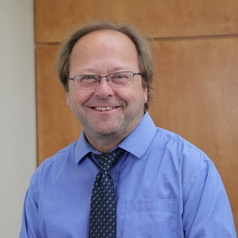
Associate Professor (Research and Development), Faculty of Business and Creative Industries, University of South Wales Chris is an Associate Professor in History. His research interests span across the fields of environmental history, imperial history, and the history of science and technology. His recent research, funded by the Arts and Humanities Research Council (AHRC), has explored the multifaceted role of imperialism across the cycle of nuclear development in Britain, from uranium extraction in Namibia and South Africa to nuclear weapons tests in Australia and the Pacific. Chris is Principal Investigator for the Office for Veterans’ Affairs project, 'An Oral History of British Nuclear Test Veterans'.
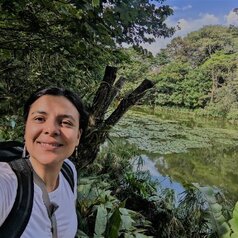
PhD Candidate, Centre for Environmental and Climate Research, Lund University I am a PhD student in Sustainable Land Use at the Centre for Environmental and Climate Research, CEC. I've been living in the Nordics since 2009. I have a BSc in Environmental Biology at Jorge Tadeo Lozano University in Bogotá (Colombia) and a MSc in Forest and Nature Management at the University of Copenhagen. After my studies, I’ve gained experience in the private and public sector in Denmark as an ecosystem services consultant at consultancy firm COWI A/S Denmark, and ecosystem service specialist at Climate-KIC Nordic. I was also Project coordinator/Research assistant at the Department of Food and Resource Economics of the University of Copenhagen. The overarching aim of my PhD study is to improve our systems' approach understanding the mechanisms behind the land use transformation. More specifically, the cumulative effects of extensive cattle ranching into tropical forests in protected areas, in order to implement effective and integrative land use planning in the northwest of Amazon region of Colombia. I am combining the systems approach with the use of Causal Loop Diagrams (CLD) together with remote sensing and GIS tools. The contribution of the study seeks to increase our knowledge to ensure pathways to reduce the alarming deforestation, create sustainable food systems and tackle the loss of biodiversity in this part of the Amazon. As part of the Agenda 2030 graduate school at Lund University my research interests within the SGDs are focused on the nexus between the competition of land for food production (i.e., livestock) and the pressure on biodiversity and ecosystem services in protected areas with tropical rainforests.
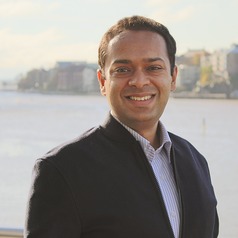
Associate professor, Lancaster University Saurabh Singhal is a Senior Lecturer in Economics. His research interests include the political economy of development, human capital development issues and experimental economics. His current projects analyse individual and household decisions related to health and education, and how these interact with political institutions and public policies. He holds a PhD in economics from the University of Southern California, and has previously worked at UNU-WIDER and the University of Delhi.
Researcher, IPIS Ken Matthysen holds a degree in political and social sciences (University of Antwerp), and obtained a Master of Conflict and Development at Ghent University. Since March 2008 he joined our research team. His focus is on natural resources and security in Central Africa.
Lecturer, University of Hull My research focuses on understanding how animals, mostly birds, but also bees, make decisions based on the information they can gather, and which cognitive abilities might support those decisions. How does the environment shape what types of information animals learn, remember, and ultimately use to solve everyday problems? How do these abilities vary between species? To study cognition in wild animals, I use two ecologically relevant behaviours: foraging and building. Both behaviours present numerous opportunities to study learning and memory of different types of cues in ecologically relevant contexts.