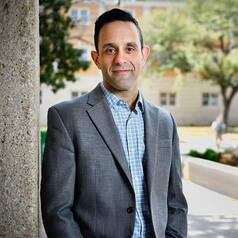
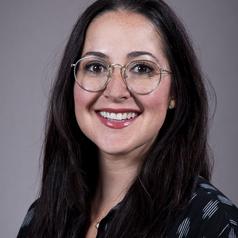
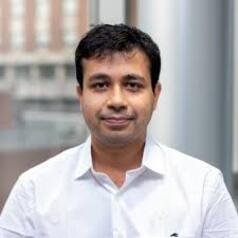
Professor of Political Science, Auburn University Mitchell Brown, Ph.D., is the Curtis O. Liles III Professor in the Department of Political Science at Auburn University and is a founding editor of the Journal of Election Administration Research & Practice. Her work as a researcher, evaluator, trainer and consultant focuses on applied projects around the country centering on election administration and community-based problem solving. She is the author of numerous books, research articles, and reports. Recent titles include How We Vote: Innovations in American Elections (with Kathleen Hale, Georgetown University Press) and the Elgar Publishing handbooks Teaching Undergraduate Political Methodology and Teaching Graduate Political Methodology (both with Shane Nordyke and Cameron Thies). From 2015-2018 she served as the Director of Auburn University PhD Program in Public Administration and Public Policy and currently co-directs the Election Administration Initiative with Kathleen Hale. She also serves as curricular faculty for the National Association of Election Officials and is a member of their board of directors. From 2016-2022 she served as the Science of Teaching & Learning section editor for the Journal of Political Science Education. Brown is the recipient of the Meredith College 2023 Career Achievement Award; 2023 Distinguished Service Award from the Political Science Education Section of the American Political Science Association; the 2021 Glenn Howze Academic Freedom Award; 2016 & 2013 SGA Outstanding Faculty Awards for the College of Liberal Arts; the 2009 Distinguished Diversity Researcher Award through the Research Initiative for the Study of Diversity under the Office of the Vice President for Research at Auburn University; an Outstanding Service Award in 1998 from the Center for Mental Health Services (SAMHSA, NIH, DHHS) for her work developing a housing fidelity instrument; among others. Brown holds and has held board and leadership positions at the university, in state government, and in non-profit organizations.
Professor of political science, University of North Texas I am a Professor of Political Science at the University of North Texas, Executive Director of the Peace Science Society (International), and the co-Director of the Social Conflict Analysis Database project. In addition, I am a Senior Fellow for Immigration Policy at the Niskanen Center in Washington, DC and an Fellow of the the John Goodwin Tower Center for Political Studies at Southern Methodist University. My research interests are diverse, but most of the time I focus on topics related to international & civil conflict, international migration, and refugee studies. My policy work centers on developing pragmatic, sensible approaches to managing forced migration. I am the author of, Rebels Without Borders: Transnational Insurgencies in World Politics (Cornell University Press, 2009). My articles appear in journals such as: the American Journal of Political Science, International Organization, International Studies Quarterly, the Journal of Conflict Resolution, the Journal of Peace Research, the Journal of Politics, and World Politics.
Assistant Professor of Public Policy, University at Albany, State University of New York Melissa studies the political economy of education policy, focusing on inequality, governance, and teacher politics and policy. She's interested in how political structures shape and get shaped by the incentives and behaviors of market actors, and conversely how economic inequalities shape the politics of education and education governance. Her current work centers around labor politics, teacher labor markets, and shifts in education governance (e.g., state takeover). Her research has been published in journals including the Journal of Human Resources (JHR), American Educational Research Journal (AERJ), Political Behavior, Education Finance and Policy, Policy Studies Journal, Educational Researcher, Economics of Education Review, Urban Affairs Review, Journal of Research of Educational Effectiveness, and Teachers College Record.
Assistant Professor of Immunology and Computational & Systems Biology, University of Pittsburgh We are a computational systems immunology lab. Our research focuses on the development and use of novel systems approaches to analyze high-dimensional immunological datasets, and elucidate molecular mechanisms of immunological disorders. Our past work has utilized systems approaches to analyze Mendelian mutations in the context of three-dimensional protein-protein interaction networks, to understand molecular mechanisms of corresponding disorders. We have also developed network analyses frameworks to characterize the evolutionary dynamics of these protein networks. Another key dimension of our past work has been the use of statistical and machine-learning approaches for the analyses of high-dimensional antibody-omic to elucidate correlates of vaccine-mediated and natural immunity in HIV, tuberculosis and malaria. We are currently working on using network systems and functional genomic approaches to perform multi-scale integration of genomic and epigenomic datasets with biological networks to identify molecular phenotypes underlying these immunological disorders, with an emphasis on autoimmune and alloimmune diseases. We also use high-dimensional statistical and machine-learning techniques to integrate multi-omic datasets (genomic, transcriptomic, proteomic, metabolomic and antibody-omic) and elucidate molecular mechanisms of immune regulation and dysregulation.
Assistant Professor of Biomedical Engineering, Georgia Institute of Technology Aniruddh Sarkar is an Assistant Professor in the Wallace H. Coulter Department of Biomedical Engineering at the Georgia Institute of Technology and Emory University where he leads the Micro/Nano Bioelectronics Lab. He was earlier a Research Fellow at the Ragon Institute of MGH, MIT and Harvard with research affiliations at Harvard Medical School and at MIT. His research has evolved around the theme of exploiting unique physical phenomena that occur at the micrometer to nanometer length scales to develop devices and systems for solving various technological problems with a special focus on applications in biology and medicine. His earlier work, with Prof. Galit Alter (MGH/HMS) and Prof. Jongyoon Han (MIT), involved the development and application of microfabricated and nanofabricated devices to further the prevention, diagnosis and therapy of infectious diseases such as Tuberculosis and HIV/AIDS. He received his Ph.D in Electrical Engineering and Computer Science with a minor in Biology at MIT, developing microfluidic tools for single-cell analysis. He received his bachelors and masters degrees, both in Electrical Engineering at IIT Bombay.
Ph.D. Candidate in Integrative Systems Biology, University of Pittsburgh My interests lie in Systems Immunology and Network Science. Currently a PhD student in Dr. Jishnu Das’ lab at the Center for Systems Immunology, University of Pittsburgh, School of Medicine.