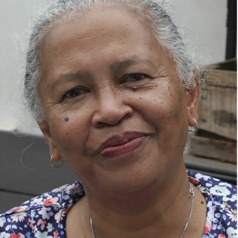
Senior Lecturer, Archaeology, University of Antananarivo, Université d’Antananarivo Chantal Radimilahy is senior lecturer in archaeology at the University of Antananarivo, and former director of the Institute of Civilizations/Museum of Art and Archaeology in Antananarivo. She holds a PhD degree from the Sorbonne University and a second PhD degree from the University of Uppsala. She has worked on ancient iron metallurgy and has undertaken archaeological research in many parts of Madagascar, including Mahilaka.
Professor in Geology, University of Bern I have worked as a geologist in many parts of Madagascar for over 25 years, leading several field-based research projects. During these visits, I became fascinated by the human settlement of the island and I have been involved in different archaeological projects for over ten years now.
Postdoctoral Research Fellow, Department of English Literary Studies, University of Cape Town Nhlanhla Dube is a native of Harare, Zimbabwe. He holds a PhD in English studies from Stellenbosch University. He is currently a postdoctoral research fellow in English literary studies at the University of Cape Town. His research interests are geocriticism, spatiality, literary Bulawayo and John Eppel. He has published peer reviewed papers on law and literature and literary pornography. You can follow him on Twitter @nhlanhladube09.
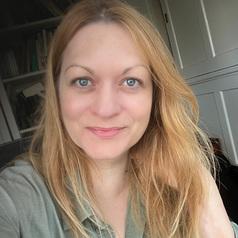
PhD Candidate, Sheffield Institute of Social Sciences, Sheffield Hallam University Jess Scott-Lewis is a Forensic Psychology PhD Researcher at Sheffield Hallam University. Her current research explores the use of knife imagery in anti-knife crime interventions and the emotional and cognitive effect on young people. Other research interests include the use of technology in education including virtual reality, and the impact of social context on life outcomes for young people.
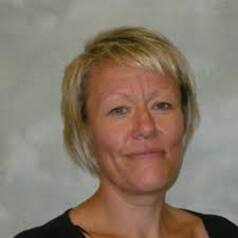
Deputy Head of the Sheffield Institute of Social Sciences, Sheffield Hallam University Dr Charlotte Coleman is a Forensic Psychologist whose main research focus is the prevention of youth violent crime, working on programmes that reduce the risk of becoming a victim or an offender. Charlotte has experience of working on both large and small evaluations using a range of methodologies. For example large scale YEF funded RCTs to reduce school exclusions and to improve familial relationships through therapeutic interventions, and small scale qualitative IPE evaluations of local domestic abuse programmes aimed at reducing controlling and coercive behaviours in young people. She has extensive experience in working with the police and other agencies, undertaking activity related to violence and youth crime/behaviour. For example, she sits on the Evidence Based Policing panel for South Yorkshire Police and is involved in ongoing research with police forces and Violence Reduction Units around anti-knife crime messaging, the impact of Covid 19 on policing domestic abuse, youth organisations around crime and reducing exploitation risk and recidivism, and working with schools to evaluate interventions designed to prevent offending behaviour. Charlotte completed her PhD in Children’s Eyewitness Testimony and therefore has theoretical and practical experience of generating reliable information from children and young people in interviews and working with vulnerable children. She also has expertise and experience in research methods and analysis, both quantitative and qualitative, and draws upon both academic and professional experience of analysing and working with data.
Professor of Molecular Medicine, UMass Chan Medical School UMass Chan Medical School researcher Victor R. Ambros, PhD, will share the 2024 Nobel Prize in Physiology or Medicine for his co-discovery of microRNA, the very short, single-stranded RNA molecules that are now understood to play a critical role in post-transcriptional gene regulation. A central figure in ribonucleic acid (RNA) biology, Dr. Ambros, the Silverman Chair in Natural Sciences and professor of molecular medicine at UMass Chan, will share the award with his longtime collaborator Gary B. Ruvkun, PhD, of Massachusetts General Hospital and Harvard Medical School. Victor Ambros did his graduate research (1976-1979) with David Baltimore at MIT, studying poliovirus genome structure and replication. He began to study the genetic pathways controlling developmental timing in the nematode C. elegans as a postdoc in H. Robert Horvitz’s lab at MIT, and continued those studies while on the faculty of Harvard (1984-1992), Dartmouth (1992-2007), and the UMass Chan Medical School (2008-present). In 1993, members of the Ambros lab identified the first microRNA, the product of lin-4, a heterochronic gene of C. elegans. Since then, the role of microRNAs in development has been a major focus of his research.