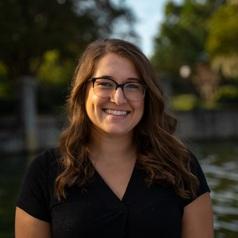
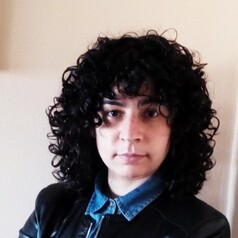
Associate Professor of Philosophy, University of Alberta Howard Nye is an Associate Professor of Philosophy at the University of Alberta. He works primarily in the areas of practical ethics, normative ethics, and metaethics, and has related interests in political philosophy, the philosophy of mind, and decision theory. One line of Howard’s current research concerns the ethics of collective action, including why individuals should contribute to projects that may do a great deal of good if enough others also contribute, and what contributions to potentially beneficial projects are most important to make. Much of his current research in this line investigates the desirability and feasibility of a just transition to a predominantly plant-based food system in Canada. Another line of Howard's research investigates challenges to the common assumption that life is less of a morally important benefit to sentient beings who lack the intellectual abilities of typical human adults. A third line of Howard's research investigates what it takes for an entity to have representations and goals in a sense that admits of genuine, underivative error and unfulfillment, with applications to the sentience and mental lives of various non-human animals, intellectually less able humans, and possible future artificial intelligence systems.
Fish Behavior and Welfare Researcher and Lab Manager, New York University Chiawen Chiang is a Fish Behavior and Welfare Researcher and Lab Manager of the WATR-lab, which uses science-based scholarship to advance animal welfare and reveal multispecies interests. She is a recent graduate with a M.A. in Animal Studies from New York University. Prior to joining the program, she was the Project Manager of Fish Welfare Initiative’s Philippines arm, where she led projects to explore and implement interventions that raise aquaculture standards for farmed fish welfare in the country. Her research focuses on highlighting the complex lives of aquatic animals, and how their welfare is impacted in aquaculture systems.
Assistant Professor of Environmental Studies, New York University Franks’s research and teaching lie at the intersection of environmental and animal protection, specializing in animal behavior, aquatic animal welfare, quantitative methods, and human-animal relationships. The core questions driving her work are: (i) How are animals affected by the Anthropocene? and (ii) How can the study of animal behavior and our understanding of animals provide valuable responses to the demands of the Anthropocene? In addition to publishing scholarly articles, commentaries, and book chapters on these topics, she had co-edited a special issue in Animal Behavior and Welfare for the journal Frontiers in Veterinary Science. Prior to joining NYU, Franks was a Killam Postdoctoral Fellow at the University of British Columbia where she was awarded the Killam Research Prize. She is an Associate Editor for the Proceedings of the Royal Society B: Biological Sciences.
Instructor in Public Health, College of Charleston Since 2018, I have been studying chemical exposures in bottlenose dolphins. Recently, I have been interested in exploring microplastic pollution in dolphins and their preferred prey.
Profesora del Departamento de Organizaciónd de Empresas. Universidad de Santiago de Compostela, España, Universidade de Santiago de Compostela Professor with Tenure at Santiago de Compostela University - Spain (Department of Business Administration), A Coruña University - Spain, and Universitát Oberta de Catalunya - Spain. Her research interests are focused on different lines of research focused all of them on corporate social responsibility, such as strategic management of human resources, innovation, technology, or natural resources management.
Profesora e investigadora de Organización de Empresas, Universidade de Santiago de Compostela Assistant Professor at Santiago de Compostela University, Spain (Department of Business Administration) and Valencia International University (Spain). Her research lines focus on corporate social responsibility, human resources management, and organizational behavior.