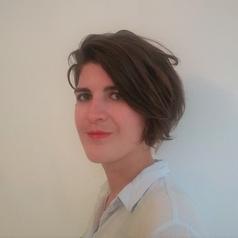
Lecturer in Law, Essex Law School, University of Essex Dr Sophie Duroy joined the University of Essex in August 2023 as a lecturer in the School of Law. Her current research focuses on the mutual influence of international law and intelligence practice on one another. Her research interests span public international law, international human rights law, intelligence and security studies, and social science approaches to international law. Prior to her appointment at Essex, Sophie held a postdoctoral fellowship at the KFG Berlin-Potsdam research group 'The International Rule of Law: Rise or Decline?' (2021-2023) and was a PhD researcher at the European University Institute (2017-2020). She has also worked as an analyst and project manager in the field of counterterrorism (2015-2017) and taught French constitutional law at Sciences Po Paris (2019 and 2020). Her first book, The Regulation of Intelligence Activities under International Law, was published by Edward Elgar Publishing in the International Law series in May 2023.
Addison Wheeler Fellow in the School of Government and International Affairs , Durham University I am an Addison Wheeler postdoctoral fellow in Government and International Affairs at the University of Durham since January 2024. My research is situated at the intersection of International Security and International Political Theory, and addresses the broad political dynamics shaping remoteness and war in global politics. My main research project engages with democratic contestation of contemporary military practices, particularly the use of military drones and military infrastructure. In addition to this project, I am currently working on a monograph titled Making War Remote, which expands on my doctoral dissertation. Furthermore, I continue to conduct research on non-state actors' use of armed drones. My full research activities can be found on my website. Prior to my current postdoctoral fellowship, I was a MINDS-SSHRC postdoctoral fellow at the University of Ottawa, Canada. I hold a PhD in Government and International Affairs from the University of Durham and an MPhil in International Political Theory from the University of St Andrews, UK. Research interests International security; war studies; remote warfare; military drones; Carl Schmitt; Visual Investigations; Democracy and War Publications Book review Archambault, E. (2020). Book review: Rise and kill first. https://doi.org/10.15664/jtr.1506 Archambault, E. (2019). Imperialism and the Making of Armies. International Studies Review, 21(3), 542-543. https://doi.org/10.1093/isr/viz035 Archambault, E. (2019). Book review: Death machines: the ethics of violent technologies. International Affairs, 95(2), 470-472. https://doi.org/10.1093/ia/iiz024 Chapter in book Archambault, E., & Veilleux-Lepage, Y. (2024). The Islamic State's Drone Innovation. In J. P. Rogers (Ed.), De Gruyter Handbook of Drone Warfare (243-254). De Gruyter. https://doi.org/10.1515/9783110742039-017 Archambault, E., & Veilleux-Lepage, Y. (2019). The Soldiers of Odin in Canada: The failure of a transnational ideology. In T. Bjørgo, & M. Mareš (Eds.), Vigilantism against Migrants and Minorities (272-285). Routledge. https://doi.org/10.4324/9780429485619 Doctoral Thesis Archambault, E. (2021). Making Drone Violence Strategic: A Conceptual Genealogy of Remote Warfare. (Thesis). University of Durham. https://durham-repository.worktribe.com/output/2292011 Journal Article Archambault, E. (2020). A good guy with a drone: On the ethics of drone warfare. Contemporary Political Theory, 19(S3), 169-175. https://doi.org/10.1057/s41296-019-00328-w Veilleux-Lepage, Y., & Archambault, E. (2020). Drone imagery in Islamic State propaganda: flying like a state. International Affairs, 96(4), 955-973. https://doi.org/10.1093/ia/iiaa014 Veilleux-Lepage, Y., & Archambault, E. (2019). Mapping Transnational Extremist Networks: An Exploratory Study of the Soldiers of Odin’s Facebook Network, Using Integrated Social Network Analysis Archambault, E. (2018). Targeted Killing, Technologies of Violence, and Society. Millennium: Journal of International Studies, 47(1), 142-152. https://doi.org/10.1177/0305829818779124
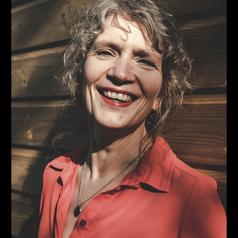
Associate Professor, Public Health Dietetics, University of Plymouth Clare Pettinger is an award winning Registered Dietitian, Public Health Nutritionist and experienced educator, who is actively engaged in community-focussed research around food systems, poverty and social justice. She is passionate about radical creative approaches to tackle local (and global) health, (in)equality and social well-being challenges.
Research Fellow & Lab Head in Medicinal Chemistry, Monash Institute of Pharmaceutical Sciences, Monash University I started my career with an apprenticeship as a chemical lab technician at Ciba Specialty Chemicals. After a few years working in industry, I then obtained a Bachelors and Masters in Chemistry from the University of Applied Sciences Northwestern Switzerland and the University of Basel, respectively. While being interested and trained as an organic chemist, I have always been extremely passionate about the application of chemistry within the health sciences. Therefore, for my PhD I have specialised in Medicinal Chemistry as I want my research to contribute to improving health within our society. Currently. I am a Monash-Newcastle University research fellow and lab-head in the Medicinal Chemistry Theme at the Monash Institute of Pharmaceutical Sciences. My research interests are in the development of chemical probes and small molecule drugs.
Senior Lecturer and Group Leader, Drug Discovery Biology, Monash Institute of Pharmaceutical Sciences, Monash University Dr May leads the Cardiac GPCR Biology laboratory at Monash Institute of Pharmaceutical Sciences (MIPS), Monash University. Dr May uses her molecular pharmacology expertise to apply new and innovative drug discovery approaches to facilitate the development of safe and effective therapeutics. She employs multidisciplinary methods to achieve these research goals, including artificial intelligence, computational biology, and molecular and analytical pharmacology. Dr. May has secured significant competitive funding, which has led to impactful publications in Nature, Cell, Nature Machine Intelligence, Nature Communications, and Proc. Natl. Acad. Sci. USA. Dr May is committed to improving health outcomes as advisory member for the Australian Cardiovascular Alliance Drug Discovery Flagship and inaugural Chair of the Monash Institute of Pharmaceutical Sciences Climate Health Initiative. Dr May is an advocate for diversity in science, co-founder and past chair of Her Research Matters (2021 Monash University Vice-Chancellor’s Award for Excellence in Diversity and Inclusion) and a member of the 2019 International Women’s Forum (IWFA) Emerging Leaders Cohort.
Postdoctoral research fellow, University of Potsdam Dr. Alexander Araya López was a Marie Skłodowska-Curie Postdoctoral Fellow for the PROTEST-AIRT project at the University of Potsdam, which explored social movements campaigning for air transport degrowth in Europe. In 2018, Dr Araya López was awarded his first Marie Skłodowska-Curie Fellowship for the project RIGHTS UP, which was hosted at Ca' Foscari, University of Venice. The RIGHTS UP project explored the emergence of social movements critical of mass tourism in three European cities, namely Venice, Amsterdam and Barcelona. Dr Araya López has also worked as an invited postdoctoral researcher at La Sorbonne Paris 3, Institut des Hautes Etudes de l'Amérique Latine (IHEAL), where he studied the media discourses about the opposition against Daniel Ortega's government in Nicaragua. He concluded both his Bachelor and Licentiate degrees at the Universidad de Costa Rica, where he taught Sociology of Media and Communication. He obtained his Ph.D at the Lateinamerika-Institut, Freie Universität Berlin in 2014. His doctoral thesis focused on media discourses about graffiti practices in Brazil and Costa Rica. He has extensive expertise on social movements, urban dissent and cross-comparative analysis both within Europe and in Latin America. His research interests include contemporary discussions on protest, radical politics, civil/democratic disobedience and media representations of acts of dissent.