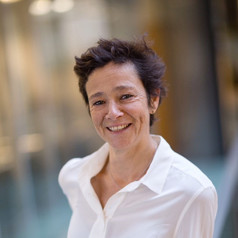
Directrice Carrières et NewGen Talent Centre, EDHEC Business School Manuelle Malot est Directrice Carrières et Prospective de l'EDHEC Business School depuis plus de 20 ans. Spécialiste de l'insertion professionnelle, elle réalise des bilans et diagnostics de compétences auprès de jeunes diplômés et cadres dirigeant, conseille et accompagne les entreprises dans leur politique de recrutement, de fidélisation et d’engagement. Elle a fondé en 2012 le NewGen Talent Centre, centre d’expertise sur les motivations, comportements et compétences des nouvelles générations. Elle est l’expert des graduate programmes d’entreprise en France sur lesquels elle a publié plusieurs études, articles et ouvrages et anime des conférences en France et à l’étranger. Manuelle Malot est diplômée de l'EDHEC et d’un 3ème cycle du CELSA Université Paris IV Sorbonne en sciences de l'information et de la communication. Elle contribue régulièrement en tant qu’expert carrière sur plusieurs supports.
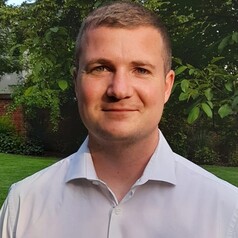
Postdoctoral Researcher, Psychology, University of Greenwich Linus Peitz works as a postdoctoral research associate at the University of Greenwich and at the University of Kent on various projects investigating social and psychological mechanisms related to criminal behaviour and reoffending. He received his PhD in social psychology from the University of Kent in 2021 and has previously worked as a postdoctoral researcher in the Faculty of Psychology at the Philipps University Marburg and the School of Anthropology and Conservation at the University of Kent. Linus’ research focuses on the impact of groups and how they contribute to peoples’ attitudes and behaviours in different social, professional and political contexts.
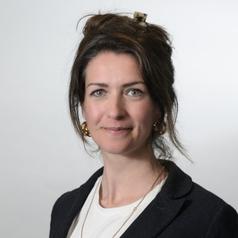
Associate Professor in Psychology, University of Greenwich Martha Newson joined Greenwich in 2023 as Associate Professor in Psychology. Though working with modern human populations, Martha’s research is strongly informed by evolutionary theory. Her highly inter-disciplinary research draws from anthropology, psychology, evolutionary theory and criminology, so she has connections across academic disciplines. Her research and consultancy practice is guided by the themes of social cohesion, ritual, and belonging. Her primary focus is on the rituals underlying social cohesion and the ensuing cooperation and conflict emerging from tightly bonded groups. Dr Newson has worked with a range of challenging populations, from fundamentalist Indonesian Muslims to London’s ravers. She has particular experience working with football fans, including surveys and interviews with hardcore Brazilian, Indonesian and Australian fans (ultras) and collecting hormonal samples from fans at live World Cup events. She gained a BSc in Human Sciences from the University of Sussex then taught English in Vietnam and Spain, before completing her postgraduate studies at the University of Oxford in Cognitive and Evolutionary Anthropology. She remains a Research Affiliate at the University of Oxford (Centre for the Study of Social Cohesion). Dr Newson provides consultancy and commentary on issues related to group psychology, belonging, conflict, and cooperation. This concerns human behaviour and evolutionary psychology in general terms, and with regard to football fandom specifically. Previous consultancy clients include Guinness, the Premier League, Manchester City and Hyundai among others. Martha has contributed to Discovery’s Why We Hate, produced by Steven Spielberg, as well as numerous BBC and Sky TV features in the UK, such as BBC News and Sky News, alongside a number of radio shows including Radio 4’s World at One and PM programmes. Her research has also featured in The Guardian, The Telegraph, The Independent, International Business Times, The Daily Mail, The Sun, Haaratz, Der Spiegel and many others.
Professor in Development Geography, University of Gothenburg Kanchana N Ruwanpura is a Professor of Development Geography at the Human Geography Unit, University of Gothenburg, Sweden and a Fellow at the Centre for South Asian Studies (CSAS), University of Edinburgh, Scotland. Her PhD in Development Studies is from Newnham College, University of Cambridge. She has worked at the Edinburgh, Southampton, Hobart & William Smith Colleges, the University of Munich and the International Labor Office (Geneva). Kanchana’s recent research explores themes around debt justice, the political economy of debt and feminist politics, with generous funding from the Bromanska and Adlerbertska Foundations and the University of Gothenburg. She came to this research through involvement in debt justice activism for Sri Lanka, which has resulted in a voluntary and virtual initiative called the Institute of Political Economy, Sri Lanka (https://ipe-sl.org) Previously, she has broadly worked on themes around feminism, labour practices, ethical trade, infrastructural politics and ethnicity in South Asia. Her research has been funded by the AAUW, ESRC, the ERC and the British Academy, amongst others. Her research has been published in peer-reviewed journals, edited volumes, edited books and as research monographs published by Michigan University Press and Cambridge University Press. She served as editor for the journals Gender, Place and Culture and Geoforum and is on the Editorial Boards of Feminist Economics, Contemporary South Asia, Gender, Place and Culture and Environment and Planning A. During 2019-20, she was awarded fellowships by the Humboldt Foundation, Max Weber Stiftung (declined) and France-ILO Chair at IAS-Nantes (France), where she finalised her last book, Garments without Guilt? Global Labour Justice and Ethical Codes in Sri Lankan Apparels published by Cambridge University Press. She recently completed and co-edited (with Amjad Saleem) the Routledge Handbook of Contemporary Sri Lanka (2025), which is published open access.
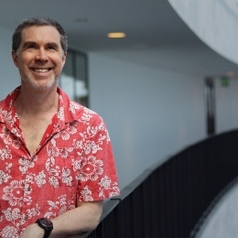
Associate Professor of Astrophysics, Stockholm University My research is focused on the origin and evolution of galaxies, where I am concerned with how galaxies are assembled in the early universe and evolve to become the population of galaxies we see at the present day. Aside from being interested in galaxy surveys, I typically say I have the following overlapping main interests: The reionization process and the sources that drove it. The infering the neutral fraction of the intergalactic medium, understanding the properties of the first galaxies, Lyman alpha emission, the escape of ionizing radiation, etc. The circumgalactic medium. What are the thermodynamic properties of 'galactic atmospheres'? Can we map CGM gas in emission, measure its thermal state, figure out where the metals are, etc. Stellar feedback and galaxy winds. How does energy returned by massive stars interact with the ambient material in the galaxy? How are winds launched and accelerated, and what influence does this have on galaxy conditions and the future of star formation. The formation of the first black holes. Were the first black holes formed by direct collapse, popullation III star formation, or other processes? How can surveys of massive black holes in the early universe inform this? Star formation histories and stellar modeling. How can we infer the star formation history of galaxies using spatially resolve high resolution imaging and large wavelength baseline spectroscopy from multiple telescopes. Nebular diagnostics. How can we infer the properties of warm gas in and around galaxies, and how reliable are these measurements? My approach to answering these questions is mostly observational. I use mainly the James Webb Space Telescope, Hubble Space Telescope, and the European Southern Observatory, although we use any telescope that can provide unique measurements.
Group Leader Population Genetics, Max Planck Institute for Evolutionary Anthropology I am group leader for population genetics at the Department for Archaeogenetics of the Max Planck Institute for Evolutionary Anthropology in Leipzig, Germany. My group investigates human history by means of Genetics, and develops computational methods to model and analyse ancient and modern genomic data.