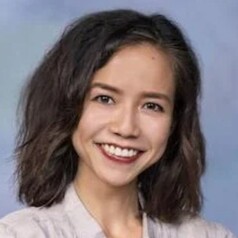
Research Scientist in Urban-Environmental Sociology, Rice University Phylicia Lee Brown received her Ph.D. and M.A. from Rice University, with a specialization in Urban-Environmental Sociology. Her work as a spatial-quantitative scholar broadly focuses on the social production of environmental inequalities, particularly as they pertain to the intersection of toxic industrial hazards and climate change impacts. Her current research also investigates the social inequities that arise from the Federal Flood Buyout Program. Phylicia is also currently a board member at Appalachian Voices, a regional environmental and economic justice nonprofit.
Professor of Anthropology, Rice University Dominic Boyer is an anthropologist, media maker and environmental researcher who teaches at Rice University where he served as Founding Director of the Center for Energy and Environmental Research in the Human Sciences (2013-2019). His most recent books are Energopolitics (Duke UP, 2019), which analyzes the politics of wind power development in Southern Mexico and Hyposubjects (Open Humanities Press, 2021), an experimental collaboration with Timothy Morton concerning politics in the Anthropocene. With Cymene Howe, he made a documentary film about Iceland’s first major glacier (Okjökull) lost to climate change, Not Ok: a little movie about a small glacier at the end of the world (2018). In August 2019, together with Icelandic collaborators they installed a memorial to Okjökull’s passing, an event that attracted media attention from around the world and which caused The Economist to create their first-ever obituary for a non-human. During 2021-22 he held an artist residency at The Factory in Djúpavík, Iceland, and was a USC-Berggruen Institute Fellow in Los Angeles working on a project on “Electric Futures.” His next book is titled No More Fossils (U Minnesota Press, 2023) a discussion of fossil fuel fossils and what is to be done about them.
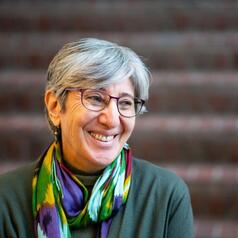
Senior Fellow, The Fletcher School, Tufts University As a girl and a member of Afghanistan’s Hazara minority, Sima Samar was not born to power. Even so, she rose to an unprecedented level of influence. A Nobel Peace Prize nominee, she sat on advisory panels to the United Nations secretary-general and became Afghanistan’s first minister of women’s affairs and deputy prime minister of the Afghanistan Interim Administration in December 2001. She chaired the Afghanistan Independent Human Rights Commission from 2002 to 2019. That couldn’t happen since the Taliban’s return to power in 2021, she believes. “Growing up in Afghanistan, as a girl, I have to say that it was much better than it is today,” said Samar, a visiting fellow at The Fletcher School and a Tufts Scholar at Risk. Today the Taliban, which retook control of Afghanistan in August 2021 as U.S. and other international forces withdrew, has outlawed girls from attending school beyond sixth grade. The women employees of Shuhada, a network of hospitals and schools Samar founded, also face restrictions. Instructors have been asked to teach from home. Many women in medicine are allowed to keep practicing, due to the sensitivities of treating female patients, but “they are very, very careful,” said Samar, who started her career as a medical doctor. “They dress the way they’re supposed to. They used to work long after dark, but now that’s not the case,” she said. “They’re not doing anything to give anyone a reason to cause a problem.” For Samar, who once in addition to chairing the Afghanistan Human Rights Commission also headed the Commission on the Prevention of Torture, current conditions represent a painful break from more promising times. She was in the U.S. in August 2021, when the Taliban retook control of Afghanistan for the first time in nearly 20 years. She had arrived in America that June with a coast-to-coast itinerary of visits to family she hadn’t seen during the height of COVID.
Clinical Assistant Professor in Speech, Language, and Hearing Sciences, Purdue University Jillian Hubertz, Au.D., CCC-A is a Clinical Assistant Professor in the Department of Speech, Language, Hearing Sciences at Purdue University. She provides clinical education to students, including diagnostic and intervention services from infancy throughout adulthood in the M.D. Steer Audiology Clinic. She also teaches a graduate level diagnostics course. Special interests include early intervention, implantable devices, and interprofessional education and collaboration.
PhD Candidate, Center for Policy Research on Energy and the Environment, Princeton University Natalie Sum Yue Chung is a Ph.D. candidate in Science, Technology, and Environmental Policy at the Princeton School of Public and International Affairs, jointly supervised by Michael Oppenheimer and Eric Tate. Inspired by a polar explorer at the age of 11, Natalie has dedicated her life to climate action. She is the co-founder of V'air Sustainability Education, a social enterprise that provides nature-based climate change education for schools and corporations, reaching over 2 million population. Natalie is recognized by Eco-Business and The Japan Times as one of the most impactful sustainability leaders in Asia Pacific. Natalie's professional experience with the World Bank on a Pacific Island environmental project led her to realize the life-and-death consequences of extreme weather for vulnerable communities, sparking her research interest in climate resilience (Link: TEDx Talk on Building Cities’ Climate Resilience. Natalie aims to develop an evaluation model that integrates scientific and human elements to support nature-based adaptation. Her ultimate goal is to bridge the gap between academia and policy by advocating for increased investments in Nature-based Solutions (NbS) and promoting community engagement to achieve transformative adaptation. In recognition of her climate research and advocacy efforts, Natalie has been appointed by the Hong Kong government as a member of the Council for Carbon Neutrality and Sustainable Development, the Green Tech Fund Assessment Committee, and the Country and Marine Parks Board to advise on policy decisions. As a World Economic Forum Global Shaper, Natalie initiated the Lead for Sustainability Mentorship program. She also served as the sole Hong Kong representative at the Dr Sylvia Earle Antarctic Climate Expedition, advocating for tackling the ocean-climate crisis. Natalie holds an MPhil in Environmental Change and Management from Oxford University and a BSSc in Geography and Resource Management from The Chinese University of Hong Kong. In her spare time, she enjoys playing the clarinet, Chinese painting, and hiking.
PhD student, Molly Wardaguga Institute for First Nations Birth Rights, Faculty of Health, Charles Darwin University Clinical Research Coordinator, Royal Flying Doctor Service of Australia, Public Health Research Unit, Federation Office, Canberra. Clinical Nurse – Clinical Research Coordinator (NICU + trauma), Townsville Institute of Health Research and Innovation (TIHRI), Townsville Hospital and Health Service, Queensland Health. PhD student, Molly Wardaguga Institute for First Nations Birth Rights, Faculty of Health, Charles Darwin University. Registered Nurse, Registered Midwife and clinical background in critical care and aeromedical retrieval.