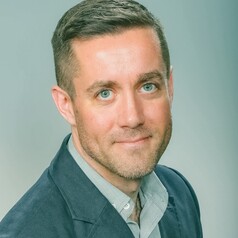
Associate Professor and Director, Doctoral Program in Urban Planning and Public Policy, Rutgers University Dr. Michael Smart is an associate professor at the Edward J. Bloustein School of Planning and Public Policy at Rutgers. His research interests include the influence of social and spatial phenomena on individuals’ transportation decisions, with a particular interest in built-environment effects on alternative modes of travel, such as biking and walking. Dr. Smart’s current research explores the ways in which social networks embedded in particular neighborhoods of affinity—such as immigrant neighborhoods and gay and lesbian neighborhoods—influence the activity patterns of those who live in those neighborhoods. His work has examined the extent to which immigrant neighborhoods across the country function as “cities-within-cities,” and developed novel techniques for describing the inward- or outward-focus of neighborhoods. He received his PhD from the Department of Urban Planning at UCLA in 2011, as well as a Master’s degree in planning from the University of Pennsylvania in 2006 and a Bachelor’s degree in German from Yale in 2000.
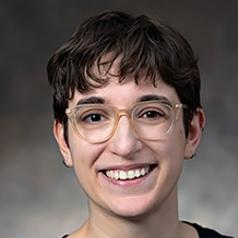
Assistant Professor of Communication Studies, American University School of Communication Dr. Chelsea Butkowski is an Assistant Professor of Data, Media & Identity in American University's School of Communication. Their research examines the relationship between media technologies and identity, including the social practices and effects of everyday social media use. Butkowski's research interests include feminist and queer media studies, platforms and algorithms, visual cultures, and political communication. Recent work has involved analyses of digital popular culture during U.S. elections and legacies of gender stereotyping in selfies. They are currently undertaking a multi-year study of social media and identity during the COVID-19 pandemic. Butkowski draws from a background in art history, material culture, and museum studies to situate contemporary digital and visual media within wider historical contexts of communication practice. They also specialize in social scientific media research methods, including content analysis and in-depth interviewing. Butkowski's research has been recognized with support from major funding organizations and awards at national and international conferences. Their work can also be found in a number of leading communication journals, including New Media & Society; Social Media + Society; Journal of Computer-Mediated Communication; Communication, Culture & Critique; and Feminist Media Studies. Butkowski is also affiliated with the UNC Center on Information Technology and Public Life (CITAP) and the UPenn Center on Digital Culture & Society (CDCS).
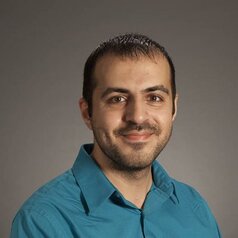
Professor of Nuclear Engineering & Radiological Sciences, University of Michigan Todd began his professional career as a submarine officer in the U.S. Navy where he learned the practical applications of operating a nuclear power plant as well as how to take a submarine to periscope depth. Following active duty, he built on that practical Navy experience by earning a Ph.D. in nuclear engineering with specific focus on how radiation changes the physical properties of metals. His first post-Ph.D. position was as a staff scientist at Argonne National Laboratory. While at Argonne, he joined the leadership team tasked with developing the Generation IV Roadmap, the document that framed the resurgence of the nuclear research programs early in the 21st Century. Following Argonne, he joined the faculty at the University of Wisconsin. While there, he split his time between establishing a premier material science program at the university and supporting the Idaho National Laboratory. At INL, he led the transition of the Advanced Test Reactor into a national user facility, creating a unique distributed network of national research facilities working together to support novel research ideas brought by universities and private industry. He also ran a six-institution Energy Frontier Research Center focused on answering fundamental questions about heat transfer in nuclear fuel. From 2013-2016, he helped lead the Idaho National Laboratory as the Deputy Laboratory Director for Science & Technology, including being an important contributor to the development of the Gateway for Accelerated Innovation in Nuclear (GAIN) initiative announced at the White House in November 2015. He is the author of over 200 technical publications, many of which are readable. Todd has degrees in nuclear engineering and management information systems. He is a native of Michigan and tries very hard to find ways to watch baseball. His best summer ever (2016) was 64 different stadiums across the U.S.
Postdoctoral Fellow in American Culture Studies, Arts & Sciences at Washington University in St. Louis Giang Nguyen-Dien's book project examines explores the afterlives of the Vietnam War through emotional textures of refugee experiences. Situated in a larger scholarship of the haunting of U.S. militarism in Asia-Pacific and the affective afterlives of the Cold War politics, this project emphasizes how the history of empire-building, nation-building, and war-making is also a history of affective cultivation. Through refugee feelings, this work seeks to imagine a new politics of affective decolonization that rests on shared compassions for the ghosts of those who died unjust deaths across multiple geographies of violence.
Assistant Professor of Electrical & Computer Engineering, University at Albany, State University of New York Mustafa Aksoy joined the faculty of the Department of Electrical and Computer Engineering in Fall 2017. Dr. Aksoy received his Ph.D. in Electrical and Computer Engineering in 2015 from the Ohio State University, where he worked as a graduate research associate at the ElectroScience Laboratory. Prior to joining the University at Albany, Dr. Aksoy was a post-doctoral research associate at the University of Maryland Baltimore County and NASA Goddard Space Flight Center. His research interests include microwave passive remote sensing of Earth and Space and electromagnetic theory. Dr. Aksoy has been the sole-investigator of several projects supported by NASA, NSF and ORAU, published more than 60 peer-reviewed journal and conference articles, and received NSF Faculty Early Career Development Program, NASA Space Technology Mission Directorate Early Career Faculty, NASA Robert H. Goddard Exceptional Achievement for Engineering, and ORAU Ralph E. Powe Junior Faculty Enhancement awards. Dr. Aksoy is a senior member of the Institute of Electrical and Electronics Engineers (IEEE), the IEEE Geoscience and Remote Sensing Society (GRSS), and the IEEE Geoscience and Remote Sensing Society’s Frequency Allocations in Remote Sensing (FARS) Committee.