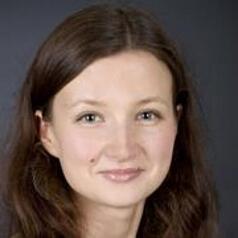
Research Fellow, School of Public Health, University of Adelaide Dr Olga Anikeeva is a Research Fellow in the Environment and Health Research Group within the School of Public Health. She has a research and teaching background in epidemiology and public health, with experience in both quantitative and qualitative research methods. Her research interests include the impacts of extreme heat and climate change on health and wellbeing, particularly among vulnerable populations, such as outdoor workers, culturally and linguistically diverse communities and older individuals.
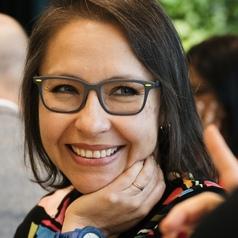
Doctoral Candidate, School of Health, Te Herenga Waka — Victoria University of Wellington Roya is a research doctoral candidate in the School of Health, focusing on the impact of teleworking and hybrid working models as emerging work norms. Roya's research aims to understand and analyse the hybrid model, exploring its effects on workers, work processes, and workplaces. Roya’s research intends to shed light on the implications of teleworking/hybrid working model and offer insights for organisations and individuals navigating this evolving work landscape.
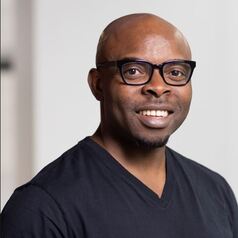
PhD Candidate in Economics and Business Administration, University of Vaasa MacDonald is a Doctoral Degree (PhD) Candidate in Economics and Business Administration at the University of Vaasa, Finland. His qualifications include an M.A. in Education Management and a Bachelor of Arts in English Language. He also holds certificates in Business Analysis and Project Management. He is currently the Director of Corporate Training and Workforce Development at the Department of Continuing Education, University of Calgary.
Associate Professor, Department of Surgery and Faculty of Education; Scientist, Centre for Education Research & Innovation, Western University My research program investigates how action teams navigate and respond to disruptive events. My goal is to show how best to support training and practice for resilient teaming. To this end, I developed a unique research approach that cross-pollinates qualitative research, sociobiology, and engineering principles with insights from various industries, including healthcare, tactical/military, and emergency response. I am currently interested in understanding how community volunteer initiatives could augment emergency management in Canada, if we are to attain "whole-of-society resilience". As an author and with my research, I am hoping to contribute to the recent discussion around Canada's approach to emergency management that is taking place in The Conversation.
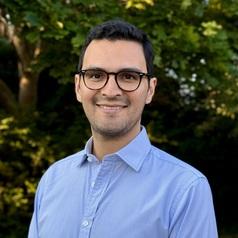
Associate Professor of Materials, University of Oxford Sebastian is an engineer and researcher with a background in Electrical and Electronics Engineering from Universidad de los Andes, Colombia. His career includes internships at CERN and Asylum Research, an MPhil in Micro and Nanotechnology from the University of Cambridge, and a Doctorate in Materials Science at Oxford, focusing on silicon solar cell technology. Postdoctoral work, supported by fellowships like the EPSRC and the Royal Academy of Engineering, contributed to the field of silicon photovoltaics. His research on nanolayer electronic materials has impacted solar cell efficiency globally. As an Associate Professor of Materials at Oxford, with a Tutorial Fellowship at St Anne's College, Sebastian works on electronic interface materials for solar photovoltaic and optoelectronic devices. He leads the Interface and Electronic Materials Laboratory, securing over £4.8m in funding for research that links academic and industrial applications. His work, recognized for its impact, has been featured in journals and PV-Magazine.com and earned the Philip Leverhulme Prize in Engineering. As a Europe Fellow at the International Strategy Forum by Schmidt Futures, Sebastian contributes to discussions on sustainable energy and technology. https://interface.materials.ox.ac.uk/
Senior Lecturer, School of Environmental Sciences, University of Hull Dr Hopkins is a Senior Lecturer in Marine Conservation at the University of Hull. Trained in Conservation Science, she has a broad interest in wildlife conservation, with a particular focus on the marine environment. She is particularly interested in understanding human perceptions of nature and wildlife and how these can be incorporated into conservation, wildlife management and sustainable use. Her current research aims to understand how we can better protect and restore ecosystems as part of the REWILD research cluster. Dr Hopkins leads the Ocean Literacy research cluster at the University of Hull and is a core member of the British Ecological Society English Policy Group.