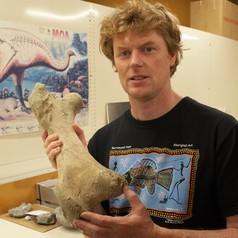
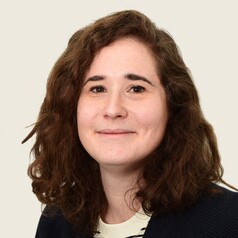
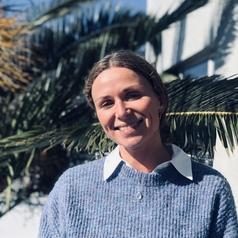
Curator of Vertebrates, Museum of New Zealand Te Papa Tongarewa My thesis research was on petrel (seabird) ecology on the Chatham Islands. I have since worked for Ecology Division DSIR/Landcare research radio-tracking kereru, The Forest & Bird Protection Society as a marine campaigner, the Department of Conservation in the head office Threatened Species Unit, as an Antarctic tour guide, and at the Museum of New Zealand Te Papa Tongarewa as the Birds Collection Manager, the Curator of Vertebrate Palaeontology and currently as a Vertebrate Curator.
Lecturer: Nematology; Entomopathogenic Nematodes and Fungi, Stellenbosch University DR Nomakholwa Stokwe Lecturer: Stellenbosch University • Dr Stokwe has over 14 years of experience in Entomology research. She completed her BSc (Entomology & Biochemistry) and BSc Honours (Entomology) at the University of Fort Hare and later an MSc (Entomology) and a PhD (Agricultural Entomology) at Stellenbosch University. • She worked for the Agricultural Research Council as a project leader and researcher focusing on integrated pest management. She was responsible for managing research projects on Integrated Pest Management; compiling project proposals for new funding; planning and undertaking research projects; supervising post graduate students; providing leadership to research technicians; managing project budgets; publishing research outputs in peer - reviewed journals, semi scientific publications and technical reports. • She is currently a lecturer and Researcher at Stellenbosch University, championing research on integrated pest management. She lectures a Nematology course and supervises postgraduate students. She is also very passionate about skills development and mentorship in the field of entomology. • Her research interests include the use of entomopathogenic nematodes and fungi to control insect pests (biological control); management of plant parasitic nematodes.
Research entomologist, Department of Conservation Ecology and Entomology, Stellenbosch University I am a research entomologist, and my research focus is on the biological control of economically important insect pests in agroecosystems using entomopathogenic fungi and nematodes. I have three degrees from Stellenbosch University: BSc in conservation ecology (2016), MSc in entomology (2019) and PhD in entomology (2021). I also did postdoctoral studies in agriculture (entomology) at Stellenbosch University in 2022.
Lecturer, University of Cape Town I am the deputy head of department and a lecturer in the Department of Knowledge and Information Stewardship in the Humanities Faculty at the University of Cape Town, South Africa. I hold a PhD in library and information studies from the University of Cape Town. I am an emerging scholar in the area of research impact assessment, focusing on the development of a more holistic framework for such assessment that is relevant to transformative and decolonising contexts.
Marie Curie Postdoctoral Fellow, University College Cork Jessica Wax-Edwards is a Marie Skłodowska-Curie Action Postdoctoral Fellow at the University College Cork. Previously an Honorary Research Fellow at Royal Holloway University of London, her research interests include memory, violence and politics in twentieth century and contemporary Mexican visual culture. She has published articles on Latin American fiction and documentary cinema, graphic art and photography and her first monograph Documenting Violence in Calderón’s Mexico: Visual Culture, Resistance and Memorialisation was published 2023. Jessica was also a selected participant in the 8-month AHRC-funded mentorship scheme Doing Women’s (Global) (Horror) Film History (DWGHFH); her resulting short film Storylines___ was published 2024.
Ocean Nexus Postdoctoral Research Fellow, Institute for Coastal and Marine Research, Nelson Mandela University Mia Strand is an Nippon Foundation Ocean Nexus Postdoctoral Research Fellow at Nelson Mandela University, who’s research centres around socio-cultural and equity dimensions of ocean governance and conservation. Her research has largely explored the value of arts-based participatory research for more inclusive and equitable ocean governance in South Africa, specifically emphasising the need to better recognise Indigenous and local knowledge systems in decision-making processes