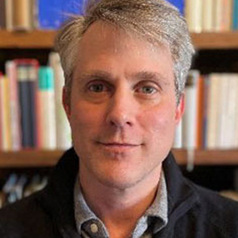
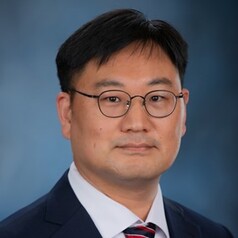
Lecturer in Sport Sociology , University of Lincoln Dr Lesley Sharpe is a lecturer in Sport Sociology in the School of Psychology Sport Science and Wellbeing at the University of Lincoln (UK). Lesley completed her undergraduate studies in Special and Inclusive Education and Sport Education at Nottingham Trent University in 2017. Then in 2021 was awarded her PhD in Inclusive Physical Education and School Sport from Loughborough University. Lesley's research is focussed on the experiences of disabled and other marginalised young people in PE and school sport and utilises qualitative participatory and creative research to engage young people in the research process. Lesley is also a self taught illustrator and has hybrid research and illustration projects for the Youth Sport Trust, Street Games, Acess Sport, FIBA, All England Lawn Tennis and Croquet Club, The Peter Harisson Centre at Loughborough University and Leeds Beckett University.
Professor of German, University of Tennessee Daniel H. Magilow is Lindsay Young Professor of German as well as an affiliated faculty member with the Fern and Manfred Steinfeld Program in Jewish Studies, the Cinema Studies Program, and the Department of History. He earned his BA in Comparative Literature from Columbia University and his MA and PhD in German from Princeton University. With Helene Sinnreich, Dr. Magilow serves Co-Editor-in-Chief of Holocaust and Genocide Studies. He serves on the Academic Council of the Holocaust Educational Foundation of Northwestern University and the Academic Committee of the United States Holocaust Memorial Museum, where he was the Pearl Resnick Postdoctoral Fellow in 2005-2006.
Associate Professor of Communication and Journalism, Auburn University Myoung-Gi Chon, Ph.D., serves as an associate professor and the graduate program officer (GPO) in the School of Communication and Journalism at Auburn University. He holds the position of associated editor at Asian Journal of Public Relations (AJPR). Previously, he was a co-advisor for the Public Relations Student Society of America (PRSSA), and since 2019, he has been an advisor for the Korean Student Association (KSA) at Auburn University. Moreover, he actively contributes as one of the board members of Korea Corner, an organization dedicated to fostering mutual understanding and bridging the gap between the Korean community and non-Korean communities. Chon's primary research interests center around risk-crisis management, health communication, and science communication, particularly concerning infectious diseases and environmental issues. His research has evolved to explore communicative behaviors of the public, addressing social and political challenges in the digital age. Throughout his academic journey, Dr. Chon, along with co-authors, has contributed to the development of various measurements, including social media activism, issues-crisis principles (RAPIDS) and allegiant communication behavior (ACB). Recently, he has extended his research interests to include the application of public relations theories in public diplomacy. Moreover, as a committee member in Auburn University's AI@AU initiative, his ongoing research centers on applying AI in public relations education and addressing health-science communication issues.
Senior Technical Lead of Bioinformatics, Irell & Manella Graduate School of Biological Sciences at City of Hope Alexander Pozhitkov, Ph.D., graduated from the Moscow State University with an M. Sc. in chemistry and molecular biology in 1998. His master’s thesis was on the detection of microorganisms by biochips using 16S rRNA. In 2003, Alexander earned his doctorate degree from the Albertus Magnus University of Cologne (Germany), focusing on the physical chemistry of immobilized DNA oligonucleotides for the purpose of detection and quantification of specific RNA targets. He also conducted postdoctoral research at the University of Washington (Seattle), studying the interaction between microorganisms and implant materials. In Prof. Pichiorri’s lab, Dr. Pozhitkov has established and been maintaining the informatic infrastructure for the ongoing clinical trials. Also, he has been developing atomic force microscopy protocols to investigate cellular micromechanics.
Affiliate Professor of Microbiology, University of Washington As a seasoned scientist, serving as a Principal Investigator and Full Professor, I bring a comprehensive interdisciplinary expertise encompassing critical thinking, problem-solving, innovative discoveries, scientist training, and adept leadership in collaborative endeavors.
Assistant Professor of Medicine, University of Pennsylvania Margaret (Maggie) Lowenstein, MD, MPhil, MSHP is a general internist, addiction medicine physician, and an Assistant Professor of Medicine at the Perelman School of Medicine. Dr. Lowenstein’s research focuses on novel strategies for implementing evidence-based treatment and harm reduction interventions for opioid and other substance use disorders. She is interested in the delivery of substance use care in general medical settings as well as developing and studying low-barrier treatment models for substance use disorder. Dr. Lowenstein also co-chairs the Opioid Use Disorder Workgroup of the Penn Medicine Opioid Task Force and collaborates with partners in Philadelphia to disseminate best practices for opioid use disorder care. She currently practices integrated addiction medicine and primary care at the University of Pennsylvania and attends on Penn’s inpatient addiction medicine consult service. Dr. Lowenstein received her undergraduate degree at Williams College, a Master’s degree in Biology and Biological Anthropology at the University of Cambridge as a Herchel Smith Fellow, and her medical degree from the University of Pennsylvania Perelman School of Medicine. She completed her residency training in internal medicine at the University of California, San Francisco in the UCSF primary care program and then a fellowship in health policy with the National Clinicians Scholars Program at Penn.