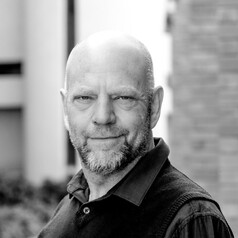
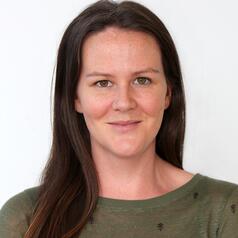
Senior Instrument Scientist (SIS) and Manager Electron Microscopy Unit, Rhodes University Interests: Analysis of inorganic materials; Extraterrestrial Petrology; Mineral Exploration; Economic Geology.
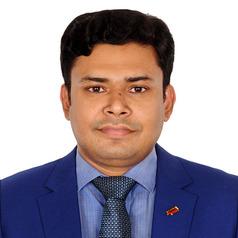
PhD Candidate in Legal Analytics, University of Galway Raisul is a Doctoral Researcher at the School of Law, University of Galway. He holds a Scholarship awarded by the College of Business, Public Policy and Law of the University of Galway to pursue his PhD. Raisul’s research focuses on Regulation of Legal Analytics in the Legal Profession and investigates whether legal analytics tools enhance access to justice. He is also an Associate Professor (presently on study leave) at the Department of Law, Dhaka International University (DIU), Dhaka, Bangladesh, and a qualified lawyer at the Supreme Court of Bangladesh. He is the elected Ethnic Minorities Officer 2024-25 of the University of Galway Students’ Union (Aras-Na-Mac-Leinn). Raisul worked as a lead consultant for a Road Safety law reform project in Bangladesh. He writes numerous Opinion Editorials (Op-eds) and scholarly articles in both national and international peer reviewed journals, newspapers and magazines on contemporary legal and human rights issues. Raisul is currently the Senior Editor of University of Galway Law Review. Earlier he served as the Executive Editor of Dhaka International University Journal of Law and Human Rights.
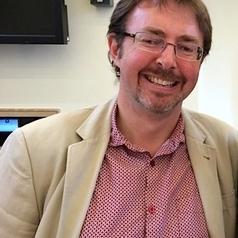
Research fellow of Mineral Physics, University of Leeds My principal area of research is the key processes in the metallic cores and magma oceans of rocky planets which facilitate habitable conditions at the surface. I work within the Leeds Centre for Planetary Cores but collaborate broadly, so if you have ideas, I’m all ears! Feel free to send me an email or catch me at a conference. I am regularly at the AGU and EGU annual meetings and help organise the Mineral Physics Group Research in Progress meetings.
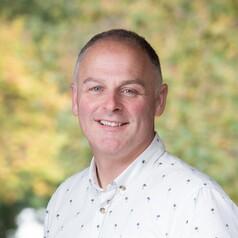
Senior Lecturer in Modern Literature, Aberystwyth University Luke is Senior Lecturer in Modern Literature, whose teaching covers mainly Victorian and modernist literature, as well as literary theory. He is an internationally-recognized scholar who has been writing on psychoanalysis and literature for more than two decades, and whose more recent work on the ghost story has contributed to significant new developments in literary studies. Luke worked as a postgraduate student in Paris, and has translated several important books by French psychoanalysts, including André Green and Jean Laplanche. Luke's main research interests are in modernist literature, psychoanalysis, deconstruction, the ghost story, literature and war, Welsh and Irish writing in English. He has published on Dickens, M. R. James, Joyce, Henry James, May Sinclair, Wyndham Lewis, David Jones, Beckett, Pessoa, Elizabeth Bowen, Margaret Oliphant, Freud, Lacan and Laplanche. He is a member of the Editorial Committee for a new edition of the works of May Sinclair, currently in production with Edinburgh University Press. Luke is the translator of several works by Jean Laplanche, including most recently The Unfinished Copernican Revolution (2020) and is Director of the David Jones Centre In 2010 Luke took part in a film about Joyce, psychoanalysis and Trieste, made by an Italian television company. See http://www.youtube.com/watch?v=kl4zk3UmV54
Associate Professor and Deputy Scientific Director Research at Monash IVF, The University of Melbourne Associate Professor Mark Green is a reproductive biologist and group leader at the University of Melbourne, the Deputy Scientific Director Research at Monash IVF and a Fellow of the Society for Reproductive Biology. Mark obtained his PhD studying factors that affect early embryo development at the University of Nottingham UK, before undertaking a Life Sciences Postdoctoral Fellowship at the University of Missouri USA. In 2004 he became the inaugural Maurice Paykel Fellow and relocated to The Liggins Institute, University of Auckland NZ. He subsequently held a joint appointment as the first Fertility Associates Research Fellow at The Liggins Institute, University of Auckland and as a Senior Scientist at AgResearch Ltd NZ. In 2011, he took up his current position, as the Merck Serono Lecturer, then Senior Lecturer, and now Associate Professor in the School of BioSciences at the University of Melbourne. His research centres on improving outcomes of human and animal ART by identifying how endocrine and environmental factors impact gametes and early embryo development, as well as subsequent offspring health. He undertakes this research in a variety of species, including humans, ruminants, rodents and invertebrates.
Group Leader and Senior Research Fellow, Anatomy and Developmental Biology, Monash University Dr Amy Winship is a Rebecca Cooper Foundation Al & Val Rosenstrauss Fellow and Group Leader in reproductive biology at Monash Biomedicine Discovery Institute. She obtained her PhD in 2016 at the Hudson Institute of Medical Research, defining cytokine functions in the reproductive tract (PNAS 2015, Scientific Reports 2015) and reproductive cancer (Molecular Cancer Therapeutics 2016). Her recent research has been at the forefront of the fertility preservation field in identifying ovarian toxicity profiles of new-line cancer therapies, including PARP inhibitors and immunotherapies. Immune checkpoint inhibitors (ICIs) have revolutionised cancer therapy – harnessing the patient’s own immune cells to mount an anti-tumour response. Using preclinical models, Dr Winship's research made the ground-breaking discovery that ICIs cause irreversible ovarian damage, raising concerns that people treated with these agents may be at increased risk of infertility and comorbidities related to early menopause (Nature Cancer 2022). Dr Winship’s current research proposes that uterine protection is the missing link to effective fertility preservation for healthy pregnancy for cancer survivors. Her teams’ analysis of clinical pregnancy outcomes shows survivors experience increased rates of infertility and obstetric complications after cancer therapy, even after using currently available fertility preservation methods, including embryo transfers from cryopreserved or donor oocytes (eggs), unexposed to cancer therapies (Human Reproduction Update 2020). This research has overturned dogma that because of its’ cyclical and regenerative nature, the endometrium – the inner lining of the uterus – does not sustain permanent damage. By designing unique preclinical models (Reproduction & Fertility 2022) and using primary human tissues, we showed the first empirical evidence that radiotherapy causes direct, lasting uterine damage (JCI Insight 2023), leading to new clinical guidelines for patients and clinicians (Human Reproduction Open 2020). Her other recent research has examined the essential role of DNA repair capacity in regulating quality control of the ovarian germline (Human Reproduction Update 2018). She recently revealed evidence that loss of BRCA1 exacerbates age-related decline in oocyte number and quality. This is important knowledge to support BRCA mutation carriers, who already face higher risks of developing breast and ovarian cancer, to make informed decicions about their fertility (eBioMedicine 2024). In addition, her work uncovered the first evidence for a key role of intrinsic DNA break repair in response to endogenous DNA damage (i.e. resulting from normal cellular processes) to safeguard primordial follicle oocyte number, genetic integrity and reproductive capacity (Human Reproduction 2020).