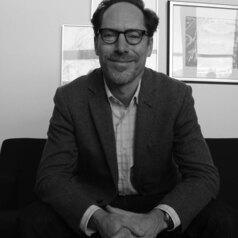
Professor of Environmental Planning, Georgia Institute of Technology Brian Stone Jr., Ph.D., is a Professor in the School of City and Regional Planning at the Georgia Institute of Technology, where he teaches in the area of urban environmental planning and design. Stone's program of research is focused on urban scale drivers of climate change and is supported by the National Science Foundation, U.S. Centers for Disease Control and Prevention, and U.S. Environmental Protection Agency. He is Director of the Urban Climate Lab at Georgia Tech and author of the forthcoming book, Radical Adaptation: Transforming Cities for a Climate Changed World (Cambridge University Press). Stone holds degrees in environmental management and planning from Duke University and the Georgia Institute of Technology.
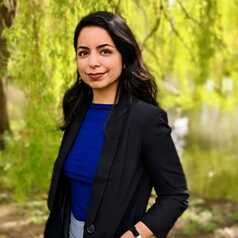
Professor of Anthropology, University of California, Irvine Roxanne Varzi is an ethnographer, writer, artist, filmmaker, playwright, dyslexia advocate and Full professor of Anthropology at the University of California Irvine. She holds a PhD in Anthropology from Columbia University, was the first Fulbright scholar to Iran since the Revolution, A Woodrow Wilson Scholar and the youngest Distinguished Senior Iranian Visiting Fellow at St. Antony’s College, Oxford University. She is working on a graphic novel and a Murder Mystery series that teaches anthropology, book one, Death in a Nutshell: an Anthropology Whodunnit came out this fall. Her writing has been published in The London Review of Books, Le Monde Diplomatique, The Annals of Political and Social Science, Feminist Review, Public Culture, American Anthropologist. She is the author of Warring Souls: Media, Martyrdom and Youth in post-Revolution Iran, Duke University Press, 2006 and the 2016 Independent Publishers Gold Medal winning novel Last Scene Underground: An Ethnographic Novel of Iran Stanford University Press and on audible. Her film, Plastic Flowers Never Die, 2009 is distributed by Documentary Educational Resources and has been shown in Festivals all over the world. Her short stories have appeared in the New York Press and Anthropology and Humanism for which she won a first place short fiction award and in three anthologies of Iranian-American writing and are anthologized in four books of Iranian-American writing. Her multi-media sound and video projects, Whole World Blind, No Wings to Fly to God and Salton Sublime address war and climate change. Her first play Splinters of a Careless Alphabet about French philosopher Henry Corbin and the Iranian Revolution is being developed as a graphic novel and her second play, Yalda: an Iranian Twelfth Night was recently directed by Eli Simon in a reading at the New Swan Shakespeare Center at UCI.
Associate Professor of English and Comics Studies, Bournemouth University Julia Round is a writer and scholar who researches the intersections of Gothic, comics, and children’s literature. Her books include Gothic in Comics and Graphic Novels (McFarland, 2014), the award-winning Gothic for Girls (UP Mississippi, 2019), and the co-authored Comics and Graphic Novels (Bloomsbury, 2022). She has also co-edited books such as Real Lives, Celebrity Stories (Bloomsbury, 2014), the Companion to Literary Media (Routledge, 2023) and Multimodal Comics (Intellect, 2024), and written over fifty peer reviewed journal articles and book chapters. She is Associate Professor of English and Comics Studies at Bournemouth University, UK, one of the founding editors of Studies in Comics journal (Intellect Books) and the Encapsulations book series (University of Nebraska Press), and co-organiser of the International Graphic Novel and Comics Conference (www.IGNCC.com). She shares her work at www.juliaround.com.
Lecturer in Politics and Policy, University of East Anglia I work at the intersection of comparative politics, communication, sociology, and public policy. I ask questions about ideology and discourse, processes of policy making, and right-wing mobilisation in the US, UK and India. I am an Assistant Professor/Lecturer in Politics and Public Policy at the University of East Anglia, UK. Prior to this position, I was a Postdoctoral Fellow in Policy and Governance at the Crawford School of Public Policy, Australian National University, and a New Generation Network Scholar at the Australia India Institute. Parallel to my independent research, I led a research project in 2021 funded by the Immigrant Learning Center and the Institute for Immigrant Research examining the policy neglect experienced by immigrant essential workers in the U.S. during the COVID-19 pandemic.
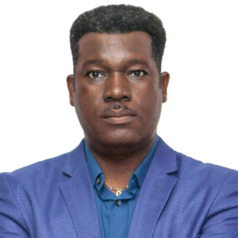
Head of Medical Entomology and Parasitology, Institut de Recherche en Sciences de la Santé (IRSS) Prof. Abdoulaye Diabaté is head of Medical Entomology and Parasitology at the Research Institute in Health Sciences (Institut de Recherche en Science de la Santé (IRSS) /Centre Muraz) in Bobo-Dioulasso, Burkina Faso and the principal investigator of Target Malaria Burkina Faso. Prof. Diabaté joined Target Malaria in 2012 when he established Target Malaria Burkina Faso. He has since become a leader in malaria research and in genetic approaches to malaria reduction in Africa. Prof. Diabaté was trained as a doctor of animal biology and ecology at the University of Ouagadougou and obtained his PhD in parasitology from the University of Montpellier II (France) in 2003. He completed a post-doctoral fellowship in 2005/2009 at the Laboratory of Malaria and Vector research of the National Institutes of Health (NIH) in the USA. He returned to Burkina Faso in 2009, where he now works at the Research Institute in Health Sciences heading the medical entomology laboratory. Professor Diabaté has been an invited speaker in several prestigious universities including Harvard University to catalyse a lasting collaboration between IRSS and other research centres or universities across the world. He is a recipient of the Royal Society Pfizer award 2013, was awarded the Grand Challenges Star in Global Health grant and the MRC/DFID African Leader Scheme grant, the PAMCA award for his contribution to the medical entomology field and the “Chevalier des Palmes académiques” of the Government of Burkina Faso in recognition of his significant contribution to scientific research in Burkina Faso. He was interviewed by several prestigious international and national media, including the BBC, Netflix, The New York Times, the National TV channel of Burkina Faso. He is a member of the African Academy of Sciences. Professor Diabaté and his team of eight researchers based in the United States and Burkina Faso received the 2019 Newcomb Cleveland Prize at the American Association for the Advancement of Science (AAAS). For more information, please read this blog by Raymond J. Monnat, Jr. M.D. More recently, he has been named as one of the 10 global winners of the prestigious Falling Walls Science & Innovation Prize 2023. An interview was published on the Falling Walls website titled ‘ERADICATING MALARIA: GENETIC SOLUTIONS AND AFRICAN LEADERSHIP‘.
Research Associate, Biosecurity Program, Kirby Institute, UNSW Sydney Dr Costantino is a Research Associate for the Biosecurity Program (BSP) at the Kirby Institute for the faculty of Medicine at UNSW Sydney. She has a Mathematics background and holds an Mphil from School of Population Health, UNSW, Sydney, in modelling of infectious diseases. She completed her PhD candidature in January 2022 at the Kirby Institute, UNSW Sydney. Her work focusses on the use of mathematical modelling for the optimization of pharmaceutical and not pharmaceutical interventions in an outbreak response. She uses mathematical modelling for epidemic forecasting, preparedness and control. She contributed to the policy control for COVID-19 in Australia, with the first study showing the effectiveness of Australia international borders closure on cases control. She investigated the effectiveness of influenza vaccination uptake with immunity waning. Her research field expended on preparedness and response for bioterror attacks, with a particular focus on smallpox and bacillus anthracis release. Her research fields include modelling of infectious diseases, estimation of intervention effectiveness, risks and data analyses, using statistical methods (SPSS, SAS) and analytical methods (Matlab, R).