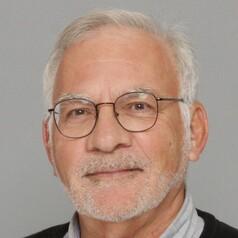
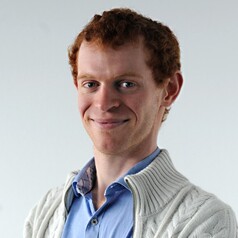
Associate Professor at the Business Administration Department (A.D.O)., Universidad Rey Juan Carlos I received a PhD in Economics and Business Cum Laude from the University of Granada (with Special Mention for the International Doctorate). I also earned my University Master's in Economics and Business Administration, Bachelor's of Science in Labor Studies, Diploma in Tourism, and CAP (Certificate of Pedagogical Aptitude) from the University of Granada. My research and publications focus on human resources management and leadership in the hotel industry. I worked for two years as a visiting professor and researcher in the Department of Tourism of the University of Guadalajara (Mexico), where I also participated in various research projects with the Mexican Secretary of Tourism. I hold a specialist's certificate in Hotel Leadership and Management from the University Alfonso X El Sabio (Madrid). For 9 years, I held middle management positions in the hotel chains AC Hotels and Marriott International.
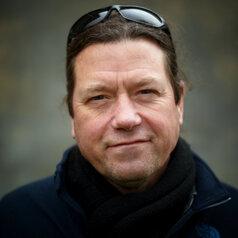
Lecturer in Literature, University of Essex I have written widely in creative non-fiction forms and taught on the MA in Wild Writing at the University of Essex since its inception in 2009. I have run many workshops to encourage writing on nature and landscape, and worked on Radio 4 detailing the writing and landscapes of Essex such as for ‘Something Understood’ on John Clare and Epping Forest (August 2014) and ‘Open Country’ on Tollesbury Wick and literary Essex (November 2015). My books include Out of Essex: Re-Imagining a Literary Landscape (2013) which was inspired by rural wanderings in the county and Ancient Wonderings: Journeys into Prehistoric Britain (2017) that tells some remarkable tales of life in ancient Britain. The Oak Papers (2020) – Radio 4’s Book of the Week – explores some of the ties between humans and oaks since prehistory, meditating on our need to connect with the natural world. My latest book, Grounded (Canongate, 2023) tells of rediscovering the most sacred spaces in our landscapes – both natural sites and human places – seeing the lessons we can learn from our ancestors and their relationship with the land. My forthcoming book, Renaturing (due out March 2025) investigates ways of democratising rewilding, how we can all be involved in nature restoration.
Professor of Criminology, Associate Member of Dept. of Indigenous Studies, Simon Fraser University I was hired to teach research methods and have published texts on qualitative, quantitative and mixed methods approaches -- most recently "Research Methods in the Social and Health Sciences" (published by Sage) -- and am an expert on research ethics issues, particularly with respect to research confidentiality (see Protecting Research Confidentiality, published by Lorimer). More recently this interest led to me looking into internet governance issues, particularly regarding privacy and surveillance, and the impacts of artificial intelligence on the research process and the sociology of knowledge. My interests in the sociology of knowledge was also what led me 30+ years ago to begin learning about Indigenous issues as well, not only in terms of Indigenous methods and ways of knowing, but also with broader issues of Indigenous justice. I have written about and helped facilitate the development of Indigenous community-based justice systems in Canada and participated internationally in meetings of the former UN Working Group on Indigenous Populations/Peoples, who developed the UN Declaration on the Rights of Indigenous Peoples.
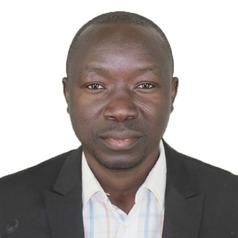
PhD Candidate, Africa Center of Excellence for Climate Smart Agriculture and Biodiversity Conservation, Haramaya University Razak is a PhD candidate in climate-smart agriculture at Haramaya University. Mr Kiribou's PhD topic is the Spatio-temporal carbon dioxide emission dynamics induced by land use change in Bontioli complex reserve of the West African dryland ecosystem. His previous research has included how African apes are already being exposed to climate change impacts, and will experience extreme events such as wildfires, heatwaves and flooding more frequently in the next 30 years (https://journals.plos.org/climate/article?id=10.1371/journal.pclm.0000345).
Research Project Manager at the Alliance Bioversity and International Center for Tropical Agriculture, CGIAR and Associate Professor of Production Ecology and Resource Conservation, CGIAR System Organization Sintayehu W. Dejene (PhD) holds a PhD in production ecology and resource conservation from Wageningen University, the Netherlands in October 2017. He is currently working for Alliance Biodiversity and CIAT at the CGIAR as a research project coordinator for the livestock water monitoring project in Addis Ababa, Ethiopia. He is part of the climate action team contributing to different projects and initiatives. He is an associate professor of production ecology and resource conservation. His expertise is in the areas of natural resources, climate-smart agriculture, nature-based solutions, ecosystem services, rangeland resource assessment and management, climate change adaptation and mitigation, modelling, geospatial modelling and remote sensing in forest, grassland and agricultural systems. He worked in different research positions including research training and research head at Africa Centre of Excellence in Climate Smart Agriculture and Biodiversity Conservation (ACE Climate SABC) of Haramaya University, Ethiopia. He has expertise in capacity building, research, international project development, implementation and engagement experience in sustainable agriculture, natural resource management, integrated environment and ecosystem rehabilitation and management, climate-change mitigation, adaptation and resilience working with diverse partners and stakeholders including students, farmers, government policy makers and international development partners. He has been actively working on developmental research in the areas of natural resource and climate change including pastoralism, sustainable agriculture, climate smart agriculture, climate and spatial modelling, environment, and ecology projects in forest, grassland and agricultural systems.