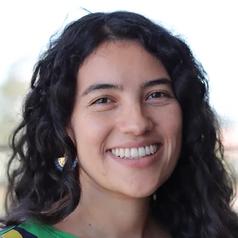
Assistant Professor of Biology, USC Dornsife College of Letters, Arts and Sciences The overarching goal of my research is to develop statistical and computational methods to leverage large biodiversity datasets to learn about ecological processes. While we know that the distribution of some species is changing, it is actually very difficult to make reliable inferences as to which species are declining and by how much from the often messy and complex historical and spatial datasets that we have to work with — for example, historical museum records, where species occurrences are aggregated from studies with different sampling procedures. In order to address this gap, my research focuses on determining if and how statistical models can be applied to historical records without yielding biased trends. In my research I also apply these statistical models to determine how the distribution of pollinators has changed through time, where museum records provide lots of information. I am also interested in determining which drivers (e.g. pesticide use, climate change, land use change, etc.) are causing the most decline of the most pollinator species. Another aspect of my research is to understand the processes that shape communities, for example I have combined experiments and modelling to understand how the structure of body size in a community affects the stability of food webs. In more recent work, I used large-scale simulations and machine learning to identify the signal of metacommunity processes in ecological time series.
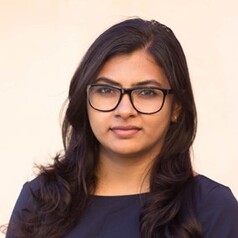
Assistant Professor of Community Planning, Auburn University Binita Mahato is an assistant professor in Auburn University’s Community Planning Program. She has a Ph.D. in urban and regional planning, a master’s degree in community planning from the School of Planning, University of Cincinnati, and a bachelor’s degree in architecture from the Indian Institute of Engineering Science and Technology (IIEST), India. Mahato has worked as an architect for two years and has work experience with the Cincinnati Area Geographic Information System (CAGIS), Niehoff Urban Studio, and the Institute of Policy Research at the University of Cincinnati. She has been a research fellow for the Communication in Urban Environments (CUE) research initiative by the Fruth and Gemini Foundation, University of Cincinnati. Alongside, she has worked as an editorial assistant for the Journal of Children, Youth, and Environment and has taught urban planning and urban design studios at the School of Planning, University of Cincinnati. Mahato’s research interest lies in investigating the relationship between space and society using qualitative and interpretive research methods. Her dissertation focuses on the manifestation of social class relations over the use of public spaces in Kolkata, India. She has also worked on several other research projects on measuring the robustness of neighborhood business districts and the diversity of urban parks in Cincinnati. She has urban design and GIS certificates and likes to use her design and GIS skills to illustrate complex urban phenomena through communicative visuals.
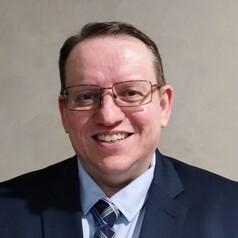
Professor of Accounting & Business Information Systems, The University of Melbourne Professor Michael Davern, FCPA, holds the Chair of Accounting and Business Information Systems at The University of Melbourne. For over 30 years, in Australia and overseas, he has led industry-engaged research examining decision-making Business Analytics, Risk Management and Financial Reporting. Michael’s research is informed by his substantial board-level experience with for-purpose and privately held entities. A neurodiverse boundary spanner with eclectic interests his background includes academic and professional experience in accounting, finance, computer science and decision sciences.
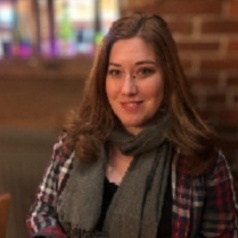
Assistant Professor, Department of English, Dalhousie University Brittany Kraus is an Assistant Professor at Dalhousie University, where she teaches courses on Canadian Literature, Global Literature, and Literature and Multiculturalism. Her field of study is Contemporary Canadian literature, with a research focus on refugee literature and the environment.
Associate professor of economics, Queensland University of Technology Dr. Jayanta Sarkar is an Associate Professor at Queensland University of Technology, Brisbane. He completed his Ph.D. degree in Economics from Southern Methodist University (Dallas, Texas) in 2006. He worked as an Assistant Professor at Louisiana Tech University, before moving to Australia in 2010. Dr. Sarkar’s research focuses on human behaviour and decision making, primarily in the areas of health and education. He has frequently published in high-impact peer-reviewed journals such as Health Economics and is also a regular commentator in Australian TV and news media. Dr. Sarkar has successfully led cross-disciplinary research partnering with stakeholders associated with health programs funded by Queensland Health, as well as Queensland Schools. His research has attracted numerous overseas PhD students conducting research in the area of behaviour and health. His research interest areas include Economic Development, Behavioral Economics, Health and Human Capital.
Professor of Modern History, Macquarie University Robert Reynolds is a Professor of Modern History at Macquarie University. He has published widely on gay history, oral history and psychoanalysis.