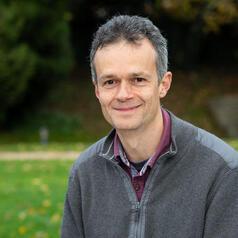
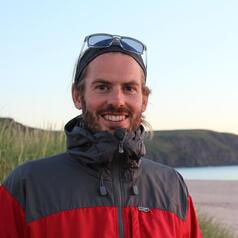
Professor of Evolutionary Biology, University of Oxford I work on the evolutionary biology of species diversity. Why does life evolve into distinct species? What processes shape speciation, adaptive divergence and diversity patterns? How does diversity affect the evolution of species living in complex ecosystems? In order to tackle these questions, I combine theory and statistical analysis with molecular, genomic, experimental and field data across a wide range of animals, plants, fungi and bacteria. Current projects include comparative genomics to understand the bizarre asexual life-style of bdelloid rotifers – microscopic animals living in moss and freshwater – evolutionary time-series of pathogenic fungi from cryopreserved living samples, and ‘evolution and speciation in action’ in complex microbial communities.
Lecturer in Animal Evolutionary Biology, University of Stirling I am an evolutionary biologist with broad interests in the interaction between genome structure and the processes of adaptation, diversification and speciation in non-model eukaryotes. I work with whole-genome sequence data in conjunction with population genomic and comparative phylogenetic methods to provide insights into how these mechanisms contribute to the evolutionary process. I am particularly interested in the interaction between ecology, life-history and genome structure, the impact of extraordinary molecular mechanisms such as horizontal gene transfer, and the insights to be gained from the genomic peculiarities of non-model organisms. I have a hat-trick of degrees from the University of Edinburgh, with a BSc (Hons) in Evolutionary Biology (2008), then an MSc in Quantitative Genetics and Genome Analysis (2010) before getting my PhD in 2015. I then completed 2 postdocs with Prof Tim Barraclough and Dr Chris Wilson at Imperial College London (and later Oxford) working on a group of enigmatic and unusual animals called bdelloid rotifers, before moving to Stirling in early 2024. Happily, I am still scratching my head trying to understand bdelloid genomes.
Lecturer in Biology, University of Oxford I am interested in a longstanding evolutionary puzzle: why does sex exist? In theory, a lineage of asexual females can reproduce twice as efficiently as a competing sexual population, whose resources are diverted into males that cannot produce eggs. Why does natural selection maintain sex so widely despite this and other costs, and why do most asexual lineages rapidly go extinct? To address these questions, I study a group of animals that have succeeded despite lacking males. Bdelloid rotifers are microscopic invertebrates that live in almost every pond, stream, puddle and patch of moss in the world. Hundreds of species have been described and thousands of individuals examined, but all of them so far have been female, and reproduction is known only via asexual eggs. My collaborators and I are investigating genetic and ecological aspects of the unusual reproductive behaviour of bdelloid rotifers. We are trying to understand how they deal with rapidly changing selection pressures, particularly infectious disease, by studying how species, populations and individuals interact with pathogens. We use a range of molecular and experimental approaches, including long-term field studies, population genetics, experimental evolution, comparative genomics, resistance bioassays, metagenomics and transcriptomics. I am also interested in fungal systematics, through my work with rotifer pathogens belonging to neglected fungal taxa.
PhD Candidate, Literature and Languages, University of Stirling I have an MA in Modern History (University of Glasgow, 1995) and an MSc in Information Management and Preservation (University of Glasgow, 2021) For my PhD research I am investigating and contextualising the cultural and social history of swimming as a popular leisure pursuit in Glasgow for 100 years from 1850 to 1950, I'm using archive, literary and historical sources to uncover the intangible history of swimming culture, as well as investigating the surviving built heritage of sites of swimming The work is exploring the experiences of diverse men, women and children who swam in the River Clyde, private baths and clubs and public swimming pools.
Professeur en Physique, Utrecht University Development and application of isotope techniques to investigate physics and chemistry of the atmosphere Global trace gas budgets Impact of anthropogenic activities on the atmosphere. Stratosphere-Troposphere exchange Stratospheric water vapor Development of air sampling devices for atmospheric trace gases (e.g. high altitude research aircraft "Geophysica", stratospheric balloon experiments). Investigation of kinetic isotope effects in laboratory experiments Investigation and application of mass independent isotope effects Reconstruction of the paleo-atmosphere using air samples from Arctic and Antarctic ice and firn Member of the Netherlands Earth System Science Center consortium Chair Atmospheric physics and chemistry