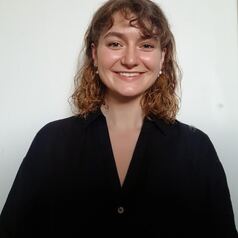
Assistant Professor, Department of Recreation and Leisure Studies, University of Waterloo Kaleigh Pennock is an Assistant Professor in the Department of Recreation and Leisure Studies in the Faculty of Health at the University of Waterloo. Her research addresses risk, responsibility, and harm in youth sport. Her interests include psychosocial aspects of sport-related concussions, decision-making and safe sport practices in community sport organizations, and inclusion and belonging for Black and racialized Canadian youth athletes. Her work emphasizes the complex interplay of personal, social, and cultural factors that shape athletes’ experiences in sports, highlighting the responsibility of sport leaders in safeguarding and supporting youth athletes.
Lecturer in Recreation and Leisure Studies, University of Waterloo My research focuses on the social impact of sport and its potential for positively improving the health and well-being of individuals and communities. While I acknowledge that sport is capable of having both a positive and negative social impact, my research examines how sport organizations can take a shared value approach that addresses competing stakeholder needs, provides a competitive advantage, and develops economic returns for an organization, while addressing social and environmental needs. This approach to corporate social responsibility (CSR) is distinct from the traditional viewpoint, which has tended to focus solely on an organization’s benefits rather than on the constituents for whom the programs are intended. By conducting program evaluations, I have been able to identify opportunities for inter-organizational relationships and have provided feedback to stakeholders with recommendations to ensure the initiatives are effectively helping their participants, thereby having the greatest social impact possible.
Artist, writer and academic, Indigenous Knowledge Dr. Tom Munro-Harrison is a Wiradjuri Artist, Writer and Academic with a diverse professional background, spanning academia, graphic design, community engagement and service. Driven by a passion to celebrate and elevate First Peoples' voices and cultures through Indigenous Cultural Practices, his work explores themes of Indigenous Sovereignty and Self-Representation. This passion is expressed through his own Cultural Practice, in the form of visual storytelling and Graphic Novels, curating compelling narratives that amplify underrepresented voices in the arts in collaboration with organisations including Indigenous X, Australia Council for the Arts, Welcome to Country, Activism@theMargins, Wiradjuri Digital Nation's "Being Wiradjuri Together" (Good Design Award Winner) and more. In 2024 Tom published his Doctoral Thesis and accompanying Graphic Novel "Artistic Perspectives on Indigenous Standpoint Theory: A Visual Practice of Cultural Activism".
Researcher, The University of Queensland My professional work is in strategic research, advocacy and community development, particularly community programs development in Aboriginal communities. I have also worked for many years in environmental protection & ecosystem health, economic transition, climate change and climate justice, energy policy, international political and human rights advocacy. I have completed PhD (University of Newcastle), M App Sci, Western Sydney University) B App Sci (University of Canberra). My academic writing has included complex adaptive systems, just transitions from fossil fuel dependency to sustainability, environmental justice advocacy and climate change.
Associate Professor in Cognitive Neuroscience, Western Sydney University My research investigates the perceptual-motor processes underlying human performances and their changes across the lifespan, with expertise and pathologies, using behavioural, neuroimaging and brain stimulation methods. I am particularly interested in identifying the neural, informational and biomechanical mechanisms that support and enhance agent-environment and multi-agent coordination. I employ a range of motion capture, EEG, TMS, tDCS/tACS and virtual reality technologies to investigate these perceptual-motor processes, as well as a wide variety of contemporary linear and nonlinear time-series analysis and dynamical modelling techniques.