Assistant Professor of Psychology, Bond University Dr Doug Angus recently joined Bond University as an Assistant Professor of Psychology. Prior to his engagement at Bond University, he held research positions at The University of Sydney, and The University of New South Wales. He completed my PhD at The University of New South Wales. Before this, he studied psychology at The University of Auckland. His research primarily focuses on how theories of motivation and emotion are informed by neuroscience and psychophysiology. His PhD research used electroencephalography to examine the time-course of neural activity involved in reward anticipation and consumption, and how these processes interact with anger and aggression. Dr Doug Angus’s current research agenda encompasses five broad areas; 1. Temporally and psychologically discrete aspects of reward processing 2. Anger and its association with positive emotional states 3. Self-regulation and decision making in emotional contexts 4. Meta-cognition about affective states 5. Frontal cortical-subcortical imbalances, cognitive function, and healthy aging
Associate Professor, Wicking Dementia Research Education Centre, University of Tasmania Lyn Goldberg, a speech pathologist, was recruited to the Wicking Centre in 2014 to develop a focus on oral health and function related to dementia, consolidating her background in speech pathology and international experience in interprofessional education and practice. Prior to 2014, Goldberg was the John and Ruby Hendren Distinguished Professor in the College of Health Professions at Wichita State University, Kansas, USA, and member of the Executive Board of the American Speech-Language-Hearing Association (ASHA), guiding the Association’s financial, long-term planning and multicultural initiatives. At the Wicking Centre, Goldberg is a Graduate Research Coordinator, online educator and community-based researcher. With NHMRC-Dementia Collaborative Research Centre program funding ($99,752, 2016-17, CIA), Lyn initiated an innovative interprofessional program in which a speech pathologist, dentist, and nutritionist worked with residential care staff to screen the oral health, nutritional status, and swallowing ability of residents, and document residents’ perceptions of their health-related quality of life. Further philanthropic funding ($34,300) enabled a clinical trial to document the positive effects of an evidence-based oral health program to decrease chest infections and aspiration pneumonia. Findings resulted in a policy change within the national organization. Lyn's work now focuses on Aboriginal-led, community-based research to promote health and wellbeing and reduce dementia risk. She served on the National Committee for the Action Plan to implement the Aboriginal and Torres Strait Islander Roadmap for Dementia Research and Translation. In the past five years she has served on externally funded grants totaling $11.5M (lead CI on 5, AI on 3), complemented by University/College funding of $529,314. She currently leads a national team of Aboriginal and non-Aboriginal early, mid-, and senior career researchers and Aboriginal community leaders in the MRFF Consumer-Led Research opportunity, Privileging the spirit, voices, and culture of Aboriginal people in dementia care: education for non-Aboriginal healthcare providers (2023-25). She is an AI on two Aboriginal health related NHMRC Centre of Excellence grants: Good Spirit, Good Life: better health and wellbeing for older Aboriginal and Torres Strait Islander peoples (2021-25) and On TRACK (Teaching, Research And Community Knowledges): promoting brain health with older Aboriginal and Torres Strait Islander peoples (2022-2026). In the past 5 years, Lyn has published 24 peer-reviewed journal papers and accrued >600 citations.
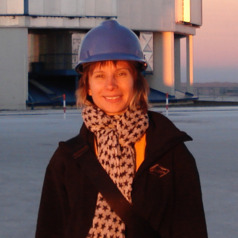
Associate Professor, School of Physics and Astronomy, Monash University My primary area of research interest is in the evolution and nucleosynthesis of sun-like low and intermediate-mass stars and the origin of elements in galaxies. The story of the origin of the elements is intimately tied to the processes of stellar evolution, which describes how stars change with time as a result of nuclear fusion. One focus of my research is the intriguing mystery of the production of heavy elements in stars, that is, elements heavier than iron. While astronomers can explain the origin of most of the elements in nature, the type of the stars that produced the heavy elements is still highly uncertain, especially in the early universe. My research has been focused on the role that low and intermediate-star stars play in this story.
PhD Candidate, The University of Queensland Björn is a PhD-candidate, researching the intersections of Olympic coaches’ learning and experiences from multiple Olympic cycles. The PhD is focussed on learning in a pedagogical context, with the opportunity to support the coaching pathway towards the Brisbane 2032 Games. Björn also teaches postgraduate students in the field of sports coaching at the University of Queensland, Brisbane, Australia.
Postdoctoral Research Fellow, Department of Anthropology, McGill University I'm a cultural anthropologist specializing in religion, ethics, and strategies of influence. I use my training as an ethnographer to make sense of situations where people find themselves pulled between conflicting commitments. I'm co-editor of the special issue "Religious Suasion" (Journal of the Royal Anthropological Institute, 2024). My current work analyzes how moral values shape economic action in the social innovation sector.
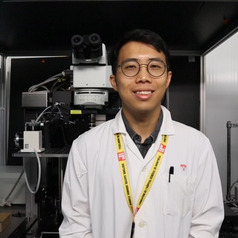
Postdoctoral Fellow in Neuroscience, McGill University I obtained my bachelor degree of biomedical sciences in the University of Hong Kong in 2016. I started my master right away and fast-tracked to obtain my PhD in neuroscience in 2021, during which I got involved in 6 publications, in 2 of which I am the first-listed author. I received extensive training in the cutting-edge theory about neurodevelopment, cognition, memory formation and neurological diseases. From 2022 until now, I am a postdoctoral fellow at McGill University, where I continue contributing to solving the questions regarding the nervous system in its health and also diseases. I have had profound experience in experimental neuroscience, especially with transgenic rodent models and non-human primate models, as shown in my previous publications. My research covers the finest scale of molecular biology to the holistic scale such as animal behaviours. I have been successful in discovering mechanisms which control memory formation in animals with state-of-the-art in vivo imaging techniques and will continue contributing to understanding the code our brain utilises to process complex information in our everyday reality.