PhD Candidate at MECADEV (Centre National de la Recherche Scientifique/Muséum national d'Histoire naturelle), Sorbonne Université My thesis aims to quantify and explain the variability of elephant trunk behaviour using ethology and biomechanics. In other words, whether at individual, population or species level, can the performance of the trunk, in terms of manipulation, be explained by its behaviour, shape, trajectory, speed or strength? To answer this question, interdisciplinary procedures are used to acquire and analyse data. This project will enrich the discussion around fundamental biological and ecological questions. At the end of the project, thanks to a transfer of knowledge to bio-inspired robotics, all this new data will help to design a prototype prehensile trunk capable of reproducing the movement of the elephant trunk.
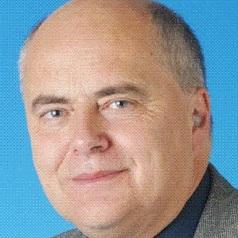
Professor of Historical Geography, University of Portsmouth Professor of Historical Geography at the University of Portsmouth. Principal creator of the Great Britain Historical GIS, and the web site "A Vision of Britain through Time". Research interests include the history of the North-South divide in Britain, Data models for gazetteers and geospatial ontologies, Long-run impacts of locality characteristics on health inequalities and the role of travellers in the development of political life.
Professor of Politics, Royal Holloway University of London Oliver Heath is Professor of Politics and co-director of the Democracy and Elections Centre. He holds a BA (Hons) in Social Anthropology from the University of Sussex and an MA in Political Behavior from the University of Essex, where he also received his PhD. He joined the Department in 2008, having previously held a British Academy Postdoctoral Fellowship at the University of Essex and an ESRC Postdoctoral Fellowship at the LSE. He has also worked at the University of Strathclyde and held visiting positions at the Centre for the Study of Developing Societies (CSDS) in India, Universidad Simon Bolivar in Venezuela, and the Centre for the Study of Political Change (CiRCap) in Italy. Oliver's main research interests include elections and voting behaviour, public opinion, and survey design and analysis. He has a particular interest in both UK elections and Indian elections. He is the author of Political Research: Methods and Practical Skills (with Sandra Halperin) and has published his work in the Journal of Politics, British Journal of Political Science, European Journal of Political Research, Electoral Studies, Political Behavior, and Political Studies among others. He has received funding for his research from the ESRC, British Academy, and Nuffield Foundation, and has written commissioned reports for the Home Office on voluntary participation, citizenship and ethnic diversity and for the Joseph Rowntree Foundation on Brexit and low income voters.
Programme Director for New Archival Visions, Centre for Humanities Research, University of the Western Cape Valmont Layne is the programme director for New Archival Visions and co-convenor of the graduate Sound Study Group at the Centre for Humanities Research, University of the Western Cape. He has written about museums, archives, heritage studies, sound and media studies, as well as jazz and black music history. He is working on a monograph based on his doctoral thesis titled ‘Goema’s refrain: Sonic anticipation and the musicking Cape’.
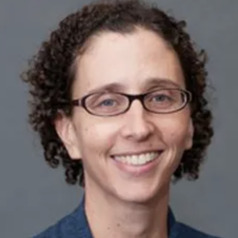
Professor of History and Society, Babson College Marjorie N. Feld's teaching and research interests include U.S. social, labor, and gender history, along with the history of global human rights movements, food justice, and sustainability. She is a member of the Academic Advisory Councils of the Jewish Women's Archive and Jewish Voice for Peace. Her first book, Lillian Wald: A Biography, published in 2008 by University of North Carolina Press, won the Saul Viener Book Prize of the American Jewish Historical Society, an award presented biannually to an "outstanding book in American Jewish History." At Babson, she received a Nan Langowitz Women Who Make a Difference award in 2009, the Martin Luther King Leadership Award in 2014, and the Babson Pride Award in 2017. From 2011-2015, she was the faculty director for Babson's Center for Women's Leadership. Her second book, Nations Divided: American Jews and the Struggle Over Apartheid, was published by Palgrave MacMillan in July 2014. In 2019-2020, Feld was a Goldstein-Goren Fellow in the Skirball Department of Hebrew and Judaic Studies at New York University. Her third book has just been published by New York University Press, titled The Threshold of Dissent: A History of American Jewish Critics of Zionism.
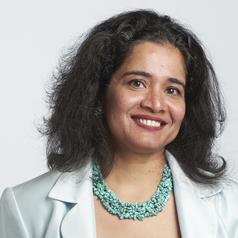
Professor of Art Therapy Research, Drexel University Dr Girija Kaimal (EdD, MA, ATR-BC) is Associate Professor, Interim Chair and Assistant Dean for the Division of Human Development and Health Administration at the Drexel University College of Nursing and Health Professions. She serves as interim Chair to the oldest creative arts therapies department in the world preparing clinicians and researchers in art therapy, music therapy, dance movement therapy and counseling. In her Health, Arts, Learning and Evaluation (HALE) research lab, she examines the physiological and psychological health outcomes of visual and narrative self-expression. She has published over 80 peer-reviewed papers and published a book with Oxford University Press called The Expressive Instinct. Her research has been continually funded since 2008 by federal agencies like the Department of Defense, Department of Education, National Endowment for the Arts as well as foundation and academic centers and has been featured by NPR, CNN, The New York Times as well as a range of media outlets worldwide. In her current studies, she is examining outcomes of art therapy for military service members with traumatic brain injury and post-traumatic stress, narratives from Gulf war veterans, and arts-based approaches to mitigate chronic stress among patients and caregivers in pediatric hematology/oncology units. Additional international research projects include examining the therapeutic underpinnings of indigenous and traditional artforms and the creative self-expression in times of adversity across the human lifespan. Living out her research interests, she has been a lifelong visual artist and her art explores the intersection of identity and representation of emotion. Her service commitments at present include being the President of the American Art Therapy Association (a member organization of over 4,300 members) and faculty senate representative from CNHP. Dr. Kaimal has a doctorate from the Harvard University Graduate School of Education, Master of Arts from Drexel University and Bachelor's in Design from the National Institute of Design in India.