

 Menu
Menu

 Search

- News

- Economy

- Central Banks
- Investing
- Research
- Roundups
- Digital Currency
- Insights
- Technical Analysis
- Technology
- Business
- Law
- Health
- Nature
- Fintech
- Science
- Topic
- Opinions
- ©Econometrics LLC . All Rights Reserved.
Christian Siderius
Senior researcher in water and food security, London School of Economics and Political Science
Christian is an adaptation and water resources expert with 20 years of experience in conducting research and consultancy on climate and water risks. He grew up in the Netherlands and, after four years in the UK, is now living in Sydney, Australia. He is especially interested in the value of water, the link between climate variability, risk, resilience and decision making, and the concept of ‘digital twins’. Christian’s ambition is to make a science-based contribution to societal challenges linked to the water-energy-food-environment nexus. To do so, he can draw from years of experience in conducting pilot research, working with big data and remote sensing, applying hydrological and hydro-economic models, and interacting with stakeholders.
Christian has a Master's and engineering degree in agriculture and integrated water management and a combined PhD in environmental economics and earth system sciences, both from Wageningen University, the Netherlands. He is the founder of Uncharted Waters ltd, a climate-tech start-up in Sydney, that is building a digital twin of the global water and food system. Previously he worked at Wageningen Environmental Research, from 2004 to 2019, and for the Grantham Research Institute at the London School of Economics in London, from 2016 to 2020. He is still a visiting senior research fellow at both.

Less 
Christian Turney
Pro Vice-Chancellor of Research, University of Technology Sydney
I am an experienced, positive, energetic and optimistic leader, scientist, entrepreneur and author. I have the privilege to be the Pro Vice-Chancellor of Research at the University of Technology Sydney (UTS). I champion the value of research findings in decision-making and am passionate about universities supporting the rapid decarbonization of the global economy to reach net-zero carbon pollution. To help reach this goal, I was a Founding Director, Inventor and am now a Scientific Advisor to the New Zealand-based cleantech company CarbonScape (www.carbonscape.com) which has developed technology to covert plant material into locally-produced, sustainable, carbon-negative bioengineered graphite for lithium-ion batteries.
To cut through the noise surrounding 'Fake News' and 'Alternative Facts', it's so important universities share discoveries, their implications and opportunities for society. With Imagine Entertainment, iHeart Media, Awfully Nice, and an incredible lineup of inspirational guests, I am excited to be hosting a new podcast series called 'Unf**king the Future' which will explore the sobering climate reality our planet faces today and the common–sense solutions that can be implemented now to save it.
My research has generated over 240 research papers, a h-index of 68, and been cited in policies and patents around the world. I have received several major prizes and medals. In 2014, the Australian Academy of Science honoured me with the Frederick White Prize for the understanding of natural phenomena; in 2007, I was awarded the inaugural The Sir Nicholas Shackleton Medal for outstanding young scientist for pioneering research. I completed a prestigious Australian Research Council (ARC) Laureate Fellowship at the University of New South Wales (Sydney) in 2015. I am also a Non-Executive Director of Cicada, the Sydney-based incubator of deep tech innovation (www.cicadainnovations.com), and a Non-Executive Director of the NSW Government’s Environment Protection Authority (EPA) to help deliver a thriving and healthy environment for the beautiful state of New South Wales.
Less
Christian Wolf
Associate Professor, Astronomy & Astrophysics, Australian National University
My research interests include: wide-field sky surveys, object classification and photometric redshift estimation; growth of supermassive black holes, early universe and variability; optical counterparts to gravitational-wave events; galaxy evolution through cosmic epochs and via environmental influence; dust in the Milky Way and star-forming galaxies.
Less
Christian John Makgala
Professor of History and Political Economy, University of Botswana
Christian John Makgala is a professor of history and political economy at the University of Botswana, where he teaches African diaspora, international relations, southern African history, public health history, historical military strategy for entrepreneurship, and Africa’s history on film. His publications are on colonial administration and public opinion, democracy, governance and development, industrial relations, liberation struggle in southern Africa, work ethic, motor sport, and even recently the impact of Covid-19 on Botswana. He is also a writer of historical fiction. He has been the chief editor of Botswana Notes and Records journal for about 15 years now.
Less
Christian Lueme Lokotola
Lecturer in Planetary Health, Division of Family Medicine and Primary Care, Stellenbosch University
Dr. Lokotola Christian Lueme is an early career research in Climate change, air pollution and human health, and resilience of healthcare service. He has an MPH and PhD in Public Health. His current expertise is in Planetary Health Education (integration of planetary health into Health Professional Education) and Climate resilient Primary Health Care (what need to be done and known).
Less

Christiana Harous
PhD Candidate / Provisional Psychologist, Flinders University
Christiana is a PhD candidate and Provisional Psychologist who is part of the Psychology of Justice, Emotions and Morality lab at Flinders University. Christiana is researching how storytelling (and re-telling) may aid, or hinder, self-forgiveness following wrongdoing in relationships.
Less
Christiana Ochoa
Professor of Law, Indiana University
Christiana Ochoa’s research seeks to understand how economic activity impacts human and ecological well-being. Her theoretical and empirical research relies on international and comparative law, particularly in the fields of Business & Human Rights, Law & Development, International Finance, and Foreign Direct Investment. She brings her field work—as well as her practice experience at the global law firm Clifford Chance and with a number of human rights and humanitarian non-governmental organizations in Latin America—to her research questions and classroom teaching. She teaches Contracts as well as International Law, International Business Transactions, Human Rights, and Law & Development.
Her scholarship in these areas has been published and is forthcoming in the Yale Journal of International Law, Harvard International Law Journal, Virginia Journal of International Law, Michigan Journal of Environmental & Administrative Law, Duke Journal of International & Comparative Law, and Human Rights Quarterly, among others. Her work has also been published internationally, including in Germany, Colombia, and Korea. Her first documentary film, Otra Cosa No Hay (There is Nothing Else), was completed in 2014, received film festival acclaim, and has been viewed by audiences around the world.
Professor Ochoa has been recognized for her research, teaching, and service, and has held numerous administrative positions at the Law School, campus and university level. In 2018, she was named an Indiana University Class of 1950 Herman B Wells Endowed Professor. Individually, and as part of research teams, she has won competitive funding from numerous sources, including from the Mellon Foundation and the U.S. Department of Education. In 2015, she was a co-PI for a prestigious Sawyer Seminar on Documentary Media and Historical Transformations. Within the Law School, she has served as Executive Associate Dean, Associate Dean for Research and Faculty Affairs, and as Latin America Program Director for the Stewart Center on the Global Legal Profession. She has held campus-wide leadership positions, including as Associate Vice Provost for Faculty and Academic Affairs and as a founding Associate Director of the Center for Documentary Research and Practice. At the university level, she is the founding Academic Director of the IU Mexico Gateway, IU’s only office in Latin America. She has also served on various committees for AALS and ASIL.
Less
Christiane Brems
Author; Clinical Professor at Stanford Medicine, Dept of Psychiatry and Behavioral Sciences; Director of YogaX, Stanford University
Less
Christiane Gerblinger
Visiting Fellow, Australian National Centre for the Public Awareness of Science, Australian National University
I've been a leader, communicator and collaborator across several policy areas across several agencies in the Australian Public Service and am currently a Visiting Fellow at the Australian National Centre for the Public Awareness. I have two PhDs (which I'm finding similar to having two driver's licenses) - one in film and literature, the other in policy communication. My most recent publications include How Government Experts Self-Sabotage (ANU Press) and “Peep show: a framework for watching how evidence is communicated inside policy organisations” (Evidence & Policy).
Less
Christiane Kehoe
Research manager and program specialist Tuning in to Kids, The University of Melbourne
DR Christiane Kehoe is the Research Manager at Mindful, Centre for Training and Research in Developmental Health, where she has been the Project Manager for several randomised controlled trials of the emotion-focused Tuning in to Kids (TIK) suite of programs, including a current trial investigating the efficacy of three methods of delivery of TIK (online, 1-1 delivery, and group delivery) with parents of children with challenging behaviours. Christiane is co-author of the evidence based Tuning in to Teens (TINT) and Tuning in to Toddlers (TOTS) programs, and Whole School Approach TINT program, which are variants of the TIK parenting program and has extensive experience in emotion-focused parent education, including designing and delivering intervention programs.
Less
Christiane Keys-Statham
PhD Candidate, Institute for Culture and Society, Western Sydney University
Christiane Keys-Statham is a PHD candidate at the Institute for Culture and Society at Western Sydney University. Her research focuses on the relationships between cultural and ecological infrastructures, and between public art and museums.
Christiane also works as a public art curator, project manager, cultural researcher and writer.
Less
Christiane Zarfl
Professor for Environmental Systems Analysis, Faculty of Science, University of Tübingen
Less

Christianna Alexiou
MSc in Regulation Student, London School of Economics and Political Science
Christianna Alexiou is an MSc in Regulation student at the London School of Economics and Political Science, where she is studying governance, policy, and law extensively. Her research and academic interests include: procedural justice, accountability and participation in decision-making processes, DEI policy, public interest regulation, socio-legal studies, comparative and cross-cultural policy and law, discourse, and human rights.
Before beginning her master’s degree, Christianna received a Bachelor in Journalism Honours with a double minor in Law and Spanish from Carleton University in Ottawa. Upon graduating she was awarded the Senate Medal for Outstanding Academic Achievement for finishing in the top 3% of the 2022 graduating class.
Christianna is also a freelance writer and editor, experienced in journalism, strategic communications, and corporate and public-sector communications. Her published works have appeared in the Ottawa Citizen, Ottawa Sun, Ottawa Business Journal, Montreal Gazette, and The Province, among others. Notably, two of her articles, covering Indigenous language preservation and sustainability in fashion, were shortlisted for the Fraser MacDougall Prize for Best New Canadian Voice in Human Rights Reporting.
Her academic contributions have appeared in the journals Journalism Practice, and Facts and Frictions.
Less

Christiern Rose
Senior Lecturer in Economics, The University of Queensland
I'm an economist at the University of Queensland specialising in quantitative methods and health economics. Prior to this, I completed my doctorate at the University of Bristol in 2016 followed by a post-doc at Toulouse School of Economics.
I've worked on diverse topics including peer effects among patients recovering from a substance use disorder, peer effects among doctors in the diffusion of healthcare innovation, peer effects in the demand for private health insurance, the role of wealth in funding healthcare, and the impact of enforcement in the market for illicit drugs.
Less
Christina Aggar
Associate Professor of Nursing, Southern Cross University
Christina has held academic roles in undergraduate and postgraduate nursing programs at several Australian universities. Christina’s most recent projects have involved interdisciplinary research in collaboration with health care professionals from various fields of expertise. Christina is currently the Conjoint Academic with Northern NSW Local Health District.
Less
Christina Boedker
Professor, Business School, University of Newcastle
Christina was born in Denmark and has lived and worked in Europe and the USA. She came to Australia on a ship in the 1990s when she worked in the American cruise industry.
In 2022, Christina was the Deputy Head of School (Learning and Teaching) at the Newcastle Business School and prior to that, the Head of Discipline, Accounting and Finance at the Newcastle Business School. Before joining The University of Newcastle, Christina was employed at the School of Accounting at the University of New South Wales (2002-2020).
Christina is the Founding Director of the UoN Tax Clinic. The UoN Tax Clinic was established in 2022 via a grant from the ATO totaling $299,343. The Tax Clinic provides free tax advice to clients with reduced capacity to manage their tax affairs. In the role as Director, she oversaw the Clinic's governance, stakeholder relations and research activities.
Christina holds a PhD in Accounting from UNSW, an MBA in Financial Management, a Master of Commerce in Accounting and a 1st class (Honours) in Economics. Christina is an accredited member of the Chartered Accountant Australia and New Zealand (CAANZ) and CPA Australia.
Christina’s research combines academic rigor and theory with industry collaboration and applied policy work. Christina has published in high quality accounting publications in A* and A journals such as Accounting, Organizations and Society, the Accounting, Auditing & Accountability Journal, Critical Perspectives on Accounting and Accounting & Finance. A career highlight is her article on emotions and accounting published in the Financial Times Top 45 journal, Accounting, Organizations and Society.
She has authored several government reports and books, culminating in the High Performing Workplaces Index report, launched at the Prime Minister’s Future Job Forum in 2011 and used by firms to measure their workplace productivity and leadership and management skills. Christina’s work has featured in over 50 media articles in the Australian Financial Review, The Australian, Sydney Morning Herald and SKY News. Christina is currently leading the Australian Workplace Index project, a strategic partnership between University of Newcastle and Australian National University.
Christina has won several research grants, totaling $2,143,287 in cash funding. She has worked with organisations such as Microsoft, the Department of Finance and Deregulation, the Commonwealth Department of Education, Employment and Workplace Relations, Westpac Banking Corporation, the Victorian Government, the Business Council of Australia, the South Australian Government and others to influence policy and practice. She was the acting CEO of the Society for Knowledge Economics for 2 years.
She has received a number of awards for her work, including the Emerald Literati Network Awards for Excellence; the Emerald/EFMD Outstanding Doctoral Research Award in the Interdisciplinary Accounting Research category, the UK Advertising Standards Authority Award; the Mindshift Consulting Group Prize; Saunders Harris’ Prize for Outstanding Academic Achievement; the Carlson Companies’ Award; MGSM’s Award for Competitive Intelligence; and MGSM’s Award for Human Resources Management. She received an Honourable Mention at the 2008 Business and Higher Education Roundtable Awards for Outstanding Achievement in Research and Development.
Less
Christina Breed
Senior Lecturer, University of Pretoria
PhD in Landscape Architecture, University of Pretoria (2015)
Post Graduate Certificate in Higher Education (2009)
Masters in Design, UNAM, Mexico (2003)
BL Landscape Architecture (1998)
Less
Christina Chan-Meetoo
Senior Lecturer in Media and Communication, University of Mauritius
Christina Chan-Meetoo has published on press freedom, media regulation, new media, gender-sensitive reporting, and language and culture. She is also a scientific collaborator on research projects related to Mauritian Creole and Rodriguan Creole. She writes at: www.christinameetoo.com
Less
Christina Chau
Lecturer at Curtin University, Curtin University
Christina is an arts writer and lecturer in the School of Media, Culture and Creative Arts at Curtin University. Her book is titled "Movement, Time, Technology and Art"
Less
Christina Culwick
Senior researcher, urban sustainability transitions, environmental governance and resilience, Gauteng City-Region Observatory
Christina's research extends across a range of disciplines, including environmental sustainability, urban form and development, social justice, and quality of life. She has a particular interest in collaborative knowledge creation and the role of research in informing policy and governance practices. Christina Culwick joined GCRO as a researcher in 2013 after completing her MSc in Geography. She completed both undergraduate (BSc Geography & Maths) and postgraduate studies (BScHons & MSc Geography) at Wits University, and she is currently a PhD candidate in Geography and Environmental Sciences at the University of Cape Town. Christina’s PhD project focuses on the boundary between environmental sustainability and social justice in low-income housing developments in Gauteng.
Beyond her academic research, Christina holds a postgraduate teaching diploma from UNISA and she worked as an SABC broadcasting meteorologist for 6years. Her climbing and travelling help to sustain her love for Joburg, where she grew up and now lives with her husband.
Less

Christina Grozinger
Professor of Entomology and Director, Center for Pollinator Research, Penn State
Bees are critical pollinators in natural and agricultural landscapes, and key model systems for the study of social behavior. Grozinger's research group examines the mechanisms underlying social behavior and health in honey bees and related species. Her studies on social behavior seek to elucidate the proximate and ultimate mechanisms mediating cooperation and conflict in insect societies. Her studies on pollinator health evaluate the impacts of biotic and abiotic stressors at the molecular, physiological and behavioral level, and examine how bees’ resilience to these stressors can be bolstered by management practices and environmental contexts, particularly by improved nutrition.
To help beekeepers, growers, land managers and members of the public better assess and mitigate the stressors that their managed and wild bee populations experience, Grozinger works with the Beescape team to develop models and decision support tools to evaluate landscape conditions and predict bee health at local scales (see beescape.org).
The Grozinger Lab group is highly collaborative and interdisciplinary, with individuals from multiple programs and perspectives.
Less
Christina Le
Physiotherapist and Researcher, University of Alberta
I graduated with a Master of Science in Physical Therapy in 2011 and have worked as a musculoskeletal physiotherapist for over 10 years. Since 2015, I have worked closely with orthopaedic knee surgeons and developed a strong interest in knee injuries. I have extensive experience treating people with an anterior cruciate ligament (ACL) injury. In 2022, I completed my PhD in Rehabilitation Sciences with my thesis focusing on the quality of life of young athletes with a knee injury. Ironically, I ruptured my ACL at the start of my PhD, so I am well-versed in ACL injuries as a physiotherapist, researcher, and patient.
Less

Christina Littlefield
Associate Professor of Communication and Religion, Pepperdine University
Less

Christina Maags
My research focuses on issues around Chinese governance, state-society relations and political economy, particularly in thr policy fields of cultural heritage and demographic change.
Less
Christina Maher
Biomedical Engineer, University of Sydney
Christina is a PhD candidate in the School of Biomedical Engineering and Brain and Mind Centre at the University of Sydney. She applies AI and computational neuroscience to MRI and EEG data to map brain networks and signals. Her goal is to explore novel neuroimaging biomarkers that can guide diagnosis and treatment of persons living with drug-resistant epilepsy. Along with a postgraduate in psychology and neuroscience, her broad experience includes a clinical role providing EEG neurofeedback and leading a software development team.
Less

Christina Mammone
Early Careers Researcher in Peace and Conflict Studies, Flinders University
Awarded her PhD at Flinders University, South Australia in 2022, Christina has consistently focused her research on the limitations of international humanitarian efforts in post-conflict countries to promote sustainable long-form peacebuilding. Her research is primarily focused on transitional justice and how its relationship with development can provide a more durable form of peace. To address this relationship, Christina’s approach to transitional justice research incorporates retrospective analysis and contemporary development perspectives. Presently, Christina’s research explores transitional justice implementation in the early 2000s and its contemporary impact.
Prior to commencing her PhD at Flinders University, Christina studied at the University of South Australia where she primarily focused on the Disarmament, Demobilization and Reintegration of Child Soldiers and how child soldiering impacts peacebuilding and societal reconstruction.
Less

Christina Pilgrim
Master's student, Department of Sociology, Queen's University, Ontario
Christina Pilgrim is a Master's candidate in the Department of Sociology at Queen's University. Her research is focused in surveillance, media, and communication technology.
Less
Christina Stringer
Associate Professor, Business School, University of Auckland, Waipapa Taumata Rau
Christina is an Associate Professor in the Department of Management and International Business.
In 2008, she undertook a project for New Zealand’s Ministry of Fisheries (now Ministry of Primary Industries) which looked at the extent that New Zealand caught fish was being processed in China and exported to key markets. This project led in 2010, to Christina and colleagues investigating the use of forced labour on board New Zealand foreign chartered fishing vessels. This research, in turn, led to a Ministerial Inquiry, a major shift in government policy, and the enactment of a law requiring all foreign charter vessels to be reflagged to New Zealand by 1 May 2016.
In 2012, Christina and her two co-researchers (Dr Glenn Simmons and Professor Hugh Whittaker) received the Dean's Award: a special award recognising the impact of research concerned with human rights issues on-board foreign charter vessels fishing in New Zealand's waters. In 2017, the fisheries team (Dr Glenn Simmons, Professor Hugh Whittaker, Associate Professor Christina Stringer, Associate Professor Manuka Henare and Professor Nigel Haworth) received a Research Excellence Award for Strategic Impact in Research.
This research, in turn, led to research undertaken on behalf of the Human Trafficking Research Coalition (comprising Stand Against Slavery, Hagar New Zealand, Préscha Initiative, ECPAT NZ) and the release of the ‘Worker Exploitation in New Zealand: A Troubling Landscape’ report in 2016.
Most recently in 2019, Christina completed research with Professor Francis Collins (University of Waikato) into the exploitation of temporary migrant workers in New Zealand, and with Professor Snejina Michailova research into exploitation in the jurisdictions New Zealand compares itself to (Australia, Canada and the United Kingdom). This research fed into the extensive review undertaken by New Zealand’s Ministry of Business, Innovation and Employment (MBIE), into migrant worker exploitation in New Zealand.
Less

Christina Tworeck
Ph.D. Student in Developmental Psychology, University of Illinois at Urbana-Champaign
I research the development of moral beliefs and beliefs about social groups. I am interested in how cognition and social context influence these beliefs in children and adults.
Less
Christina Wilkins
Lecturer in Film and Creative Writing, University of Birmingham
I am researcher in contemporary film, television and literature with a specialism in adaptations and mental health. I am also a poetry editor for a small press. My most recent book looks at character, the body, and adaptation was released in 2022. I am currently working on a book about male mental illness in contemporary culture.
My primary research area is adaptations. I have published various chapters related to this field, regularly participate in the AAS conferences (and am on the board of trustees), have established the BAFTSS Adaptation group, and have recently released a book in this area. This book, Embodying Adaptation: Character and the Body examines the connection between character and the body, and the hierarchies inherent within this relationship. It seeks to find a new approach to adaptations that is framed by the body and its importance in our increasingly intangible society. It was published through Palgrave in 2022 as part of the Adaptations and Visual Culture series. My other research interests include mental health, identity, memory, and queer studies. This is reflected in the chapters I have published on these topics. Another strand of my research is male mental health and suicide in contemporary culture, which will be the focus of my next monograph.
Less
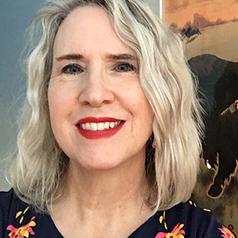
Christina Elizabeth Dando
Professor of Geography, University of Nebraska Omaha
My specialties include the various intersections of landscape (especially the Great Plains), media, and gender. I have published numerous articles on the Great Plains and its perception by humans (historically, also coverage by the media of the pipeline battles). I have worked on women's use of maps for their social activism during the Progressive Era (such as on the "suffrage map" used by suffragists as a propaganda tool during the suffrage movement) and I have published a book on the subject (Routledge).
I am currently a partner in the Omaha Spatial Justice Project which is examining the history of discriminatory housing practices (restrictive covenants, redlining, neighborhood erasure in the name of urban renewal) in Omaha Nebraska. This project is just beginning but I believe it has the most potential for articles of interest to The Conversation.
Less
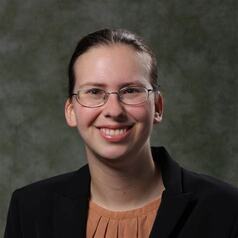
Christina S. Baer
Assistant Professor of Biological Sciences, Binghamton University, State University of New York
I'm interested in the natural history, ecology, and evolution of insects' interactions with plants, animals, and changing environments. Much of my research focuses on shelter-building caterpillars and the invertebrates that interact with them, but my FRI students work on a wide range of global change projects. I'm currently investigating how invertebrate communities that live in shelters will respond to warming temperatures. I'm also interested in how herbarium specimens can be used to investigate plant-insect interactions.
Less


- Market Data




