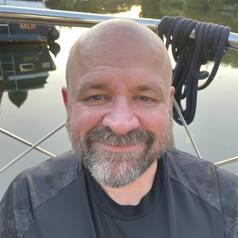
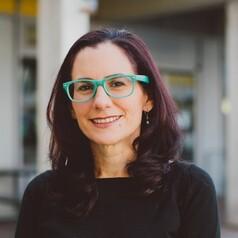
Professor of Microbiology, University of Galway Jim O'Gara completed his PhD in the laboratory of L. Kieran Dunican at the University of Galway investigating the genetic basis of tryptophan overproduction in Corynebacterium glutamicum. During his first postdoctoral fellowship at the University of Texas Medical School Houston in Samuel Kaplan's laboratory he discovered a novel relationship between the activity of electron transport chain redox carriers and transcriptional regulation of photosynthesis gene expression, and a new mechanism of resistance to the heavy metal tellurite in Rhodobacter sphaeroides. Returning to Ireland in 1997 for a postdoctoral fellowship at Trinity College Dublin in the laboratory of Charles J. Dorman, he revealed how fimB promoter-driven transcription across the fim switch impacts phase variable expression of type 1 fimbriae in E. coli. Jim was appointed to a lectureship in microbiology at RCSI in 1999 and established an independent research programme investigating virulence and antimicrobial resistance (AMR) mechanisms in staphylococci, including MRSA. In 2005, he was appointed Senior Lecturer in Microbiology at University College Dublin, and returned to his alma mater as Professor of Infectious Disease Microbiology in 2012. Prof O'Gara's research group are focused on the identification and characterisation of new drug targets, from which new therapeutic interventions can be developed for the improved treatment of AMR and chronic infections. Notable scientific contributions from his group include i) the first description of the major transcriptional regulator of staphylococcal biofilm production (IcaR), ii) the identification of novel biofilm mechanisms mediated by 1. the fibronectin binding proteins, 2. the major autolysin and 3. coagulase in S. aureus, iii) elucidating the relationship between methicillin resistance, biofilm and virulence in S. aureus, iv) new therapeutic approaches to the treatment of chronic MRSA infections, including beta-lactam/nucleoside combinations, and (v) the discovery of new drug targets to increase the effectiveness of beta-lactams against MRSA (including alanine transport systems and succinyl-CoA synthetase-controlled regulation of lysine succinylation in the proteome). Prof O'Gara was awarded a DSc from the National University of Ireland in 2018, and was elected a Member of the Royal Irish Academy (MRIA) in 2022.
Senior Research Fellow in the Institute of Population Health, NIHR Applied Research Collaboration North West Coast, University of Liverpool My research focuses on Inequalities in Dementia and ageing in the UK, across Europe, in Australia, and in lower and middle-income countries. Patient, public, and stakeholder involvement is at the core of all my work, to shape, conduct, and disseminate research with the expertise of people with lived, care professional, and third sector experiences. My research group at the University of Liverpool works with the public to co-produce solutions to inequities in dementia diagnosis and care.
Professor of Applied Economics, University of East Anglia Duncan, a Senior Fellow of the Higher Education Academy, is primarily a labour economist. While he remains dedicated to this domain, his recent research has taken a more unconventional direction. He has ventured beyond typical economic parameters, applying labour theory to a variety of unique subjects that many consider outside the conventional scope of the field. His innovative, interdisciplinary studies encompass areas such as the integration of economic psychology with housing demand modeling, the use of firm organization theory in addressing skill shortages, examining the effect of military spending on labour demand, and researching the implications of labour market inefficiencies on financial sector expenses. Duncan is deeply involved in researching the student experience in education. He has contributed to the field of economics education with publications on curriculum design to optimise student engagement and a comprehensive overview of diverse assessment methods, from seminar evaluations and reflective exercises to group assessments and online discussion boards, all aimed at enriching the learning experience for students. My research centres on enhancing Pedagogical Content Knowledge, which commits to advancing both disciplinary and educational research methodologies. The disciplinary aspect of my work draws on applied economics to empirically test hypotheses across a broad spectrum of issues, avoiding an overly narrow focus within the field. Meanwhile, my burgeoning work in pedagogical research examines the impact of teaching-only contracts on student experiences and emphasises the significance of economic pluralism. This approach advocates for diverse teaching methodologies, enriching student options for learning economics and fostering a more inclusive educational environment.
Associate Dean for Research, Purdue University My primary research interests are communication technologies, digital knowledge creation, data storytelling, and trust. My primary teaching interests are human AI interaction, digital analytics applications, security and strategy AI and communication technology, AI and data ethics. I typically work with graduate students who are interested in computational methods and social scientific approaches to human AI / technology interaction. My approach to graduate advising is structured and features research collaboration supported by extramural funding. My students and I have co-authored papers and books. I also encourage them to seek out and explore individual publishing opportunities.
Professor of Sociology, University of California, Davis I am a Professor of Sociology at the University of California, Davis, a research affiliate at the UC Institute on Global Conflict and Cooperation (IGCC), and currently a board member and a faculty affiliate of the UC Davis Designated Emphasis in Environmental Humanities. My research interests and expertise focus on risks & hazards, the environment, community politics & movements, and institutions, organizations, & economy. These interests have taken shape through studies of mass media and the anti-war movements, the petroleum industry and an oil spill disaster, technological innovation in the commercial construction and real estate industries, risk disputes and civic political conflict, and the political discourse and theatre that currently surrounds "public tragedies." Across my career, within these broad areas of interest, I have focused on the collective construction of rationality and how situated membership(s) in organizations, communities, and social movement groups shape interpretation, expectations, and preferences in significant ways. The National Science Foundation, the California Energy Commission, the UC Toxics Research and Teaching Fellowship, and the Institute on Global Conflict and Cooperation are just some of the institutions that have funded my research. From my research, I have published three books, Silent Spill: The Organization of an Industrial Crisis (2002, MIT Press), Community at Risk: Biodefense and the Collective Search for Security (2015, Stanford University Press), and After Tragedy Strikes: Why Claims of Trauma and Loss Promote Public Outrage and Encourage Political Polarization (2024, University of California Press). I have also published in leading journals like The Journal of Social Problems, Annual Review of Sociology, The American Behavioral Scientist, Environment & Planning C: Government & Policy, and Organization and Environment, among others.
Professor of Political Science, University of Essex Carolina Garriga is a political economists in the Department of Government at the University of Essex, and Deputy Director of the Essex Summer School in Social Science Data Analysis. Her research interests include international and comparative political economy, and international cooperation. Her current work focuses on central banks' governance, monetary institutions in developing countries, foreign direct investment, and the political economy of conflict. Her research has been published in the Journal of Politics, International Studies Quarterly, the Journal of Peace Research, the Journal of Conflict Resolution, Governance, Regulation & Governance, Economic Modelling, Economic Analysis and Policy, and other outlets.