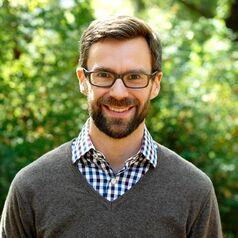
Professor in Exercise Science, James Cook University Professor Anthony Leicht is an experienced academic who has been involved in teaching, administrative, accreditation and research activities within the fields of sport and exercise science, and cardiovascular physiology for the past 25 years. He is the Academic Head of Sport and Exercise Science and Chair of the Human Research Ethics Committee at James Cook University. He currently teaches 1st and 2nd year undergraduate students and has published >300 teaching/research outputs. He has been an invited reviewer for >60 international journals and numerous national/international funding agencies. He is a Fellow of Exercise and Sports Science Australia. the European College of Sport Science and Sports Medicine Australia (SMA). He has been a SMA member since 2000 and is currently a longstanding Associate Editor of SMA’s Journal of Science and Medicine in Sport.
Lecturer, Graduate School of Business and Law, RMIT University Dr Nicole Shackleton is a socio-legal researcher focused on gender and sex, technology and regulation. Using qualitative empirical research, Dr Shackleton explores how gender and technology interact, and consequently how technologies may be regulated to reduce abuse and harassment. Her research aims to inform law reform to prevent online abuse, and the regulation of technology companies.
Associate Research Fellow at the Centre of the Digital Child, Deakin University Chris is a former teacher of French and now works as a Research Fellow at the ARC Centre of Excellence for the Digital Child. His research interests include the datafication of learning, gamified learning platforms and the use of technology in education more broadly. Chris completed his doctoral thesis in 2023. In his thesis he investigates how gamified learning applications reshape ideas, understandings and enactments of student engagement in a competitive private girls' school.
Lecturer, Faculty of Education and Social Work, University of Auckland, Waipapa Taumata Rau I am interested in sociological and philosophical approaches to schooling and education and how these disciplines might help us to make education good and right. I have a particular interest in secondary English curriculum and its relationship to social equity and educated ideals. I am also interested in education policy and in the relationships between policy and practice, with a focus on teacher subjectivity.
Postdoctoral Fellow in Fish, Wildlife and Conservation Biology, Colorado State University I am a behavioral ecologist interested in the intersection of animal acoustic communication, animal cognition, and the evolution of language. I use a combination of observation and non-invasive experiments with wild animals in their natural habitat to gain a window into the minds of my subjects and the intricacies of their social lives. I am also passionate about conservation biology and the use of bioacoustics as a tool for biodiversity conservation. I am currently an NSF-funded postdoctoral fellow in the lab of Dr. George Wittemyer at Colorado State University, where I study vocal communication in African savannah elephants. I obtained my Ph.D. from the Department of Neurobiology and Behavior at Cornell University, studying social cognition and vocal communication in the cooperatively breeding Acorn Woodpecker with Dr. Walt Koenig and Dr. Mike Webster. I received my B.S. degree in Environmental Biology from SUNY College of Environmental Science and Forestry, where I completed an Honors thesis on visual communication in Eastern gray squirrels under the supervision of Dr. Bill Shields.
Senior Lecturer in German and Translation, University of Bristol The focus of my research, teaching and consultancy work is on the intersection between language and community. It is based on the recognition that words are actions that matter in specific social situations. I analyse language use across various communities and support the development of communicative practices that are effective and appealing, most recently around the language of Brexit. This work is based on research into the way in which linguistic and social practices intersect; applying Richard Sennett’s theory of craftsmanship to literature I have identified and described the poet Stefan George’s ‘workshop’ as his major work. The resulting monograph was #2 on the NDR/SZ list of the best new non-fiction books. It was followed by a five-year working group I led at the Hanse Institute for Advanced Study, deepening the exploration of linguistic creativity and community and resulting in an edited volume published with Klostermann. In parallel, I examined the need for a reconceptualisation of the link between encounter on the one hand and textual criticism on the other. This notion of a possible phenomenology of language use was put to the test in work on the various medial traces of conversations between the writer Ernst Jünger and the ‘interview artist’ André Müller. I edited these materials and have since published two articles on them. Part of this work was supported through a Marie Curie Fellowship held at the University of Bristol. My teaching is an ongoing inquiry into the various forms in which language aids or hinders the emergence of communities. I have designed courses on discourses around the ‘centre’ in society and politics, the language of economic policy-making, and the poetics and practices of German humour. My aim is to help students understand the extent to which they can actively participate in the processes analysed, because I contend that the current historical moment of crisis is a crisis of agency – of translating values and ambitions into action. Research and teaching can clarify the ways in which this is possible, and I see it as my job to do so. In my translation teaching this concerns the way in which new graduates become entrepreneurs, in an industry dominated by freelancers and marked by a tension between automation and creativity that linguists today can harness. I am hoping to expand the ways in which the study of language and the joys of venture creation can be linked up. As a former managing partner of a research and consultancy firm I can offer the business development perspective needed in the process. I was, from 2010 to 2018, a founding partner at Nimirum, a research and consultancy firm tracking the language of socio-economic change and consumer biographies. I was responsible for around 300 completed projects, enabling over 100 clients across multiple industries to sharpen their profile, win a record number of bids, base strategic decisions on a secure footing, and increase revenue. I was also in charge of recruiting, training, and deploying researchers in 65 countries, and for Nimirum’s research methods portfolio. Many of the projects carried out at Nimirum serve as proof that a sense of individual agency, business success and linguistic competency can be brought into close alignment. In terms of my own contribution to creative language use I am the German translator of a number of bestselling and highly-acclaimed writers, including Guardian columnist Owen Jones, Atlas of Prejudice internet sensation Yanko Tsvetkov, science writer Hugh Aldersey-Williams and American poet Joshua Mehigan. As a creative writer I am the author of two volumes of poetry and two travel books, the most recent one outlining 111 reasons to love England, which was featured in broadsheets, tabloids and on radio.