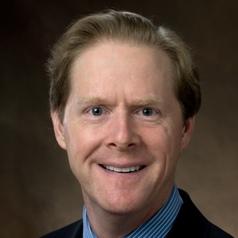
Professor of Classics, Miami University Professor Steven L. Tuck is Professor of Classics at Miami University. After earning his B.A. in History and Classics at Indiana University, he received his Ph.D. in Classical Art and Archaeology from the University of Michigan. He held the postdoctoral Arthur and Joyce Gordon Fellowship in Latin epigraphy at The Ohio State University. An esteemed teacher, Professor Tuck received the 2013 E. Phillips Knox Teaching Award, Miami University’s highest honor for innovative and effective undergraduate teaching. In addition, the Archaeological Institute of America, North America’s oldest and largest organization devoted to archaeology, presented him with its Excellence in Undergraduate Teaching Award in 2014. He also has been named a Distinguished Scholar and an Altman Faculty Scholar at Miami University. Professor Tuck has conducted archaeological fieldwork and research in Italy, Greece, England, and Egypt. He has directed more than a dozen study tours in Italy, concentrated on the city of Rome and the area around the Bay of Naples, including Pompeii, Herculaneum, and the Island of Capri. He has given more than 50 public lectures, including as a national lecturer for the Archaeological Institute of America. Professor Tuck is the author of numerous articles featured in international journals on such topics as the lives of sailors in the Roman navy, the schedule of gladiatorial games at Pompeii, the decorative program of the amphitheater at Capua, the professional organizations of spectacle performers, Roman sculpture, and triumphal imagery across the ancient Roman world. He is the author of "A History of Roman Art," a lavishly illustrated introduction to the topic. Professor Tuck has taught two previous Great Courses: Pompeii: Daily Life in an Ancient Roman City and Experiencing Rome: A Visual Exploration of Antiquity’s Greatest Empire.
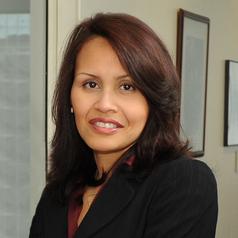
Professor of Law, Seton Hall University I am a tenured professor with over 20 years of experience teaching in the areas of family law, race and the law, gender and the law, and torts. I am the author of the forthcoming book The Architecture of Desire: How the Law Shapes Interracial Intimacy and Perpetuates Inequality (NYU Press May 2024). I am also the co-editor of two casebooks: Family Law: Cases and Materials (Foundation Press, 7th ed. 2019) (with Judith Areen, Marc Spindelman, and Philomila Tsoukala) and Family Law in the World Community: Cases, Materials, and Problems in Comparative and International Family Law (Carolina Academic Press, 3rd ed. 2015) (with D. Marianne Blair, Merle H. Weiner, and Barbara Stark). I have also published numerous law review articles in the areas of race and family law and I am an Associate Reporter of the American Law Institute's Restatement of Children & the Law.
PhD Researcher in Evolutionary Biology, The University of Edinburgh Jamie Weir is an evolutionary and behavioural ecologist interested in the origins of biological diversity and its consequences in changing environments. His research focuses particularly on adaptive colouration and phenology in the Lepidoptera (butterflies and moths). In his most recent teaching post at the University of Edinburgh, Jamie provided statistical support to fourth year undergraduate students designing, conducting, and completing their honours research projects. Jamie completed his PhD at Edinburgh's Institute for Ecology and Evolution, supervised by Ally Phillimore. He used large-scale experimental approaches to examine the consequences of phenological asynchrony in woodland caterpillar species. Prior to this work, he employed a combination of field experiments and phylogenetic comparative analyses to investigate the selective pressures exerted on insect colouration by bird predators. Jamie is a Fellow of the Linnean Society of London, and a Member of the Royal Entomological Society.
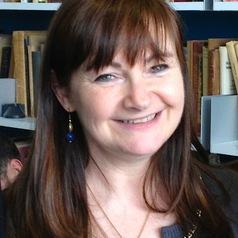
Professor in Classics, Trinity College Dublin I studied Classics at Churchill College Cambridge, followed by a Ph.D. at University College London. I worked for the British School at Athens (at Knossos) and as research assistant to Colin Renfrew before coming to Trinity in 1994. I am the Trinity representative on the Managing Committee of the Irish Institute of the Hellenic Studies at Athens, and co-edited the Institute's first publication, The Lure of Greece (2007). My main area of expertise is the archaeology of the Aegean Bronze Age. Specific areas of interest include ceramic studies (pictorial pottery; figurines); ancient art; Mycenaean intercultural relations in the Aegean and Eastern Mediterranean; ancient religion (goddesses; experiential/embodied aspects). My work on the historiography of the goddess in early archaeology situates the study of goddesses and gender within the intellectual trends and ideologies of the mid-19th to early 20th centuries. I am also involved in a number of long-term archaeological projects in Greece, most notably the Atsipadhes peak sanctuary project in western Crete (in collaboration with Dr Alan Peatfield). This project has received IRCHSS funding to apply GIS technology to the spatial study of the figurines and pottery within the excavated site.
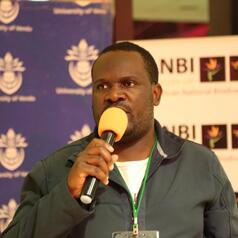
Professor of Environmental Science, Rhodes University Prof Ruwanza holds a PhD in botany and MSc in conservation ecology from Stellenbosch University (graduated in 2012 and 2009, respectively). Prior to that, he graduated with an MSc in environmental policy and planning and a BSc Honours in geography from the University of Zimbabwe. He is a Y2 National Research Foundation (NRF) rated scientist and a DST-NRF Centre of Excellence for Invasion Biology (CIB) core team member. His research career started with work in environmental policy and planning, where he researched the socio-economic contribution of urban agriculture to city dwellers in Zimbabwe. To develop a deeper understanding of environmental policy and planning, he embarked on a research project to examine the impact of land resettlement on vegetation cover and wildlife habitat in Zimbabwe. In 2007, he relocated to South Africa and joined the South African National Biodiversity Institute (Sanbi), where his career in ecology started. His ecological restoration projects looked at old agricultural fields and riparian system restoration. The above-mentioned projects were funded by Biota Southern Africa Phase III and CIB, in collaboration with Working for Water (WfW). Results of the river restoration project have contributed to the development of alien clearing guidelines by WfW. Besides the above-mentioned research projects, Dr. Ruwanza has also examined alien plant responses to climate change and soil nutrient enrichment. After six years of conducting research in the field of ecological restoration, he decided to grow his understanding of plant ecology by researching ecological changes caused by non-timber forest products (NTFPs) harvesting. The above-mentioned research work was done in collaboration with the NRF-SARCHI chair in Interdisciplinary Science in Land and Natural Resource Use for Sustainable Livelihoods at Rhodes University. At a policy level, he has worked on mainstreaming environmental issues in integrated development plans (IDPs) and development of invasive species control plans. Recently, he has been awarded an NRF-Thuthuka grant to examine social and ecological effects of Lantana camara invasion in Vhembe Biosphere, Limpopo province of South Africa. His broader future vision is to make progress in research and teaching in the field of ecology. His specific research aims are to carry out projects in ecological systems, producing results that positively improve people’s lives as well as contributing to environmental conservation. He believes that research should change local people’s lives. Besides publishing and communicating his research in scientific journals, he also intends to train young South Africans and graduate more students. Publications Mthethwa, K. & Ruwanza, S. 2023. Topsoil & vegetation dynamics 14 years after Eucalyptus grandis removal in the Eastern Cape province of South Africa. Plants, 12(17). doi.org/10.3390/plants12173047 Thondhlana, G., Amaka-Otchere, A.B.K. & Ruwanza, S. 2023. Encouraging household energy conservation through transdisciplinary approaches in Ghana and South Africa: Assumptions, challenges, and guidelines. International Journal of Urban Sustainable Development, 15(1): 201-214. doi.org/10.1080/19463138.2023.2223531 Ruwanza, S. & Thondhlana, G. 2022. People's perceptions and uses of invasive plant Psidium guajava in Vhembe Biosphere Reserve, Limpopo province of South Africa. Ecosystems & People, 18(1): 64-75. Ruwanza, S., Thondhlana, G. & Falayi, M. 2022. Research progress and conceptual insights on drought impacts and responses among smallholder farmers in South Africa: a review. Land, 11, 159. Ruwanza, S. 2021. Effects of Solanum mauritianum Scopoli (bugweed) invasion on soil and vegetation in Vhembe Biosphere reserve, South Africa. Austral Ecology, 46, 342-348. Ruwanza, S. 2021. Vegetation and soil recovery following Eucalyptus grandis removal in Limpopo Province, South Africa. Journal of African Ecology, 59(1): 241-252. Pamla, A., Thondhlana, G. & Ruwanza, S. 2021. Persistent droughts and water scarcity: Households' perceptions and practices in Makhanda, South Africa. Land, 10, 593. Thondhlana, G., Mubaya, C.P, McClure, A., Amaka-Otchere, A.B.K. & Ruwanza, S. 2021. Facilitating urban sustainability through Transdisciplinary (TD) Research: Lessons from Ghana, South Africa, and Zimbabwe. Sustainability, 13, 6205. Holmes, P.M., Esler, K.J., Gaertner, M., Geerts, S., Hall, S.A., Nsikani, M.M., Richardson, D.M., & Ruwanza S. 2020. Biological invasions and ecological restoration in South Africa. In. van Wilgen, B.W., Measey, J., Richardson, D.M., Wilson, J.R., Zengeya, T.A (eds.). Biological Invasions in South Africa, Invading Nature - Springer Series in Invasion Ecology, 14, pp 665-700. Nsikani, M.M., Geerts, S., Ruwanza, S. & Richardson, D.M. 2020. Secondary invasion and weedy native species dominance after clearing invasive alien plants in South Africa: status quo and prognosis. South African Journal of Botany, 132, 338-345. Ruwanza, S. & Mhlongo, E.S. 2020. Lantana camara invasion along road-river interchanges and roadsides in Soutpansberg, Vhembe Biosphere Reserve in South Africa. South African Journal of Science,116(9/10), Art. #8302, 5 pages. https://doi.org/10.17159/ sajs.2020/8302. Ruwanza, S. 2020. Potential of soil seed bank and ungulate-mediated endozoochory in old field restoration. Ecological Restoration, 38, 9-12. Ruwanza, S. 2020. Vegetation and soil recovery following Eucalyptus grandis removal in Limpopo province, South Africa. Journal of African Ecology, doi.org/10.1111/aje.12822. Ruwanza, S. 2020. Effects of Lantana camara invasion on vegetation diversity and composition in Vhembe Biosphere reserve, Limpopo province of South Africa. Scientific African 10; e00610; doi.org/10.1016/j.sciaf.2020.e00610. Ruwanza, S. 2020. Top-soil transfer from natural renosterveld to degraded old fields facilitates native vegetation. Sustainability, 12, 3833; doi:10.3390/su12093833. Panter, B., Ruwanza, S. 2019. Spekboom (Portulacaria afra) planting in degraded thickets improves soil properties and vegetation diversity. Ecological Restoration 37(2), 76-80. doi: 10.3368/er.37.2.76 Ruwanza, S., Dondofema, F. 2019. Effects of exotic guava (Psidium guajava L.) invasion on soil properties in Limpopo, South Africa. African Journal of Ecology, doi: 10.1111/aje.12675 Thondhlana, G. & Ruwanza, S. 2019. Homestead tree holdings: Composition, uses and challenges in Checheche Growth Point, South East lowveld, Zimbabwe. African Journal of Ecology, 10.1111/aje.12691. Ruwanza, S., Tshililo, K. 2019. Short term soil and vegetation recovery after Acacia mearnsii removal in Vhembe Biosphere Reserve, South Africa. Applied Ecology and Environmental Research 17(2), 1705-1716. doi: http://dx.doi.org/10.15666/aeer/1702_17051716 Ruwanza, S. 2019. The edge effect on plant diversity and soil properties in abandoned fields targeted for ecological restoration. Sustainability 11(1), 140. doi.org/10.3390/su11010140 Hirsch, H., Allsopp, M.H., Canavan, S., Cheek, M., Geerts, S., Geldenhuys, C.J., Harding, G., Hurley, B.P., Jones, W., Keet, J-H., Klein, H., Ruwanza, S., van Wilgen, B.W., Wingfield, M.J., Richardson, D.M. 2019. Eucalyptus camaldulensis in South Africa – past, present, future. Transactions of the Royal Society of South Africa. doi: 10.1080/00359191x.2019.1669732 Vukeya, E.N., Ruwanza, S., 2018. Soil physical properties underneath Pine elliottii and Eucalyptus cloeziana plantations in Vhembe biosphere, Limpopo Province of South Africa. Journal of Forestry Research. Ruwanza, S., 2018. Nurse plants have the potential to accelerate vegetation recovery in Lapalala Wilderness old fields, South Africa. African Journal of Ecology. DOI: 10.1111/aje.12536. Ruwanza, S., Mulaudzi, D.,2018. Soil physico-chemical properties in Lapalala Wilderness old agricultural fields, Limpopo Province of South Africa.Applied Ecology and Environmental Research, 16(3), 2475-2486. Ruwanza, S., 2017. Furrows as centers of restoration in old fields of Renosterveld, South Africa. Ecological Restoration, 35(4), 289-291. Ruwanza, S. 2017. Towards an integrated ecological restoration approach for abandoned agricultural fields in renosterveld, South Africa. South African Journal of Science 113(9/10), Art. #a0228, 4 pages. http://dx.doi. org/10.17159/sajs.2017/a0228 Ruwanza, S., Shackleton, C., 2017. Ecosystem scale impacts of non-timber forest product harvesting: effects on soil nutrients. Journal of Applied Ecology, 54(5), 1515-1525. Sholto-Douglas, C., Shackleton, C.M., Ruwanza, S., Dold, A., 2017. The effects of indigenous invasive shrubs on plant species richness and soils in semi-arid communal lands. Land degradation and development, 28(7), 2191-2206. Ruwanza, S. 2017. Invasion of abandoned agricultural fields by Acacia mearnsii affect soil properties in Eastern Cape, South Africa. Applied Ecology and Environmental Research 15(1): 127-139.
Associate Professor of Environmental Science, Rhodes University Gladman Thondhlana is an associate professor in the Department of Environmental Science at Rhodes University in South Africa, where he teaches both undergraduate and postgraduate students. He completed his PhD in environmental science in 2011 at Rhodes University. He was previously a PhD fellow in the Department of International Environment and Development Studies (Noragric), at the Norwegian University of Life Sciences. His work centres broadly on society and conservation. He has a particular interest in the links between wild natural resource access, use and household welfare, governance of protected landscapes, conservation conflicts and urban sustainability. In his work on urban sustainability, he has focused on questions of energy use behaviour and waste management. His work is guided by efforts aimed at addressing inequality, marginalisation and social injustice within the context of sustainable natural resource management. Glad’s research and practice has been supported by the National Research Foundation (South Africa), Centre for Environmental Economics and Policy in Africa (South Africa), Economic Research Southern Africa (South Africa), International Foundation for Science (Sweden), the Social Science Research Council (USA), the Centre for International Governance Innovation (Canada) and International Science Council (France). Associate Professor Thondhlana is an avid educator and a Teaching Advancements in Universities (TAU) fellow. He is a recipient of the Vice Chancellor’s Distinguished Teaching Award (2016) and Vice Chancellor’s Distinguished Research Award (2019). Recent Publications Ngalo, N. & Thondhlana, G. 2023. Illegal solid-waste dumping in a low-income neighbourhood in South Africa: Prevalence and perceptions. International Journal of Environmental Research and Public Health, 20(18). doi.org/10.3390/ijerph20186750 Thondhlana, G., Amaka-Otchere, A.B.K. & Ruwanza, S. 2023. Encouraging household energy conservation through transdisciplinary approaches in Ghana and South Africa: Assumptions, challenges, and guidelines. International Journal of Urban Sustainable Development, 15(1): 201-214. doi.org/10.1080/19463138.2023.2223531 Yose, P., Thondhlana, G., & Fraser, G. 2023. Conceptualizing the socio-cultural impacts of marine plastic pollution on human well-being: A perspective. Marine Pollution Bulletin, 194. doi.org/10.1016/j.marpolbul.2023.115285 Mutumbi, U., Thondhlana, G. & Ruwanza, S. 2022. Co-designed interventions yield significant electricity savings among low-income households in Makhanda, South Africa. Energies, 15, 2320. https://doi.org/10.3390/en15072320 Thondhlana, G., Yose, P., Cockburn, J. & Shackleton, C. 2022. Livestock ecosystem services and disservices in a medium-sized South African town. Ecosystems & People, 18(1): 31-43. Ruwanza, S. & Thondhlana, G. 2022. People's perceptions and uses of invasive plant Psidium guajava in Vhembe Biosphere Reserve, Limpopo province of South Africa. Ecosystems & People, 18(1): 64-75. Ruwanza, S., Thondhlana, G. & Falayi, M. 2022. Research progress and conceptual insights on drought impacts and responses among smallholder farmers in South Africa: a review. Land, 11, 159. Williams, S.P., Thondhlana, G. & Wei Kua, H. 2021. Behavioural interventions yield electricity savings among high-income households in Johannesburg, South Africa. Engery & Environment, 1-16. Mutumbi, U., Thondhlana, G. & Ruwanza, S. 2021. The distribution of selected woody invasive alien species in small towns in the Eastern Cape, South Africa. Southern African Journal of Botany, 141: 290-295. Pullanikkatil, D., Thondhlana, G. & Shackleton, C.M. 2021. The cultural significance of plant-fibre crafts in southern Africa: A comparative study of Eswatini, Malawi and Zimbabwe. Forests, Trees & Livelihoods, DOI: 10.1080/14728028.2021.1998797. Thondhlana, G., Mubaya, C.P., McClure, A., Amaka-Otchere, A.B.K. & Ruwanza, S. 2021. Facilitating urban sustainability through transdisciplinary (TD) research: Lessons from Ghana, South Africa, and Zimbabwe. Sustainability, 13, 6205. Pamla, A., Thondhlana, G. & Ruwanza, S. 2021. Persistent droughts and water scarcity: Households' perceptions and practices in Makhanda, South Africa. Land, 10, 593. Belluigi, D.Z. & Thondhlana, G. 2020. Your skin has to be elastic: The politics of belonging as a selected black academic at a ‘transforming’ South African university. International Journal of Qualitative Studies in Education. https://doi.org/10.1080/09518398.2020.1783469 Cockburn, J., M. Schoon, G. Cundill, C. Robinson, J. A. Aburto, S. M. Alexander, J. A. Baggio, C. Barnaud, M. Chapman, M. Garcia Llorente, G. A. García-López, R. Hill, C. Ifejika Speranza, J. Lee, C. L. Meek, E. Rosenberg, L. Schultz & Thondhlana, G. 2020. Understanding the context of multifaceted collaborations for social-ecological sustainability: A methodology for cross-case analysis. Ecology and Society, 25 (3): 7 https://www.ecologyandsociety.org/vol25/iss3/art7/ Du-Point, T., Vilakazi, M., Thondhlana, G. & Vedeld, P. 2020. Livestock income and household welfare for communities adjacent to the Great Fish River Nature Reserve, South Africa. Environmental Development, 33: 100508. https://doi.org/10.1016/j.envdev.2020.100508 Thondhlana, G., Redpath, S., Vedeld, P., van Eeden, L., Pascual, U., Sherren, K. & Murata, C. 2020. Non-material costs of wildlife conservation to local communities and implications for conservation interventions. Biological Conservation, 246: 108578. https://doi.org/10.1016/j.biocon.2020.108578 Thondhlana, G., Shackleton, C & Pullanikkatil, D. 2020. Plant fibre-products production, trade and income in Eswatini, Malawi and Zimbabwe. Forests, 11, 832. https://doi:10.3390/f11080832 Williams, S.P., Thondhlana, G. & Kua, H.W. 2020. Electricity use behaviour in a high-income neighbourhood in Johannesburg, South Africa. Sustainability, 12, 4571. https://doi:10.3390/su12114571 O’Brien, J. & Thondhlana, G. 2019. Plastic bag use in South Africa: Perceptions, practices and potential intervention strategies. Waste Management, 84: 320.328. Olagunju, A., Thondhlana, G., Chilima, J.S., Sene-Harper, A., Compaore, W.R. & Ohiozebau, E. 2019. Water governance research in Africa: progress, challenges and an agenda for research and action. Water International, doi.org/10.1080/02508060.2019.1594576. Books and Book chapters Linnell, J.D.C., Thondhlana, G. & Simon Hedges 2023. Assessing the impacts of conflicts. IUCN SSC guidelines on human-wildlife conflict and coexistence (First Edition). Gland, Switzerland: IUCN. McQuinn, B., Zimmermann, A., Stevens, J. & Thondhlana, G. 2023. Dialogue: a process for conflict resolution. IUCN SSC guidelines on human-wildlife conflict and coexistence (First Edition). Gland, Switzerland: IUCN. Roe, D., Thondhlana, G., Hill, C. & Roy, S. 2023. Livelihoods, poverty and well-being. IUCN SSC guidelines on human-wildlife conflict and coexistence (First Edition). Gland, Switzerland: IUCN.