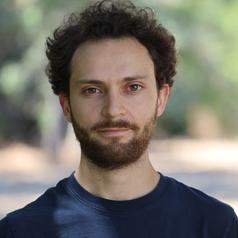
Postdoctoral Fellow, Carnegie Science I am a postdoctoral fellow in the Climate Energy Lab at the Carnegie Institution for Science at Stanford, USA, since April 2023. I am currently working on decision-making under uncertainty for technological innovation and energy system modeling. I earned my BSc and MSc in Environmental Engineering from Politecnico di Milano where I also obtained my PhD in Information Technology in 2022 in the Environmental Intelligence Lab. In 2021, I participated in the Young Scientist Summer Program at IIASA. From June 2022 to March 2023, I was a visiting postdoctoral scholar at the Natural Capital Project at Stanford University.
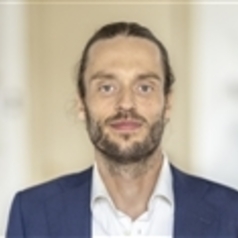
Assistant Professor of Religion and Heritage, Utrecht University Erik Meinema is an assistant professor of religion and heritage in the department of Philosophy and Religious Studies. His research focuses on religious diversity, youth culture, and political secularism in East Africa. He is a member of the research group Religious Matters in an Entangled World, led by Birgit Meyer. He received a Research Talent Grant from the Dutch Research Council (NWO) to conduct his PhD research on the regulation of religious coexistence in coastal Kenya, in which he studied Christianity, Islam and indigenous African religious traditions within one conceptual framework. His PhD thesis received the biennial Gerardus van der Leeuw PhD Dissertation Award from the Dutch Association for the Study of Religion in 2023. He has published peer-reviewed articles in journals such as Religion, Africa, the Journal of Religion in Africa, and the Journal of Eastern African Studies. He is also interested in questions about materiality, religion and (violent) conflict and has recently published an edited volume on this topic with Brill together with Lucien van Liere. Together with Lucien, he also currently works on a project on The Meaning of Weapons.
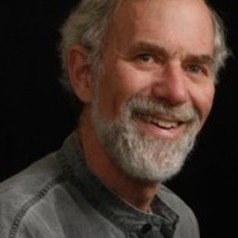
Senior Lecturer of Finance, Auburn University Finance professor/lecturer for almost 3 decades at Auburn University, University of Iowa, University of Notre Dame, and Southern Methodist University (SMU). Also, a partner at Palos Harbor Fund LP, a precious metals hedge fund out of the United States, Canada, Switzerland. Received a Ph.D. in Finance from the University of Texas, Arlington; MBA from Loyola University, Chicago; and BBA in Finance from the University of Iowa. Prior to academia was a financial analyst in Chicago and Seattle.
James T. Watkins IV and Elise V. Watkins Professor of Political Science, Stanford University David D Laitin is the James T. Watkins IV and Elise V. Watkins Professor of Political Science at Stanford University. His specialty is comparative politics. In that field he conducts research on political culture, ethnic conflict, and civil war. His field expertise spans Somalia, Nigeria, Catalonia, Estonia and France.
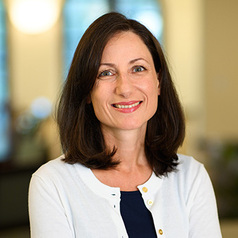
IBM Chair of International Studies and Professor of Politics and International Affairs, Princeton University Rafaela Dancygier holds the IBM Chair of International Studies at Princeton University, where she is Professor of Politics(Link is external) and Public and International Affairs(Link is external) (Link opens in new window). Dancygier is Director of the Mamdouha S. Bobst Center for Peace and Justice(Link is external) (Link opens in new window) and Director of the Initiatives on Contemporary European Affairs (ICEA)(Link is external) (Link opens in new window). Her research examines how social and economic divides structure political conflict in Europe and the United States. Dancygier covers topics such as immigration, radical right populism, political extremism, gender equality, and housing crises and gentrification. Her first book Immigration and Conflict in Europe(Link is external) (Link opens in new window) explains when and why immigration destinations witness conflict between immigrants and natives, between immigrants and the state, or no conflict at all. Her second book, Dilemmas of Inclusion: Muslims in European Politics(Link is external) (Link opens in new window) examines how minority groups are incorporated into politics and studies the consequences of this inclusion for the nature of party politics, electoral realignments and gender equality. Her articles have appeared in outlets such as the American Journal of Political Science, American Political Science Review, Comparative Political Studies, Journal of Politics, Proceedings of the National Academy of Sciences, World Politics, and elsewhere. Immigration and Conflict was awarded the Best Book Award by the European Politics and Society Section of the American Political Science Association (APSA), and it was also named a Choice Outstanding Academic Title. Dilemmas of Inclusion won the 2018 Stein Rokkan Prize for Comparative Social Science Research and the 2019 Luebbert Prize, awarded by APSA to the best book published in comparative politics in the previous two years. Her articles have been awarded Best Paper Prizes by APSA’s Sections on Comparative Politics; Migration and Citizenship; European Politics and Society; and Representation and Electoral Systems. In 2023 Dancygier was elected to be a member of the American Academy of Arts and Sciences.
Associate Professor of Anthropology, Amherst College I am an anthropologist interested in questions of politics and mediation, particularly in the entanglement of popular sovereignty and political communication. My recent interests are in political affect, populism, rumor, infrastructural development and democracy. I received my PhD in Anthropology from the University of Chicago and have been a Member at Institute for Advanced Study in Princeton during 2020-21. My first book, Paradoxes of the Popular: Crowd Politics in Bangladesh (Stanford University Press 2019) is an ethnography of the crowd. My current book project explores the entanglements of sovereignty and sacrifice in the lived materiality of populist authoritarianism, or what I loosely describe as ''infrastructural populism'. I am the book review editor (South Asia) of Journal of Asian Studies and am on the editorial board of Journal of Bangladesh Studies. During 2020-23, I served as an elected member of the South Asia Council of the Association for Asian Studies.