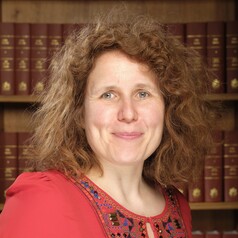
Professor, Conservation Biology, Zoological Society of London I am a conservation biologist interested in biodiversity monitoring, climate change ecology and nature recovery. I did my PhD in France and then worked in Norway and Canada before starting at the Institute of Zoology, Zoological Society of London, in 2006.
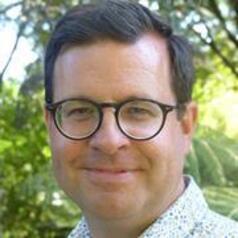
Associate Professor of Ethnomusicology, Te Herenga Waka — Victoria University of Wellington Brian Diettrich (PhD, University of Hawai‘i at Mānoa) is an internationally recognised ethnomusicologist and a specialist in music and dance of the Pacific Islands. Working at the intersection of ethnography and history, Brian's research reimagines the capacity of music within culture, society, and place. His research interests and publications explore Indigenous performance and decolonisation, ecomusicology and environment, as well as musical instruments, recordings and archives, film and popular music, and online music communities. Brian has held numerous research leadership positions both nationally and internationally. He serves on the Executive Board of the International Council for Traditions of Music and Dance (A Non-Governmental Organization in Formal Consultative Relations with UNESCO), and he is currently chair of local arrangements for the 48th ICTMD World Conference to be held in Wellington in 2025, a historic first for New Zealand. He chairs the ICTMD prize committee, is a former chair (2015–2021) of its Oceania Study Group, and a recent co-chair of the 47th ICTMD World Conference held at the University of Ghana in 2023. As part of his work facilitating new research initiatives, Brian has curated a philanthropic-funded research award for Indigenous scholars and a new international prize for emerging researchers. Brian has undertaken research collaborations with the East-West Center (Honolulu), the Yale Institute of Sacred Music, the University of Ghana, the Pacific History Association, and he has held residencies as visiting scholar at the University of Hawai‘i at Mānoa, National Taiwan Normal University, and Nara University of Education in Japan. Brian's research has been profiled by the Society for Ethnomusicology for its “Ethnomusicology Today” podcast series. He is a member of the Editorial Advisory Board for Lyrebird Press (University of Melbourne), and at VUW he is a member of the Joint Research Committee, Faculty of Humanities and Social Sciences. Brian is a regular consultant for international funding bodies as well as cultural organizations in the Asia-Pacific region. As part of his community leadership, Brian is a member of the Wellington Advocate Network, which fosters events and industry opportunities. In 2022, Brian's work received the Research Excellence Award from Victoria University of Wellington. An advocacy for the peoples and expressions of Oceania has underscored much of Brian’s publications. He has undertaken research projects in the Federated States of Micronesia, Palau, the Marshall Islands, on Guam, among migrant communities in Hawai‘i, as well as in Aotearoa. His long-term research the islands of Chuuk since 2000 has resulted in numerous publications. His book projects include the co-authored book, "Music in Pacific Island Cultures" (OUP 2011), including a Chinese language edition, and the co-edited volume, "Perspectives in Motion: Engaging the Visual in Dance and Music" (Berghahn 2021). Brian is currently leading two funded projects: "Listening with Shell, Wood, and Fibre: Decolonisation through Musical Instruments" (2021-2022) and "Musical Travels in Nan’yō" (2020-2022), which will edit and publish an English translation of Hisao Tanabe's historical writings on Pacific music. Brian is currently preparing a new introductory edited volume at the invitation of Cambridge University Press.
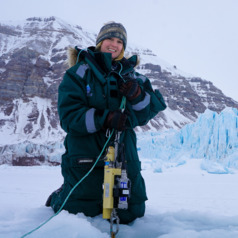
PhD Candidate in Polar Marine Ecology and Climate Change, University of Technology Sydney I am a final year PhD candidate with University Technology Sydney and UNIS Svalbard (Arctic Norway) and my research interest is the biological implications of sea ice decline and climate change in the polar regions, in both terrestrial and marine environments. I have spent 7 years working in the high Arctic, undertaking remote fieldwork on the frozen ocean. I have produced six first author publications in high quality scientific journals, and co-authored two books on polar fieldwork. I am a passionate advocate for women and diversity in science and have presented at many international conferences and seminars, including on the topic of barriers to participation for women in polar science. I have a Masters of Environmental Science, a Bachelor of Science and a Bachelor of Arts. In addition to conducting my research, I am employed as a guest lecturer and academic teaching staff.
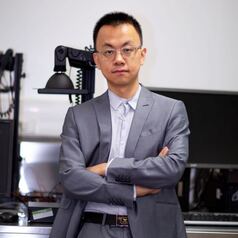
Distinguished Professor in Chemistry and Renewable Energy, RMIT University Tianyi Ma has multi-national, multi-university experience at several of the world’s top universities. He obtained his PhD from Nankai University, one of the top universities in China. Then, he worked at the University of Adelaide, University of Newcastle, and Swinburne University of Technology across different states of Australia. He is now a Full Professor in the School of Science at RMIT University. He was awarded an Australian Research Council (ARC) Discovery Early Career Researcher Award (DECRA) in 2014 and an ARC Future Fellow in 2021, both of which are highly competitive fellowship schemes - thereby indicating his outstanding academic achievement. He was made a Fellow of the Royal Society of Chemistry (FRSC) in 2021, which is a prestigious honour to those who must have made an outstanding contribution to the advancement of chemical sciences. He is a world-leading scientist in the renewable energy field, with pioneering work conducted in areas of functional photocatalytic, electrocatalytic, thermocatalytic and piezocatalytic materials for renewable solar, mechanical and thermal energy harvesting and utilisation, as well as carbon capture, utilisation and storage (CCUS). These processes have been further incorporated into his developed next-generation high-performance battery and supercapacitor-based energy storage devices. He has published over 350 peer-reviewed journal papers (252 as the first or corresponding author, 229 with a journal impact factor > 10, 64 with a journal impact factor > 20, 8 with a journal impact factor > 30, and > 35 invited reviews) in top-tier journals such as Nature Communications, Angewandte Chemie International Edition, Journal of the American Chemical Society, and Advanced Materials. In total, his papers have attracted over 35,000 citations with an H-index of 89. The substantial impact is also evidenced by 60 of his papers being ranked as ESI Top 1% or 0.1% Highly Cited Papers, resulting in him being ranked as the Clarivate’s ESI Highly Cited Researcher in 2020 - 2023 (both Materials Science and Chemistry fields), standing among Top 1% of the global researchers. He is not only a champion researcher, but also an exceptional research leader. He has supervised more than 30 PhD students, many of whom have received research awards and scholarships at multiple levels. He is actively engaged in organising international and domestic conferences, and has given more than 30 plenary, keynote and invited talks. His professional leadership is also evidenced by heavy engagement in academic roles including serving as the Associate Editor or Editorial Board Member for many journals such as Materials Reports: Energy, Rare Metals, and Journal of Electronic Materials; 10 themed issues were published by him as the leading guest editor. As chief investigator, he has secured over $21m funding from the Federal Government, the Victorian State Government, and industry partners to conduct innovation work, which is not only fundamentally significant but also shows far-reaching impact for industry. Via ARC Linkage, CSIRO Collaboration, AusIndustry R&D Finding, CRC-P, ARNEA and CCUS-Technology Projects, he has established substantial collaborations with industry partners including Siemens Australia, Loy Yang Electricity, Advanced Carbon Energy, GrapheneX, and EntX. The lab-scale renewable energy devices and systems based on his game-changing functional materials and technologies have since been up-scaled to prototype demonstrations and pilot plants. He plays a key role as the group leader, chief investigator and critical initiator in securing these industry-directed funds. He is now leading the Carbon Neutrality Group at RMIT, all while collaborating with researchers from the USA, UK, China, Japan, Korea, Canada, India, Saudi Arabia and other regions. He aims to combine aforementioned revolutionary technologies focusing on all sectors of the renewable energy supply chain to eventually achieve global carbon neutrality.
PhD student, School of English and Theatre Studies, University of Guelph Taylor Marie Graham (she/her) is an award winning playwright, librettist, director, theatre scholar, and educator who lives in Cambridge, Ontario / Haldimand Tract. She has an MFA in creative writing and a PhD in theatre from University of Guelph. She works as a sessional theatre professor at universities in Southwestern Ontario and is the Interim Community Engagement Office at the International Institute in Critical Studies in Improvisation. Taylor is published in Canadian Theatre Review, Intermission Magazine, Routledge’s Journal of Applied Theatre and Performance, and Canadian Literature. Critics describe her plays and operas as, “arresting and funny” (Slotkin), “uncommonly cool” (MoT), “charmingly twisted” (Toronto Star), “powerful, and courageous,” (OnStage), “meaningful for all ages” (Intermission), “darkly evocative” (IstvanReviews), “psychological, theological, and ornithological” (OurTheatreVoice), “as moving as it is scary” (MyEntertainmentWorld), and “profound, beautifully crafted” (StageDoor). Her book Cottage Radio and Other Plays will be published by Talonbooks this July.