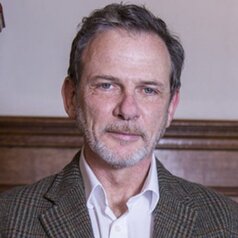
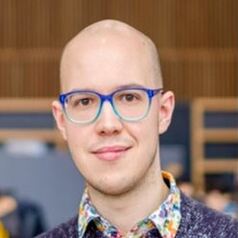
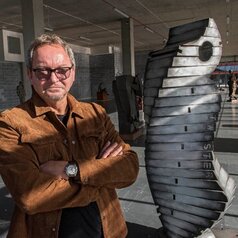
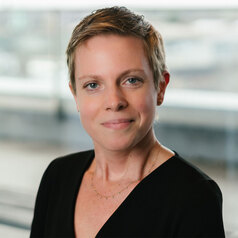
Professor of Sociology, Sociology, University of Manchester I have a first degree in Cultural Studies and a PhD in Sociology. Prior to working at Manchester I held lectureships at the University of Leeds and Nottingham Trent University, and was a research fellow at London South Bank University. My teaching has included courses on gender and sexuality, families, relationships and social change, personal life, social theory, research methods and methodologies. My research and publications has focused on the implications of social change for living with HIV; same sex intimacies; 'given' and chosen' families; ageing sexualities; friendships and other critical associations; theorising personal life; the links between sexualities and class; marriage and formalised partnerships, and qualitative research methods. With colleagues I am currently researching dating app use prior to, during and after Covid 19 restrictions. As well as the above, I have organised and provided training and capacity building workshops and events for the Realities node of the ESRC National Centre for Research Methods. Previously, as Head of Sociology, I worked with colleagues on initiatives to build further the dynamic teaching and research culture of Sociology at Manchester. As the previous Director Research in the School of Social sciences, which includes, Economics, Politics, Philosophy, Social Anthropolgy, Social Statistics and Sociology I worked with colleagues to further develop the excellent research culture of the School. I have recently stepped down from a 5 year stint as Head of School and Vice Dean and am on research leave. Currently, my theoretical and research interests are focused on the interaction of identities, relationships and diverse ways of living in the context of social change. I am interested in theories of social and cultural change, and in arguments about the contemporary reconfiguration of 'the social' and personal life. I have researched the implications of social change for how we conceive 'the social' and 'personal life' through ESRC funded projects on sexualities and gender, families and intimacies, ageing, research methods and dating app use. I have studied and written about living with HIV, same sex intimacies, ageing sexualities, sexuality and class, friendships, civil partnerships and same-sex marriages, and divorce. With colleagues I am currently writing a book on on relationship dissolution and divorce, as well as articles form an ESRC funded study of dating app use.. I was a member of the Realities research methods team which was linked to the ESRC's National Centre for Research Methods, and a founding member as well as co-Director of the Morgan Centre for the Study of Everyday Life.
Chancellor's Fellow, Deanery of Molecular, Genetic and Population Health Sciences Usher Institute Centre for Biomedicine, Self and Society, The University of Edinburgh I am an interdisciplinary researcher interested in the interface between sexuality, health, memory and online/offline practices. I am currently working on a variety of projects focused on how gay men negotiate HIV risk and COVID-19 risk, people experience memories of the HIV/AIDS pandemic, and use the internet for wellbeing during COVID-19. I have authored reports and papers on the impact of COVID-19 on LGBT+ people's lives and health and provided evidence to the UK Parliament on PrEP delivery nationwide.
Reader in Fine Art, Loughborough University Henry Moore OM CH personally funded Atkin throughout his MA sculpture course at the RCA in London. Since then, he has exhibited his work worldwide: e.g., the Guggenheim Museum in Italy, Museum of Modern Art Melbourne and New Orleans Museum of Art - are three such examples of high-profile venues worldwide. Recent publications on Atkins’ public art output focus on references to cultural heritage within urban design. Atkin has been invited to present keynote papers at a number of conferences worldwide including, 16th China Sculpture Forum. DIAOSU- National Sculpture Magazine of China: Sculpture by the Sea Symposium -Art Gallery of NSW, Sydney, Australia: Understanding the Post-Industrial City: Universidade Técnica de Lisboa Bauhaus – Lisbon, Portugal: International Sculpture Centre Conference, Pittsburgh USA: Curating in Action – Art as Social Practice, China Academy of Art, Hangzhou, China. Atkin is Reader in Fine Art and Director of Internationalisation at Loughborough University, and has lectured at numerous institutions worldwide, including Boston University: Tsinghua University, Beijing: Virginia Commonwealth University: Kansas City Art Institute: Hartford University, CT.: Sydney College of the Arts: Victoria College Melbourne: The Curtin Institute, Perth. He is Honorary Fellow, National Academy of Sculpture, Beijing, and Fellow at the Royal Society of Sculptors, London. John Atkin has developed a substantial body of work over the past 40 years which has been exhibited worldwide in the form of solo and group exhibitions, as well as public art. His research interests have evolved from the use of the found object as a metaphor for human identity into how outcomes from such research can be embedded into the public realm via regeneration projects worldwide. His early work is characterised by a series of figurative artworks which explore his own identity through the examination of family relationships, principally his father. The resulting artworks, sculpture, installation, tableaux, painting, film, screenplay formed the basis of a series of exhibitions, Juda Rowan Gallery London, Hatton Gallery, Ceolfrith Gallery. Themes of conflict permeated his output, which led to the development of further works influenced by study visits to, the Imperial War Museum, Wallace Collection, First World War poetry. Outcomes have been exhibited widely, from the Peggy Guggenheim Museum Italy, to Olympic Park Beijing. His output has straddled the digital-divide, where one half of his career is characterised by traditional making processes, and since 2003 has become an increasing synthesis of digital and traditional methods of making. Drawing has been the central plank of this extensive activity, recognised by significant awards from, the Rootstein Hopkins Foundation, Royal College of Art, and Loughborough University. Atkin continues to work with Interdisciplinary Design Teams, where the role of art in urban regeneration projects and urban design are key factors in shaping public space. To this end, he collaborates with Architects, Urban Designers, Landscape Architects, City Planners, Highway Engineers, Environmental Designers, Civil & Building Engineers, and other Design groups. Although his studio is the discreet environment for developing ideas, his work takes place worldwide, often working as an embedded component in fabrication team’s, as well as community groups, where history and heritage are prerequisites of a projects aims and objectives.
Senior Lecturer in Medieval History, Edge Hill University I received my BA and MA from Brown University and my PhD from the University of Connecticut. Before joining Edge Hill, I taught in the Department of English at the University of Mississippi and the School of History at University College Dublin. I am a Fellow of the Royal Historical Society and a Fellow of the Society of Antiquaries. My work focuses on transcultural and multilingual connectivity in early medieval Britain and Ireland. My first book, Writing the Welsh borderlands in Anglo-Saxon England (Manchester University Press, 2017) was winner of the Best Book on an Anglo-Saxon Topic Publication Prize from the International Society for the Study of Early Medieval England in 2019 and the Southeastern Medieval Association award for best first book in 2020. My second book, The Origin Legends of Early Medieval Britain and Ireland (Cambridge University Press, 2022) was published last year, and I have just completed a Cambridge Element entitled Multilingualism in Early Medieval Britain. I have held fellowships as a Text Technologies Fellow at Stanford University, A.W. Mellon Postdoctoral Fellow in Medieval Studies at the Medieval Institute at the University of Notre Dame, British Academy Visiting Fellow at the University of Birmingham, Marie Skłodowska Curie COFUND Fellow in the Trinity Long Room Hub at Trinity College Dublin, and Resident Fellow in the Centre for Advanced Studies at the University of Tübingen. Current projects include a volume on multilingualism for the Cambridge Elements series and a larger project on intellectual connectivity in the Viking Age. Research Interests My work focuses on historical and textual connections across the early medieval Irish Sea zone, encompassing material in Old English, Old Irish, Middle Welsh, Old Norse, and Latin.
Postdoctoral researcher, University of Fort Hare A postdoctoral fellow under the SARChI Chair: Sexualities, Gender and Queer Studies at the University of Fort Hare, I am a teacher, writer and scholar activist with interests in participatory performance forms and their intersections with race, gender and sexualities in Africa. In 2018, I was awarded the Canon Collins Scholars Scholar award as well as a community engagement award (UKZN) in recognition of my scholar-artivist work.
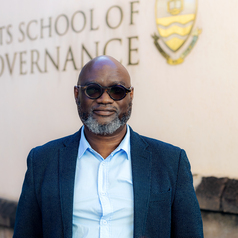
Postdoc Research Fellow - Digital Governance and Media, University of the Witwatersrand My name is Dr Maxwell M. Maseko. I hold a PhD in public administration from the University of the Western Cape and have 26 years of experience working as a journalist in various news media organisations in South Africa. I am currently a postdoctoral fellow at the newly established Tayarisha Centre at the Wits School of Government. The centre conducts academically rigorous, cutting-edge research on the challenges and opportunities presented by digitalisation, especially in the public sector. My research interests lie in the fields of media and governance, particularly in areas of democracy, digitalisation in the public sector, protests, and citizen participation. I am interested in researching new methods of governance, innovation, politics, and protest.