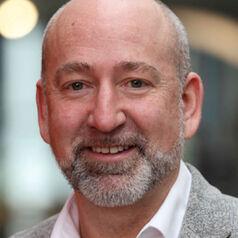
Assistant Professor in Psychotherapy, Dublin City University Assistant Professor in Psychotherapy in the School of Nursing, Psychotherapy and Community Health. He also is a registered practitioner as a Psychoanalytic Psychotherapist with both APPI and the ICP. His research work and clinical practice has been around male sexual abuse survivors, EDI intersectional concerns in Mental Health systems, education and individual's lives, the LGBTQ community, and transgenerational trauma within an Irish context. Ray has written extensively on the gay minoritised position for both services users and service providers within mental health discourses and practices with his doctoral research with DCU exploring the subjectivities involved and imposed on men in being called ‘homosexual’. As one of Ireland’s few male Agony Aunts, Ray works significantly (and sometimes with significance) with the media in discoursing love, relationships, and desire in the twenty-first century, as a regular contributor to The Ray Darcy Show, and his co-fronting of the RTE television show Then Comes Marriage. Current research explores the relationships between shame and personal and cultural identities; and the individual and collective transmission of trauma across generations, with particular emphasis on impacts of the Irish Famine experience.
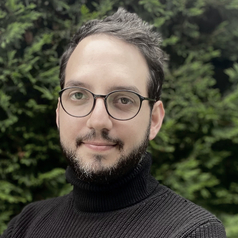
Senior Lecturer in Interdisciplinary Theology, University of the Free State Calvin D. Ullrich is currently senior lecturer in interdisciplinary theology in the Department of Historical and Constructive Theology at the Faculty of Theology and Religion of the University of the Free State, South Africa. He received his PhD in systematic theology from the University of Stellenbosch, with a concentration on political theology and continental philosophy of religion. He was formerly a research fellow at the Ecumenical Institute of the Ruhr-Universität, Bochum Germany, and is currently the principal researcher in a German Research Foundation funded project, investigating phenomenologies of embodiment, affect theory and systematic theology. Alongside the fields of political theology, public theology, embodiment and continental philosophy of religion, he also maintains interests in secular, post-secular studies, radical democratic theory and psychoanalysis.
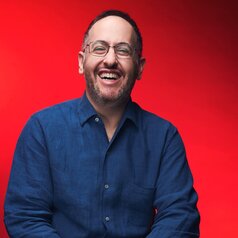
Assistant Professor of Business Law, Ross School of Business, University of Michigan Brian J. Connolly is an Assistant Professor of Business Law at the University of Michigan's Stephen M. Ross School of Business. His research and teaching centers in the areas of real estate, land use, and development law. His primary research interests include issues of public and private regulation of land use and their relationship to housing affordability and urban redevelopment. Professor Connolly has also written on First Amendment issues related to local government regulation – including signs and outdoor advertising and other free speech issues – as well as fair housing matters in local planning and zoning. Professor Connolly’s work on these topics has included filing multiple U.S. Supreme Court amicus curiae briefs and serving as an expert witness in cases involving these and other land use topics. Prior to entering academia, Professor Connolly spent over a decade in private law practice in Denver, Colorado, where he represented public- and private-sector clients in zoning, planning, development entitlements, and other complex regulatory matters. In private practice, he worked on projects that, taken together, included over $20 billion in real estate investment and created over 10,000 housing units, industrial facilities, and resort and recreational opportunities. He also represented clients in land use and zoning litigation and real estate transactions. Before his legal career, Professor Connolly served as an urban planner in local government.
Founder and Executive Director, Center for Violence Prevention Research; Affiliate Faculty with the Crimes Against Children Research Center, University of New Hampshire After completing her PhD in developmental psychology from the University of Georgia, Dr. Bright spent eight years on the faculty at the University of Florida in both the College of Medicine and College of Education. While at UF, she led evaluations of Florida’s Medicaid programs for children and developed a multidisciplinary research agenda around family violence and social determinants of health. As her research program advanced, she found the most important part of her work to be partnerships with community-based, direct service providers. More and more she became disenchanted with the distance between her academic position and the community organizations she cared about. In short, the structure of university-based research was not supportive to community-based research. In 2021, Dr. Bright left academia to found the Center for Violence Prevention Research. Her goal was to create a research organization that was accessible to non-researchers and that conducted research with immediate implications for practice. Dr. Bright’s work has been funded by the National Science Foundation, the American Psychosomatic Society, AcademyHealth, and several not-for-profit organizations. She has published dozens of papers in high impact scientific journals including JAMA Pediatrics and the Morbidity Mortality Weekly Report (MMWR) published by the Centers for Disease Control and Prevention (CDC).
Practitioner-in-Residence, Information Law Institute, New York University Albert Fox Cahn is the Surveillance Technology Oversight Project’s (S.T.O.P.’s) founder and executive director. He is also a Practitioner-in-Residence at N.Y.U Law School’s Information Law Institute and a fellow at the Harvard Kennedy School’s Carr Center For Human Rights Policy, Yale Law School’s Information Society Project, Ashoka, and TED. As a lawyer, technologist, and activist, Albert has become a leading voice on how to govern and build the technologies of the future. He started S.T.O.P. with the belief that local surveillance is an unprecedented threat to public safety, equity, and democracy. Albert is a frequent commentator, with more than 100 articles in the New York Times, Boston Globe, Guardian, WIRED, Slate, NBC Think, Newsweek, and other publications. His TED Talk has been viewed hundreds of thousands of times. He frequently lectures at leading universities and speaks at leading technology governance forums. Albert previously served as an associate at Weil, Gotshal & Manges LLP, where he advised Fortune 50 companies on technology policy, antitrust law, and consumer privacy. Albert also serves on the New York Immigration Coalition’s Immigrant Leaders Council, IEEE Standards Association P3119 AI Procurement Working Group, and is an editorial board member for the Anthem Ethics of Personal Data Collection. He was also a founding member of the the New York Immigrant Freedom Fund’s Advisory Council. Albert received his J.D., cum laude, from Harvard Law School (where he was an editor of the Harvard Law & Policy Review), and his B.A. in Politics and Philosophy from Brandeis University.
Associate professor of education, University of Virginia Rachel Wahl is an associate professor in the Social Foundations Program, Department of Educational Leadership, Foundations, and Policy at the School of Education and Human Development at the University of Virginia. She also serves as Faculty Lead for Education and Democracy at the UVa Karsh Institute of Democracy. Her research focuses on learning through public deliberation between people on opposing sides of political divides. Her prior research focused on efforts by community activists to change police officers’ beliefs and behavior through activism and education, which is the subject of her first book, Just Violence: Torture and Human Rights in the Eyes of the Police (Stanford University Press, 2017). Her research has been funded by donors such as the Spencer Foundation and National Academy of Education, the Carnegie Corporation, and the federal Institute of International Education.