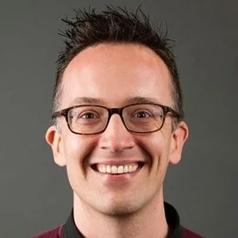
Senior Lecturer in PR Media and Communications, Media, Swansea University Jonathan joined Swansea University as Senior Lecturer in PR, Media, and Communications in 2022 where he teaches across a variety of undergraduate and postgraduate modules mainly focusing on public relations, sport, and journalism. Alongside his teaching Jonathan’s research career originally began by examining protest and its utilisation for pollical communication before shifting focus to concentrate more fully on the world of sport and its relationship with wider society. His work includes: the use of football related clickbait on social media by major media organisations; constructions of nationalism among ‘proper football men’; the newspaper representation of England men’s football international Raheem Sterling compared to Sterling’s self-representation on social media; and fan reactions on social media to suspected racism during a football match among others. Due to these expertise he’s been used as a source for media outlets such as The Athletic, BBC Radio Gloucestershire, and French football website SoFoot. Jonathan is a Fellow of the Higher Education Academy and is an external examiner at Chester University, and Edge Hill University. Jonathan sits on the editorial board of the Football Collective whose aim is to bring critical debate to football, and is a member of the Football Writers Association. He also acts as an Associate Editor for the Sport Section of the academic journal Cogent Social Sciences.
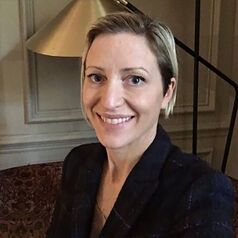
Senior Lecturer in Sports Communication and Journalism, Media, Swansea University Hannah Thompson-Radford is a Senior Lecturer in Sports Communication and Journalism. She is both a scholar and a freelance reporter, content creator and commentator on women’s sport. Her research interests intersect with sports sociology, media, and communication schools with an overall emphasis on gender.
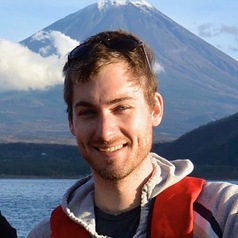
Lecturer, Physical Geography, University of York Ed is a Lecturer (Assistant Professor) in Physical Geography in the Department of Environment and Geography at the University of York. His research focuses on the coastal zone and the use of sediments to understand a range of Earth system processes. In particular, he uses saltmarsh sediments to reconstruct sea-level change and the occurrence of earthquakes and tsunamis over centennial to millennial timescales. In doing so, he seeks to examine underlying mechanisms and provide evidence to underpin future hazard assessments and projections that enable the development of improved resilience and mitigation strategies. Another strand of his research focuses on the role intertidal environments including saltmarshes, seagrass meadows, and tidal flats play in sequestering and storing carbon.
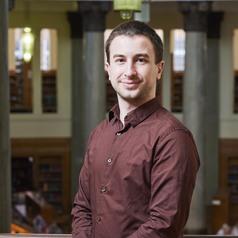
Lecturer in Physical Geography, University of St Andrews My principal research focus is to improve our understanding of the role marine and intertidal sedimentary environments play in the global carbon cycle over different spatial and temporal scales. Marine sediments and intertidal soils (saltmarsh, seagrass and mangroves) are capable of burying and storing globally significant quantities of carbon (sometimes referred to as Blue Carbon) away for thousands of years potentially providing a highly important climate mitigation service. These sedimentary environments are recognised, as crucial components of the global carbon cycle, yet many unknowns remain hindering there inclusion in global climate models, national carbon accounting and greenhouse gas inventories. To tackle this issue I bring together techniques from across the different geoscience disciplines (Geo- physics, chemistry, morphology, spatial analysis) to better understand: The quantity of carbon held with marine and intertidal sediments. The rate at which carbon is buried and locked away in these sedimentary environments. The source of the carbon (terrestrial vs marine). The natural and anthropogenic mechanisms that govern the preservation of carbon in these sedimentary systems. Geographically, my research is currently focused on the saltmarshes of the United Kingdom and continental shelf sediments in the North East Atlantic with particular focus on fjord sediments.
Associate Professor, School of Psychology, University of Plymouth My research focuses on the neurobiology of decision-making and learning, both in healthy adults and in patients with psychiatric disorders. After working as a biomedical engineer, developing brain-related clinical devises, I pursued an academic career in computational neuroscience at the universities of Glasgow and Oxford. My previous research focused on the proof of principle that transcranial ultrasound neuromodulation can safely and transiently change neural activity in precise parts of the brain, particularly deep regions of the brain, repsonsible for core cognitive and motivational processes. I am now working towards bringing this technology forward and apply it to mental health challenges. Do you know how incredible the different applications of therapeutic ultrasound can be for mental health disorders? I created this cool video with @Animate_Science https://youtube.com/watch?v=KsuqRldCspU… Enjoy!
Lecturer and Consultant in Applied Ethics, University of Leeds I joined the IDEA Centre as a Teaching Fellow in September 2021 and became a Lecturer and Consultant in August 2022. Prior to this, I worked as a University Teacher in Feminist Philosophy at the University of Sheffield and as a Hearings Support Officer in the fitness to practise directorate of a professional regulator. Additionally, I have experience in pastoral support and governance within higher education. In 2019, I completed my PhD at The University of Sheffield under the supervision of Christopher Bennett and Jennifer Saul. Before this, I completed a BA and MA in Philosophy, also at The University of Sheffield. Research interests My research focuses on issues in the philosophy of sex, particularly as this intersects with feminist philosophy. I am currently writing on language change, conscientious objection in medicine, the metaphysics of touch, and the value of consensual sex.