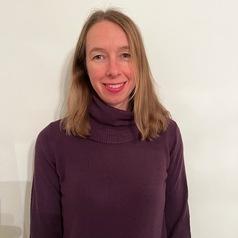
Professor of Healthcare Law, Durham University Emma Cave publishes widely in the field of Medical Law. In 2024 she serves as a core member of the Health and Social Care Committee Expert Panel, a member of the COVID-19 Inquiry Ethics Advisory Group and chairs a Nuffield Council on Bioethics working group on the ethical and regulatory issues raised by research on human stem cell-based embryo models. She previously chaired the Advisory Forum in the General Medical Council’s review of Good Medical Practice guidance, was an Assurance Group member of the Cass Review of gender identity services for children and young people, co-convened the Medical Ethics Expert Group of the Infected Blood Inquiry and served on the Human Fertilisation and Embryology Authority. Her research focuses on the protection of patient rights and interests, particularly where patients are vulnerable. Her 2004 monograph, The Mother of All Crimes was reissued by Routledge in 2018 and the seventh edition of her co-authored book (with Professor Margaret Brazier and Professor Rob Heywood), Medicine, Patients and the Law was published in 2023
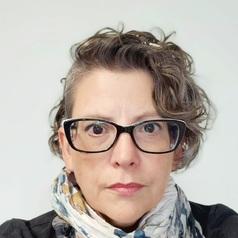
Senior Lecturer in Academic Development, University of Bristol My research interests lie in the use and value of qualitative research methods, particularly reflective methods and autoethnography for exploring complex and sensitive topics. My primary research areas are learning and teaching in Higher Education and Ageing Studies/Cultural Studies. I am co-director of the Centre for Women, Ageing and Media. I have published and presented on cultural representations of age and ageing, on care homes and care work, and on teaching and learning in Higher Education.
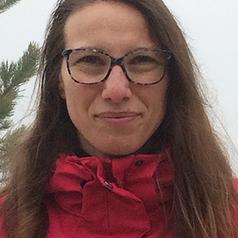
Senior Lecturer In Advanced Practice, University of Gloucestershire Sally-Anne Wherry (she/her) is a senior lecturer in Gloucestershire, teaching Advanced Practice to healthcare staff. A specialist Parkinson and Movement Disorder nurse, she is currently working on a PhD around intergenerational trauma from the Contaminated Blood Scandal, of which her family are a part.
Senior Lecturer in Psychology, Queen Mary University of London Living beings come to this world equipped with unlearned capacities to interact with the environment. For instance, chicks do not need any training to preferentially approach animate objects, orient in space and recognize familiar individuals. Other predispositions include specialized mechanisms for learning that are used in filial imprinting and language. My research is focused on the evolution of the fundamental building blocks of behaviour and cognition, predisposed behaviours and specialized learning mechanisms. My analyses span from behavioural to genomic data. Precocial species (e.g. chicks of the domestic fowl, tortoises) and insects are valuable models to conduct these studies.
Lecturer in Digital Media and Culture Education, King's College London I currently teach a range a modules in the field of digital humanities, as well as supervising UG and PG dissertations on a range of subjects. I completed my PhD at the University of York in 2020, and since this time I have taught at numerous UK HE institutions in the fields of Screen Studies, Media and Communications and the Creative Industries. Prior to this, I worked for several years in the FE sector, where I taught English and Media Studies. Areas of interest Period drama Screen adaptations of literature Screen audiences Young people and screen texts Selected publications Teenage Audiences and British Period Drama (Palgrave Macmillan, forthcoming) Bridgerton: The Progressive Period Pastiche, Screen Storytelling: The Works of Shonda Rhimes, ed. by Anna Weinstein (forthcoming) Leaning In or Opting Out? Women’s Choices in Little Women and Mary Queen of Scots, Feminist Media Studies (September 2021) Harry Potter and the Hidden Heritage Film: Genre Hybridity and the Power of the Past in the Harry Potter Film Cycle, The Journal of British Cinema and Television, Vol. 13, issue 3, 2016. Auteurs and Authenticity: Adapting the Brontës in the Twenty-First Century, The Journal of British Cinema and Television, Vol. 11, issue 1, 2014.
Professorial Lecturer of Politics, Governance & Economics, American University School of International Service Dr. Wilson-McDonald holds a Ph.D. in political science from the University of Florida with graduate certificates in European studies and gender studies. Her specializations include comparative politics, public policy & administration, European studies, and gender studies. Dr. Wilson-McDonald’s research focuses on the politics of gender in Central Eastern Europe. She examines the gendered elements of democratic backsliding and social movement activism in the region. Specifically, her research examines feminist movements in the region and their discursive strategies. Her current project analyzes the contemporary framing of gender-based violence by gender equality activists across Central Eastern Europe and the relationship between feminist social movement actors, conservative actors, and the state. Her peer-reviewed research has been published in the journals Communist and Post-Communist Studies and Feminist Review. Her recent essays have also been published online in Ms. Magazine. She has conducted extensive field research in Czechia, Slovakia, and Poland, where she was affiliated with the Faculty of Sociology at Masaryk University, Czechia and the American Studies Center at the University of Warsaw, Poland. Dr. Wilson-McDonald has been awarded numerous research grants, including a Fulbright Research Grant, Carrie Chapman Catt Prize for Research on Women and Politics, a Rothman Doctoral Fellowship in the Humanities, and a postdoctoral research grant by the Kosciuszko Foundation. She teaches courses in comparative politics, European politics, identity and politics, and research methods.