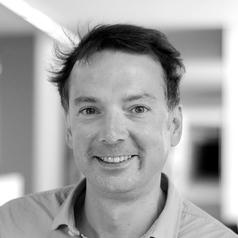
Senior Lecturer, Communications and Media, Monash University Dr Kate Fitch is a Senior Lecturer in the School of Media, Film and Journalism at Monash University. Her research foregrounds critical and sociocultural understandings of public relations, drawing on historical, feminist and social justice perspectives. Her first monograph, Professionalizing Public Relations: History, Gender and Education (Fitch, 2016, Palgrave) remains the only book-length, historical investigation of the development of the industry in Australia. Her second book, Popular Culture and Social Change: The Hidden Work of Public Relations (Fitch & Motion, 2021, Routledge) offers a critical account of the broader societal impact of public relations. Dr Fitch co-edits Public Relations Inquiry.
Professor of Film and Screen Studies, Monash University Belinda Smaill has published widely on documentary screen culture. Her research currently focusses on the aesthetic, ethical, and institutional conditions that shape the presentation of the environment and biodiversity on screen. She is the Leader of the Environment and Media Research Program at Monash University and is lead chief investigator on the Australian Research Council funded project, "Remaking the Australian Environment through Documentary Film and Television."
Professor, University of Tasmania Zanna Chase's research focuses on the interaction between chemical cycles and biological activity in the oceans, and how these are affected by climate. Understanding of these interactions, both in the modern ocean and the paleo-ocean, is necessary to predict the oceans' response and contribution to future climate change. She is particularly interested in the role of iron as a key micro-nutrient to support biological productivity. Prof Chase uses a variety of geochemical proxies in sediment cores, including long-lived, naturally occurring radioisotopes to reconstruct productivity and dust flux, and redox-sensitive metals to reconstruct ocean oxygenation.
Senior Research Scientist in Marine Biogeochemistry, University of Tasmania Research interests: Chemical oceanography, marine biogeochemistry, trace elements and isotopes, analytical chemistry, ocean iron fertilisation, atmospheric dust deposition My research has advanced our understanding of marine trace metal biogeochemistry, particularly by focussing on Southern Ocean and Antarctic sea-ice environments. I adopt an Earth system approach and have a broad my understanding of land–atmosphere– ocean interactions and the coupling of terrestrial and marine ecosystems. My current projects address key research questions on atmospheric dust deposition and solubilities, ocean iron fertilisation, physico-chemical speciation of trace elements and their isotopes, and the role of ocean dynamics on chemical and biological marine processes. I have applied my discoveries to important research outcomes related to climate change, ocean carbon sequestration, marine ecosystems dynamics, and geochemistry.
Postdoctoral Fellow, CHEO Research Institute, L’Université d’Ottawa/University of Ottawa Dr. Nicholas (Corey) Kuzik is a post-doctoral fellow with the Healthy Active Living and Obesity (HALO) group under the supervision of Dr. Mark Tremblay. The goal of his research is to improve childhood development through 24-hour movement behaviours. This requires reaching a better understanding of movement behaviours through studying: measurement, analysis, associations with developmental outcomes, and associations with correlates/determinants. Dr. Kuzik completed his MSc and PhD on the topic of movement behaviours in early years children (0-5 years) under the supervision of Dr. Valerie Carson at the University of Alberta.
PhD Candidate in the Department of War Studies, King's College London Rhiannon is a third-year PhD candidate at the Department of War Studies, King's College London. Her research focuses on the concept of 'home' in international political perspective, with auxiliary interests in the philosphy of social science and island studies.