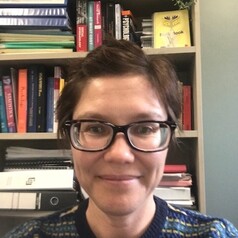
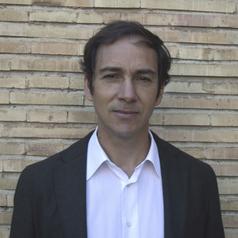
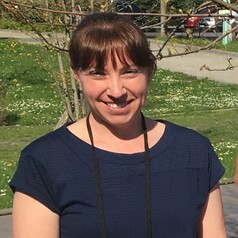
Associate Professor of Systems and Computational Biology, Microbiology and Immunology, Albert Einstein College of Medicine Our lab is interested in microbial communities as sensors of ecosystem properties over space and time. We work to define the fundamental rules of how microbiomes detect, process, and respond to internal and external signals from their environments, and how they evolve at the community level and as individuals to changing environments. We work across ecosystems to characterize microbial community resilience, to identify higher-order microbiome markers of environmental health and sickness, and to reveal networks of information flow in microbial communities that respond to and drive environmental changes using cutting-edge computational approaches that are grounded in experimental biology. The broad goal of our work is to understand how to harness the information stored in microbial communities to improve ecosystem health.
Porfesseur et directeur de recherche de l'EDHEC-Risk Climate Impact Institute, EDHEC Business School Gianfranco Gianfrate is Research Director of the EDHEC-Risk Climate Impact Institute and Professor of Finance at EDHEC Business School. He writes and researches on topics related to sustainable finance, innovation financing, and climate change finance. Prior to joining EDHEC Business School, he held teaching and research positions at Erasmus University (Netherlands), the University of Cambridge (UK), Harvard University (US), and Bocconi University (Italy). Gianfranco also has extensive experience in the financial industry, having worked, among others, for Deloitte Corporate Finance (Italy), Hermes Investment Management (UK), and iStarter (UK). Gianfranco holds a BA and a PhD in Business Administration from Bocconi University and a Masters in Public Administration from Harvard University. He has contributed to many books and academic journals, including Harvard Business Review, Journal of Corporate Finance, Energy Journal and Energy Policy. He is a board member of GRASFI, a research fellow of the Baffi Center at Bocconi University, a research fellow at the UK Center for Greening Finance and Investment, and an academic member of the Erasmus Platform for Sustainable Value Creation. He is a contributing author to the VI Assessment Report of the Intergovernmental Panel on Climate Change and received the FRI-PRI Award for the Best Pedagogical Innovation in Sustainable Finance in 2021.
Associate Professor in Work-Family-Health Research, Australian National University A/Prof Liana Leach’s research identifies the critical role social contexts play in determining mental health in Australia - with a focus on the mental health challenges in workplaces and parenting contexts. Liana's research has a focus on analysing large, population-level datasets to explore patterns of mental health (and illness) across different socio-economic contexts. She has strong expertise in the field of social epidemiology – teaching courses on the Social and Cultural Determinants of Health and Menta Health Epidemiology.
Profesor contratado doctor de Derecho administrativo, Universidad de Navarra Ejercí en el despacho de abogados Clifford Chance, soy MSFS (Master of Science in Foreign Service) por Georgetown University, doctor en Derecho por la Universidad de Navarra; a lo largo de mi carrera académica he completado dos estancias de investigación en la Westfälische Wilhelms-Universität de Münster.
Associate Professor in History, Australian Catholic University My research focuses on the history of the British Empire, Global History, and Australian History. I am the author of Britain, China and Colonial Australia (OUP 2016) and co-editor of Fighting Words: Fifteen Books That Shaped the Postcolonial World (Peter Lang, 2017) and A Global History of Gold Rushes (Uni of California Press, 2018).
Senior Research Scientist, Canadian Centre for Evidence-Based Conservation, Carleton University I'm a research scientist with the Canadian Centre for Evidence-Based Conservation at Carleton University. My research focuses on understanding the circumstances in which anthropogenic impacts (e.g., roads, dams) affect wildlife populations. I’m particularly interested in determining which species or species groups are most vulnerable to human impacts, and determining ways to mitigate negative effects. My research has focused on two main themes: (1) using evidence synthesis to inform management decisions, and (2) the impacts of roads on wildlife populations.