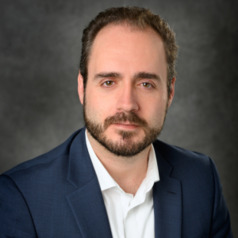
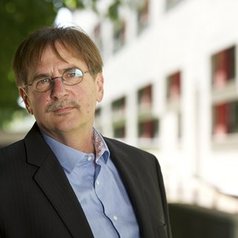
Postdoctoral Researcher in Quantitative Health Sciences and Engineering, Michigan State University Aleksandra Kostina obtained her Ph.D. in Cardiovascular Sciences at the University of Verona. In March 2022, she joined Aguirre Lab as a postdoctoral researcher. Her project aims to increase the complexity of human heart organoids and uncover early cardiac developmental events affected by medications taken during pregnancy, resulting in embryo heart defects.
Associate Professor of Biomedical Engineering, Michigan State University Aitor Aguirre is an associate professor in the Department of Biomedical Engineering. He joined MSU from the University of California, San Diego, where he focused on large-scale metabolomics and functional genomics applied to human cardiac regeneration, development and disease states. Dr. Aguirre obtained his B.S. in Biology and M.S. in Biochemistry and Molecular Biology at the University of the Basque Country, Spain. He obtained his Ph.D. in Material Science and Tissue Engineering at the Institute for Bioengineering of Catalonia and the Technical University of Catalonia. He subsequently worked at the Salk Institute as a postdoc in 2011, where he made seminal contributions to our understanding of the genetic mechanisms of cell dedifferentiation, cardiac regeneration, and human development.
Ph.D. Candidate in Biomedical Engineering, Michigan State University Volmert is a Ph.D. candidate in the MSU College of Engineering’s Department of Biomedical Engineering. He obtained a B.S. in biomaterials engineering from the University of Illinois and is the recipient of the James Scholar Honors Award and Academic Achievement Withrow Fellowship Award.
Research Professor, Larson Pennsylvania Transportation Institute, Penn State Research focuses on pavements and bituminous materials including recycled and new materials in pavements.
Professor Emeritus, Center for Bioethics and Social Sciences in Medicine, University of Michigan Raymond De Vries PhD is Professor emeritus in the Center for Bioethics and Social Sciences in Medicine at the University of Michigan and is a Professor emeritus in the Department of Learning Health Sciences, the Department of Sociology, and the Department of Obstetrics and Gynecology. He is also Professor emeritus at CAPHRI School for Public Health and Primary Care, University of Maastricht, the Netherlands. He is particularly interested in the regulation of science and the production of scientific knowledge; clinical trials of genetic therapies; the export of western moral traditions to non-western societies; and the social, ethical, and policy issues associated with the medicalization of pregnancy and birth. In 2005 he published A Pleasing Birth: Midwifery and Maternity Care in the Netherlands (Temple University Press), and he is co-editor of The View from Here: Bioethics and the Social Sciences (Blackwell, 2007), Bioethics in the Field, a special issue of Social Science in Medicine (2013), and Critical Studies of Risk and Uncertainty in Maternity Care (Palgrave, forthcoming).
Associate Professor and Veterinarian, Colorado State University Jason Lombard, DVM, grew up in Colorado and spent his early years on his family’s cattle ranch. After obtaining his DVM from Colorado State University, he practiced primarily dairy cattle medicine in Wisconsin for almost 10 years. He returned to CSU and completed a master’s degree in epidemiology while working for USDA’s National Animal Health Monitoring System (NAHMS). He coordinated multiple national studies, primarily focused on the dairy industry. While with USDA, he also participated on an Incident Management Team and was deployed for multiple cattle and poultry diseases during his 20-year federal career. Lombard’s research interests include infectious disease epidemiology and population health, with a focus on cattle diseases. His most recent work has involved investigating bovine tuberculosis outbreaks and bovine leukemia virus-associated lymphosarcoma in beef and dairy cattle. These disease investigations and research have taken a One Health approach with collaboration with public health officials and infectious disease physicians. Dr. Lombard believes the first step toward livestock sustainability is disease prevention and having healthy and productive animals.