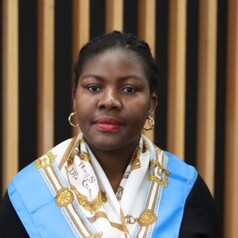
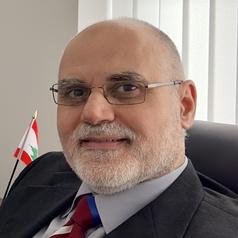
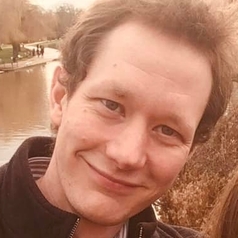
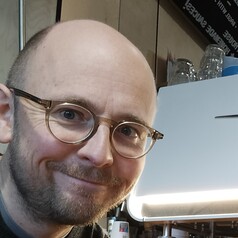
Senior Lecturer in Philosophy and Co-Director of the Centre for Engaged Philosophy, University of Sheffield Joshua Forstenzer is a Senior Lecturer in Philosophy and Co-Director of the Centre for Engaged Philosophy at the University of Sheffield. He is the author of Deweyan Experimentalism and the Problem of Method in Political Philosophy (2019). He has published widely on John Dewey, American Pragmatism, democratic theory, and the philosophy of education. His current research project focuses on pragmatist ethical responses to catastrophe.
Lecturer in Enterprise, School of Business and Creative Industries, University of the West of Scotland As the Programme Leader of MSc Logistics and Supply Chain Management at the University of the West of Scotland, I am committed to nurturing academic excellence and professional development within the field. With a research focus on leadership, entrepreneurship, innovation, and logistics and supply chain management, I bring a range of expertise to my role. My experience spans both academia and industry, where I have engaged in research, and teaching, aimed at addressing contemporary challenges.
Professor and Director of Aston Digital Futures Institute, College of Engineering and Physical Sciences, Aston University Professor Sadka is a Chartered Computer & Communications Engineer (CEng) with 27 years' worth of research leadership, business engagement and significant contributions to the area of AI-enabled visual media technologies. He is the founding Director of Aston Digital Futures Institute. This is a nationally leading powerhouse of research and innovation expertise, making strides in developing groundbreaking generative AI solutions to automate industry workflows and enhance the customer's quality of experience. Professor Sadka previously served as the Director of the Institute of Digital Futures at Brunel University London (2020-23) and as the Lead Academic of Brunel Fellowship Academy 2022-23, reporting directly to the Provost in both roles. He served as the founding Director of “Brunel Digital Science & Technology Hub” (2018-20) and as the Director of the Centre for Media Communications Research (2012-18). Professor Sadka is also the former Head of Electronic & Computer Engineering and Digital Media (2006-12). During the period 2020-23, he chaired the Government-supported West London FE-HE Partnership Group, representing seven Universities and 6 FE Colleges, developing the post-COVID skill and knowledge transfer agenda for the UK digital industries. Professor Sadka led the development of the L7 degree apprenticeship and L6 top-up programmes in digital specialisms such as data analytics and EEE. He served on the Steering Board of the NEM technology platform, which shapes the European strategic research agenda in networked media. Thus far, he has worked on over £15m worth of research projects as Principal Investigator, and supervised more than 50 Research Assistants and PhD students to completion. Professor Sadka has published widely, with over 300 papers in refereed journals and conferences, three patents and four books, including a seminal textbook titled Compressed Video Communications, published in 2002. He frequently serves on industry advisory boards and evaluation panels, and provide consultancy services to the tech industry in the area of digital media, AI and data analytics. He has had several entrepreneurial business engagements with particular success in the health tech and real estate sectors. He is a fellow of the HEA, IET and BCS.
Research Associate in the School of Social Sciences, Cardiff University I'm a researcher in the School of Social Sciences at Cardiff University. My work focuses on the lived experience and justice implications of low carbon technologies and infrastructure change. I talk to people about energy. Then write about it. My research background is in policy, science and technology studies specialising in the social acceptability of socio-technical transitions, particularly in the field of energy. My most recent research has examined issues of justice, vulnerability and social acceptability relating to transitions towards more flexible energy systems, and the ways identities and experiences rooted in place shape citizens' concerns and desires for transitions towards a low carbon economy. Wider interests include discourse and institutional theory, and novel methods for bringing identity and emotional attachment into public deliberations over sociotechnical change.
Senior Lecturer in Political Thought, Manchester Metropolitan University I am an Edward W. Said Fellow 2024 at the Heyman Center for the Humanities (Columbia University, NY). I am currently developing a book project on Said’s conception of ‘critical consciousness’ and its relationship with the thought of Antonio Gramsci. My areas of specialism are political theory and the history of modern political thought. My research addresses issues at the intersection of critical and postcolonial thought, in particular re-examining the role of intellectuals in modern society. I have forthcoming articles in Interventions and Notebooks, and I am co-editor of Revisiting Gramsci’s Notebooks (Brill, 2020), a rich collection of innovative scholarship on Gramsci (also in paperback). I have published work in TOPOI, Theory and Event, Thesis Eleven, Gramsciana, Hegel Bulletin, Journal for Critical Education Policy Studies, Science and Society, and the International Gramsci Journal. Before joining Manchester Metropolitan in 2014, I lectured in European and International Studies at King’s College London, where I completed my PhD in 2013. I co-created the Critical Theory in Hard Times network, which organised workshops on Decolonising Critical Thought (2021) and Racial Capitalism and Anti-Racist Futures (2023).
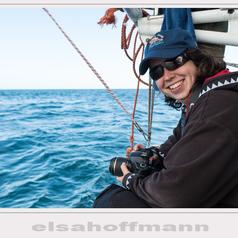
Postdoctoral Researcher in management and conservation of white sharks, Stellenbosch University Dr. Sara Andreotti is a marine biologist, working as a postdoctoral researcher at Stellenbosch University. Her research focuses mainly on white sharks, in the attempt to provide much needed information for the management and conservation of this vulnerable species. In 2007, while completing her master's degree in marine biology at the University of Trieste (Italy), a lucky encounter with the world known conservationist Michael Rutzen (www.sharkdivingunlimited.com) initiated a collaboration and instrumental access to the field. In 2009, in partnership with Michael Rutzen and the Branch Oceans and Coasts of the Department of Environmental Affairs of South Africa, she started collecting daily photographs of white sharks' dorsal fins to construct a database of the individual sharks in the area of Gansbaai. Subsequently, to combine a morphological and genetic approach for the identification of individual white sharks, Sara was enrolled at Stellenbosch University as a PhD student in 2011. White sharks are listed for protection under the Convention on International Trade in Endangered Species (CITES) and the International Union for Conservation of Nature (IUCN, Category VU A1cd+2cd) and are recognised as particularly vulnerable to rapid stock declines. The lack of basic information is arguably the biggest obstacle to planning effective protection. Understanding the population dynamics can thus play a critical part in developing conservation strategies for these animals. The PhD project also included a population genetic study of white sharks in South Africa to estimate the numbers of animals present in the coastline, point out the presence of different stocks and the level of genetic segregation between stocks. The PhD project, thanks to the sponsor of Michael Rutzen’ s Shark Diving Unlimited, was therefore extended from Gansbaai to the whole coastline and several voyages have been successfully completed by sailing around South Africa with a catamaran, equipped as a research vessel. For the PhD project, completed in March 2015, 426 white sharks could be successfully identified and catalogued from over 5,000 photographs, and more than 300 genetic samples have been collected. Since March 2015 Sara has been enrolled as a postdoctoral researcher in the Department of Botany and Zoology, thanks to the Consolidoc bursary scheme, to complete the publications on the findings of the PhD project and expand the complex dynamics of South African white sharks. Besides her own PhD project, Dr. Andreotti has been actively involved in the Sharksafe project: a novel and eco-friendly technology that aims to replace beach nets and baited drumlins to protect beach goers from large predatory sharks, without harming the marine life. As a member of the Sharksafe team she has been helping with field work and scientific publications.