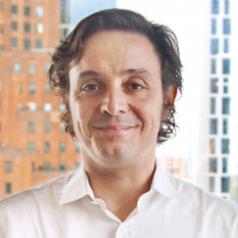
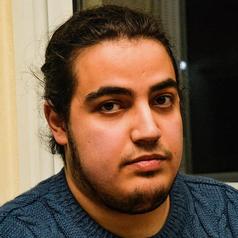
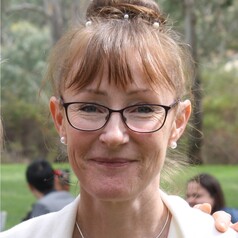
Professor of Mechanical and Aerospace Engineering and Biomedical Engineering, New York University Dr. Maurizio Porfiri is an Institute Professor at New York University Tandon School of Engineering, with tenured appointments at the Departments of Mechanical and Aerospace Engineering and Biomedical Engineering, and the Director of the Center for Urban Science and Progress of New York University. He received M.Sc. and Ph.D. degrees in Engineering Mechanics from Virginia Tech, in 2000 and 2006; a “Laurea” in Electrical Engineering (with honors) and a Ph.D. in Theoretical and Applied Mechanics from Sapienza University of Rome and the University of Toulon (dual degree program), in 2001 and 2005, respectively. He has been on the faculty of the Mechanical and Aerospace Engineering Department since 2006, when he founded the Dynamical Systems Laboratory. Dr. Porfiri is a Fellow of the American Society of Mechanical Engineers (ASME) and the Institute of Electrical and Electronic Engineers (IEEE). He has served in the Editorial Board of ASME Journal of Dynamics systems, Measurements and Control, ASME Journal of Vibrations and Acoustics, Flow: Applications of Fluid Mechanics, IEEE Control Systems Letters, IEEE Transactions on Circuits and Systems I, IEEE Transactions on Network Science and Engineering, Mathematics in Engineering, and Mechatronics. Dr. Porfiri is engaged in conducting and supervising research on complex systems, with applications from mechanics to behavior, public health, and robotics. He is the author of approximately 400 journal publications, including papers in Nature, Nature Human Behaviour, and Physical Review Letters. He was included in the “Brilliant 10” list of Popular Science in 2010 and his research featured in major media outlets, such as CNN, NPR, Scientific American, and Discovery Channel. Other significant recognitions include National Science Foundation CAREER award; invitations to the Frontiers of Engineering Symposium and the Japan-America Frontiers of Engineering Symposium organized by National Academy of Engineering; invitation to the third and fourth World Laureate Forums; the Outstanding Young Alumnus award by the college of Engineering of Virginia Tech; the ASME Gary Anderson Early Achievement Award; the ASME DSCD Young Investigator Award; the ASME C.D. Mote, Jr. Early Career Award; and the Research Excellence Award from New York University Tandon School of Engineering.
Ph.D. Candidate in Mechanical and Aerospace Engineering, New York University I am a doctoral candidate in the Department of Mechanical and Aerospace Engineering, specializing in Urban Systems. My research takes place at the Dynamical Systems lab, under the supervision of Professor Maurizio Porfiri. My work centers on stochastic complex dynamical systems, exploring both theoretical and applied perspectives. Specifically, I investigate human behavior within these systems.
Lecturer in Geography, King's College London Generally interested in natural resource management at the intersection of waste outputs of urbanisation. I have specialised knowledge in topics of litter, littering and the practice and impacts of sewage management, specifically issues surrounding sewage overflow practices in rivers.
Research Associate, Childhood Dementia Research Group, Flinders Health and Medical Research Institute, College of Medicine and Public Health, Flinders University Siti is a PhD graduate from Flinders University, College of Medicine and Public Health. She has been involved in molecular medicine research for over 10 years. She joined Childhood Dementia Research Group (CDRG) over 3 years ago whose research commitment is to improve lives of children affected with dementia. She is currently working on establishing new cell model of Sanfilippo syndrome to test and repurpose already approved drugs with the goal of fast-tracking research to clinical trial and providing more accessible treatment to the patients.
Head, Paediatric Neurodegenerative Diseases Research Group, University of Adelaide Dr. Nicholas Smith is the Director, Department of Neurology and Clinical Neurophysiology, The Women’s and Children’s Hospital, Adelaide, Australia and holds a conjoint appointment with the Discipline of Paediatric Medicine, University of Adelaide, where he leads the Paediatric Neurodegenerative Diseases Research Group. He was awarded a Churchill Fellowship to study disorders of neurotransmission at the Kennedy Krieger Institute, USA and completed a PhD within the Department of Medicine University of Cambridge, United Kingdom. He maintains a sub-speciality practice in neurogenetic and neurometabolic disease and paediatric movement disorders, with internationally recognised expertise in the Childhood Dementias, and a focus upon disorders of lysosomal metabolism. Dr. Smith maintains an active pre-clinical and translational research program, targeting the pathobiology of neurodegenerative disease, identification of disease biomarkers and novel therapeutic approaches, including gene transfer and antisense oligonucleotide technologies; he is a Principal investigator on multiple international clinical trials involving novel gene transfer and biopharmaceutical therapies for Childhood Dementia. He maintains strong collaborations with scientific, patient advocacy and clinical colleagues, who collectively advocate for therapeutic and health service advances on behalf of children with Childhood Dementia and their families.
Head, Childhood Dementia Research Group, Flinders Health and Medical Research Institute, College of Medicine and Public Health, Flinders University Since establishing the Childhood Dementia Research Group in 2002, Kim has dedicated her research career to the study of, and development of treatments for childhood dementia. Kim presently leads and coordinates a multi-disciplinary team and a comprehensive, innovative translational research program that is seeking to develop tools for predicting the rate of symptom onset and disease progression in the childhood dementia Sanfilippo syndrome, evaluate novel treatments, and provide blood-based biomarkers for monitoring therapeutic efficacy.