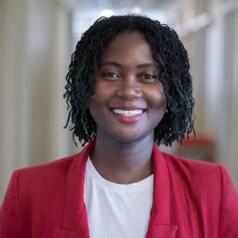
Associate Professor of English, University at Buffalo I am an associate professor of English at SUNY-Buffalo, where I research the eighteenth-century Anglophone world. I received my PhD from the University of Pennsylvania in 2012. My academic writing has appeared in Critical Inquiry, ELH, PMLA, Eighteenth-Century Studies, The Eighteenth Century, Philological Quarterly, and various critical collections. I have also written essays for The Washington Post, The Boston Review, Avidly, and Book Post. My new book, The Northeast Corridor, is coming out from the University of Chicago Press in April 2024. It’s about trains, and how they make the places that make us. I am currently writing a monograph, Rights of Way: A Literary Approach to Infrastructure, which finds the conceptual origins of our built world in early modern debates over the legality of passage. I have delivered invited talks from this project at Harvard, Yale, Columbia, and the University of Iowa. My first book, The Wreckage of Intentions: Projects in British Culture, 1660-1730 (University of Pennsylvania Press, 2017) investigated the origins of projects, concrete yet incomplete efforts to advance British society in a period defined by revolutions of finance and agriculture, the rise of experimental science, and the establishment of constitutional monarchy. I am currently co-editing with Jo Guldi, a special issue of Eighteenth-Century Studies, on infrastructure. I am also co-editing with Danielle Spratt a critical collection, Histories of Science, to be published by the University of Virginia Press.
Assistant Professor of Media & Information, Michigan State University Jean Hardy is an Assistant Professor in the Department of Media & Information at Michigan State University. His research focuses on the role of digital technology in rural economic and community development.
Associate Professor of Global Digital Media, UMass Amherst My research focuses on digital technology cultures and innovation across parts of Africa, China, and the United States. This work primarily takes a critical approach towards understanding how digital technologies are made and used, as well as their implications for issues of labor, identity, and futures.
Pioneers Chair in Telecommunications & Professor of Telecommunications, Penn State Dr. Christopher Ali is the Pioneers Chair in Telecommunications and professor of telecommunications in the Bellisario College. He holds a Ph.D. in communication studies from the Annenberg School for Communication at the University of Pennsylvania (2013). His research interests include media and telecommunications policy and regulation, broadband policy, critical political economy, critical geography, comparative media systems, qualitative research methods, media localism and local news. Dr. Ali uses critical, qualitative methods to research broadband policy, planning, deployment and digital equity in the United States. Presently, he has a series of projects dedicated to “broadband stories,” where he is researching how community-based stories can influence public policy. These projects involve interviews, focus groups, surveys, and field work to better understand the qualitative and narrative experiences of those people, places, and organizations facing digital insecurity. Dr. Ali is the author or editor of four books: "Public Service Media’s Contribution to Society"(2023, with Prof. Dr. Manuel Puppis), "Farm Fresh Broadband: The Politics of Rural Connectivity" (2021), "Media Localism: The Policies of Place" (2017), "Echoes of Gabriel Tarde: What we know better or different 100 years later" (2014, with Drs. Elihu Katz and Joohan Kim). In "Farm Fresh Broadband: The Politics of Rural Connectivity" (MIT Press, 2021), Ali examined the complicated terrain of rural broadband policy in the U.S. "Farm Fresh" unpacks the politics of broadband policy, asking why millions of rural Americans lack broadband access and why the federal government, and large providers, are not doing more to connect the unconnected. Based on his expertise, Dr. Ali was called to testify before the Senate Commerce Committee in 2021 on broadband funding and policy programs. He has also briefed members of the House Democrats Task Force on Rural Broadband, the New York State Blue Ribbon Commission on Re-Imagining New York, the Federal Communications Commission, and has presented before numerous state and county governments. Dr. Ali has published peer reviewed articles in numerous high ranking academic journals including, Communication Theory, Media Culture & Society, and Telecommunications Policy. His most recent article, published in the Journal of Broadcasting and Electronic Media, argues for the need for the inclusion of ethnographic methods in critical policy studies. His writing has been published in The New York Times, The Hill, Realtor Magazine, Law & Political Economy, Digital Beat, GovTech, Zocalo Public Square, the Canadian Broadcasting Corporation, Washington Monthly, Columbia Journalism Review, and The Conversation. He is a frequent press commentator on the subjects of broadband, media policy, and local news, with interviews in the Associated Press, Hollywood Reporter, Business Insider, Washington Post, Philadelphia Inquirer, Los Angeles Times, NPR, CNET, CBC, Bloomberg, and other major national and international news outlets. Ali's first single-authored book, "Media Localism: The Policies of Place" (University of Illinois Press, 2017) addresses the difficulties of defining and regulating local media in the 21st century in the United States, United Kingdom, and Canada and the implications these difficulties have for the long-term viability of local news. This is the first book to investigate local media policy in a comparative context and the first to systematically assess media localism in Canada and the UK. It combines policy analysis and critical theory to provide for a unique perspective on one of the most challenging policy questions in the media industry: what does it mean to be local? Dr. Ali presently serves as the Associate Editor of the journal Communication Law & Policy. He is also a member of the technology advisory board of Corporation for Education Network Initiatives in California (CENIC) and sits on the advisory board of the Centre County Film Festival. Previously, he served as the Chair of the Communication Law and Policy Division of the International Communication Association (2021-2023). He has also served on the Federal Communication Commission’s Communication Equity and Diversity Council Working Group and was a board member of Charlottesville Tomorrow, a non-profit news organization in Charlottesville, Virginia. Dr. Ali has held fellowships at the Benton Institute for Broadband and Society (2019-2020), the Global Future Council of the World Economic Forum (2018), the Center for Advanced Research in Global Communications (CARGC) at the University of Pennsylvania (2017 & 2022), the Tow Center for Digital Journalism at Columbia University (2016-2017 & 2019-2021) and the University of Fribourg in Fribourg Switzerland (2015).
Professor of Psychology, Visual Perception, Rochester Institute of Technology Andrew Herbert’s research interests lie in visual perception and related fields. He has published on different visual illusions, spent a lot of time trying to understand the perception of bilateral symmetry, and is interested in the timing and cortical loci of different perceptual and cognitive processes.
Associate Professor of Population Health Sciences and Obstetrics and Gynecology, University of Wisconsin-Madison I am currently a tenured Associate Professor in the Departments of Population Health Sciences and Obstetrics and Gynecology at the University of Wisconsin-Madison. I received my Ph.D. in economics from the University of North Carolina at Chapel Hill and received my BA in economics from Florida A&M University. As an economist and population health scientist, my goal is to understand the causes and consequences of racial/ethnic disparities in health, particularly among maternal, child, and immigrant populations. The biggest problem that keeps me up at night? The fact that black women, regardless of how much income or education they have, are the racial/ethnic group most likely to die from childbirth-related complications and give birth to babies who die before the age of 1 year. I apply methods from economics, demography, and health services research to document and unpack the sources of these disparities, and have published in a wide variety of peer-reviewed journals such as Economics and Human Biology, the Journal of Women’s Health and the American Journal of Public Health. I believe strongly that these problems have to be tackled from an interdisciplinary perspective—even if leaving your disciplinary silo makes you a little uncomfortable along the way. I am also committed to training the next generation of researchers to become better critical thinkers, better scientists, and more informed, engaged citizens.