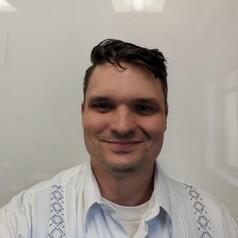
Assistant Professor of Management and Entrepreneurship, University of Louisville My name is Vitaliy, and I am an Assistant Professor of Management and Entrepreneurship at the University of Louisville, where I conduct research on family firms, entrepreneurs, and entrepreneurial teams, with a keen interest in replication studies. Holding a PhD from Mississippi State University, I am passionate about research because, at the very least, the research process is FUN. This enthusiasm drives my academic and professional pursuits in the field of entrepreneurship, family business, and management.
Professor of Animal and Dairy Sciences, University of Wisconsin-Madison Thomas D. Crenshaw is a Professor in the Department of Animal and Dairy Sciences with an affiliation with the Interdepartmental Graduate Program in Nutritional Sciences. His primary research emphasis is animal nutrition. Crenshaw received a Ph.D. (1980) and M.S. (1977) degrees at the University of Nebraska in swine nutrition and a B.S. (1974) degree in Animal Sciences at the University of Tennessee-Martin. Swine nutrition is Crenshaw’s primary area of expertise. Throughout his research career, two primary research themes have focused on nutritional factors that enhance bone integrity and the cation-anion balance of mineral elements. These research efforts have required integration of biochemical, physiological, and cellular pathways, with inorganic chemistry, and mechanical engineering principles. Crenshaw’s research expertise has attracted strong interactions with researchers in academia and the commercial swine nutrition industry. His expertise in the use of swine as a biomedical model has allowed collaborations with researchers in mechanical engineering, orthopedic surgery, urology, human nutrition, and biochemistry. Additional major research efforts have included projects in amino acid nutrition and use of fatty acids as energy supplements to enhance neonatal pig survival.
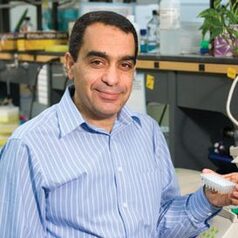
Associate Chair and Professor of Genetics and Epigenetics, University of Wisconsin-Madison Hasan Khatib is a professor of genetics and epigenetics. He earned his BS in Biology, MS in Human Genetics, and Ph.D.in Genetics from the Hebrew University of Jerusalem. Afterward, he worked in the Department of Genetics at the Hebrew University as a post-doctoral fellow and as a research scientist. Dr. Khatib currently has over 100 peer-reviewed publications in the areas of embryonic development, male fertility, production traits, epigenetics, and nutritional epigenetics. His papers have appeared in the BMC Genomics, PloS one, Science, Genome Research, Animal Genetics, Journal of Dairy Science, Journal of Animal Science, Mammalian Genome, Epigenetics and other journals. His research focuses on understanding the contributions of epigenetics to production, reproduction, and health traits. More specifically, his research examines the transgenerational epigenetic effects of paternal and maternal nutrition on phenotypes of the next generations in livestock. His group recently demonstrated that DNA methylation patterns in the sperm were affected by a paternal diet and were transgenerationally inherited by subsequent generations in sheep. He is also interested in identifying epigenetic markers as predictors of embryo development and fertility using non-invasive methods. Research methods used in his lab include embryo production, transcriptomics, whole-genome bisulfite sequencing, cell culture, gene editing, and epigenome editing. Dr. Khatib is the editor of the books “Livestock Epigenetics” and “Molecular and Quantitative Animal Genetics.
Assistant Professor of Nutrition and Dietetics, University of North Dakota I received my doctorate only a year ago in Nutrition and Exercise Sciences. My dissertation focused on protein intake and muscle health. I have two-years of experience working a biomedical engineering laboratory, and five-years of experience as a research assistant for the Department of Health, Nutrition, and Exercise Sciences. Despite having limited time with my doctorate, I have completed an eclectic range of research projects including four clinical trials, several cross-sectional human cohort studies, two analyses of large, publicly available data, three reviews, and other benchwork projects, including those using qPCR, fluorescence microscopy, and lithography which was done in a clean room. I have published 13 research papers including 6 as the first or last author. Moreover, I accomplished these activities despite severe disability; I have had more surgeries than can be counted on one’s hands and am currently suffering from a surgical complication that results in severe pain, abdominal cramping, and nausea. As the founder and organizer of the UND Affinity Group for Faculty and Staff with Disabilities and Chronic Conditions, I am passionate about nutrition, disability, and equity. My contributions to science revolve around dietary intake, muscle health, and disability. My early research was largely focused on muscle health and disability and not dietary intake. This research agenda led to several impactful findings: (1) handgrip strength is associated with a host of negative health outcomes including disability, mortality, and cognitive impairment; (2) excess sleep time is associated with disability; (3) asymmetric handgrip strength (i.e., one hand being stronger than the other) is also related to disability. After examining muscle health and disability, my research shifted to investigate the impacts of dietary intake on muscle health. This avenue of research led to following discoveries: (1) evenness of dietary protein intake is associated with increased muscle mass, strength, and endurance; (2) animal-based protein intake was related to increased muscle mass and strength in middle-aged men and women, while not being a risk factor for metabolic syndrome in women; (3) time restricted feeding resulted in better body composition than continuous energy restriction. I also investigated the use of a novel miRNA sensor’s ability to measure miRNAs associated with weight loss during a weight loss intervention, examined the effects of an online intervention on the physical activty profiles of older adults, and wrote about the gastrointestinal manifestations of hypermobile Ehlers-Danlos syndrome and dietary approaches for their management.
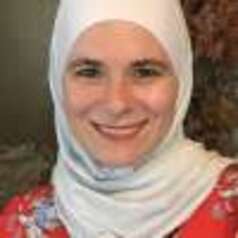
Associate Professor in Enterprise and Entrepreneurship, University of Leeds Deema Refai is an Associate Professor in Enterprise and Entrepreneurship at the University of Leeds and is currently Joint Editor in Chief of The International Journal of Entrepreneurship and Innovation. Deema’s research focus is developed around constrained entrepreneurship, with a particular interest in the refugee and rural contexts, where she has led research projects funded by the British Academy, AHRC and others. Through her work, Deema has developed strong collaborations, particularly in Jordan and the UK, and has been involved in various activities, panels and discussions around issues relevant to refugees. Her work has been published in high-ranked international peer-reviewed journals and presented in a number of national and international conferences.
Postgraduate Researcher in the School of English, University of Leeds I am a current postgraduate researcher in the School of English at the University of Leeds. My thesis, entitled 'The ‘good for her’ genre and violent revenge in American feminist film (2014-2022)', focuses on contemporary film and television narratives of violent revenge committed by women in unstable states of mind. I examine my texts as a response to the rising misogynist terrorism perpetuated by internet-based incels, which saw an increase from 2019 onwards in the time of the COVID-19 pandemic. For my Masters by Research in English Literature, I undertook a 30,000 word dissertation titled 'Disability and Disfigurement in Twenty-First Century Comic-Book Films', exploring metaphorical and literal disability in superhero films. I posited that the origin stories of super-abled people serve the same purpose as the account of how the disabled person ‘became’ disabled; creating demand for a story where non-disabled people can explore and exploit extraordinary bodies.