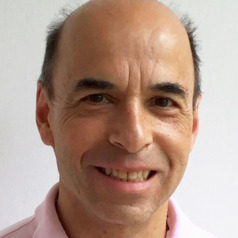
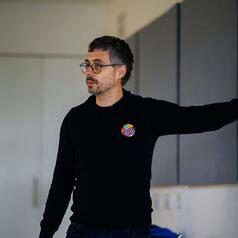
Associate Professor, Criminology, Sociology and Social Policy, Swansea University Lella Nouri is an Associate Professor of Criminology and the Co-Director of the University’s Cyber Threats Research Centre (CYTREC). Lella is also a Co-Director of the 7.5m EPSRC Centre for Doctoral Training in Enhanced Human Interactions and Collaborations with Data and Intelligence Driven Systems. Lella’s research specialism is in extremism, terrorist use of the internet and in particular extreme right ideologies as well as hate crime. Lella’s most recent work focuses on combatting hate visuals in communities across Wales. Lella is the inventor of the innovative ‘StreetSnap’ app, which was developed in collaboration with the Legal Innovation Lab Wales and Bridgend Community Safety Partnership. Lella also runs a community impact project in relation to anti-hate crime, Flip the Streets, which helps communities to build resilience to hate. Alongside this Lella has researched widely on extremist use of the internet including far and extreme right narratives, their dissemination via social media and provided recommendations for policy and community responses. As well as co-organising numerous community and academic events on these topics, including a VOX-Pol extreme right workshop, Lella has published a variety of edited collections, journal articles, book chapters, research reports and blogs through leading publishers in the field. Stakeholder and community impact and engagement work is at the heart of her research. Lella’s has most recently been appointed as an Anti-Racist Wales Research Expert for the Anti-Racist Wales Action Plan as part of the External Accountability Group. She is also an active member of the following expert groups/networks: Academic-Practitioner Counter Extremism Network (APCEN) for the Commission for Counter Extremism (UK Home Office), Member of the Accelerated Capability Environment (ACE) Research Network, Homeland Security Group at the UK Home Office as well as the UK Counter-Terrorism Policing Evidence-Based Review Group. In 2017/18, Lella held a visiting scholar position at the University of California, Santa Barbara on a Fulbright Cyber Security Award. Lella is also keen to work university wide and is currently one of the University’s Morgan Advanced Studies Institute Fellows and Co-Chair of the University’s Race Equality Network (SIREN). AREAS OF EXPERTISE Counter-terrorism Extreme right Terrorist use of the internet Radicalisation Lella has received the following accolades in recent years: 2023 Winner of the Social and Humanitarian Achievement Award - Ethnic Minority Welsh Women Achievement Association (EMWWAA) 2017/18 Fulbright Cyber Security Scholar Award - Visiting scholar position at the University of California, Santa Barbara R&I Rising Star, Early Career Winner in the 2018 Swansea University Research and Innovation Awards Inspiring Woman Award for Swansea University's International Women’s Day 2017 celebrations The Cyberterrorism Research Project was the winner of the Outstanding Research Collaboration Award at the 2016 Swansea University Research and Innovation Awards She successfully applied for a place on the CHERISH-DE Digital Economy Early Career Researchers Crucible Programme in 2016 Runner Up in the Research Impact Awards (Outstanding Contribution to Law and Public Policy) at Swansea University in 2015 Certificate of Merit from the Swansea University Research Forum Research Community Award, with the Cyberterrorism Project, in 2013 Runner Up in Swansea University's Research as Art Competition, with the Cyberterrorism Project, in 2013
StreeetSnap Research Associate, Swansea University I am currently working on the StreetSnap Project as Research Associate. This Project was funded by a SMART Partnership between Swansea University, Welsh Government and Bridgend County Borough Council. I work in the Department of Criminology within the Faculty of Humanities and Social Sciences at Swansea University. My qualifications are: BSc Social Science, MSc Social Science Research Methods, PhD Social Science - ‘Class, motherhood and mature studentship – (re-)constructing and (re)-negotiating subjectivity’. In addition to hate crime/hate visuals my research interests also centre around subjectivity, class, gender and marginalised communities. I am particularly interested in psychosocial and participatory perspectives in research.
Director of Music, The Arts Institute, University of Plymouth As Music Director for the Arts Institute at University of Plymouth, Dr Robert Taub is excited about building and leading Musica Viva - a collaborative programme featuring fellow leading musicians as well as colleagues within the University that brings top tier concert performances and broad-based music educational events to communities of all ages in Devon and the South West. From New York’s Carnegie Hall to Hong Kong’s Cultural Centre, Robert is acclaimed internationally as a concert pianist and recording artist. He has performed as guest soloist with the world’s leading orchestras and conductors, including the MET Orchestra in Carnegie Hall, the Boston Symphony Orchestra, BBC Philharmonic, The Philadelphia Orchestra, San Francisco Symphony, and many others. He has also performed solo concerts on the Great Performers Series at New York’s Lincoln Center and other major series worldwide, and has been featured in international festivals, including the Saratoga Festival, the Lichfield Festival in England, San Francisco’s Midsummer Mozart Festival, Aspen Music Festival, and the Geneva International Summer Festival, among others. He has also initiated and led several concert series and festivals, including a highly touted series at the Institute for Advanced Study in Princeton, where is only predecessor as Artist-in-Residence was TS Eliot. Following the conclusion of his highly celebrated New York series of Beethoven Piano Sonatas, Taub completed a sold-out Beethoven cycle in London at Hampton Court Palace. His recordings of the complete Beethoven Piano Sonatas have been praised worldwide for their insight, freshness, and emotional involvement. In addition to performing, Robert Taub is an eloquent spokesman for music, giving frequent engaging and informal lectures and pre-concert talks. His book Playing the Beethoven Piano Sonatas (Amadeus Press) is a standard for the Beethoven Sonata literature. In addition, Taub prepared a new edition of the Beethoven Piano Sonatas for Schirmers Performance Editions, published by Hal Leonard Corporation. He has also performed several “historic pianoforte” concerts in the London area of Beethoven Sonatas, playing pianofortes – 1795 Longman and Broderip, 1816 Broadwood, and 1823 Streicher – specifically associated with Beethoven during his years of composition of particular Sonatas. He has recorded the complete piano sonatas of Beethoven and Scriabin, as well as works of Babbitt, Schumann, and Liszt, several of which have been selected as “critic’s favourites” by Gramophone, Newsweek, The New York Times, and The Washington Post. Taub has been in the vanguard of new music, having premiered piano concertos by Milton Babbitt (MET Orchestra) and Mel Powell (Los Angeles Philharmonic), and making the first recordings of the Persichetti Piano Concerto (Philadelphia Orchestra) and Sessions Piano Concerto. He has also premiered solo piano and chamber music works commissioned for him by Milton Babbitt, Jonathan Dawe, Jane O'Leary and other major composers. During his first term at the Institute for Advanced Study, he initiated a concert series dedicated to the complete Beethoven Piano Sonatas. So popular were these concerts that he played each programme three times to sold-out houses; the series was featured in the US national press. In addition, Taub started a lunchtime series of informal discussions about music. In his subsequent two terms, he included chamber music in the concert series, bringing in world-renowned colleagues, with at least one work from every concert broadcast on NPR’s “Performance Today.” He also expanded the popular informal talks to include interviews with important young composers. Robert Taub is a Phi Beta Kappa graduate of Princeton where he was a University Scholar. As a Danforth Fellow he completed his doctoral degree at The Juilliard School where he received the highest award in piano. Taub has served as Artist-in-Residence at Harvard University and at UC Davis prior to his time at the Institute for Advanced Study. He is currently Director of Music, The Arts Institute, University of Plymouth, where he initiated and directs the Musica Viva Concert Series.
Professor in Astrophysics, Emeritus, University of Colorado Boulder My research interests include multi-wavelength observations of high redshift galaxy clusters to measure dark matter mass distributions and quantify the effects of environment on galaxy formation and evolution. I am also a co-editor of the Journal of Skyscape Archaeology and develop educational materials on cultural astronomy.
Member of Kellogg College, University of Oxford and Visiting Fellow in Archaeology, Bournemouth University Dr Amanda Chadburn FSA is a professional archaeologist and historic environment adviser. She started her professional career in local government and joined English Heritage in 1987 where she worked in various casework and policy roles. She left in 2022 to concentrate on research, voluntary work and teaching. Whilst at English Heritage, she was an Inspector of Ancient Monuments for fifteen years, during which period she supervised numerous placements on the University of Oxford’s “In Service” post-graduate Certificate in Archaeology. She later taught on University of Oxford’s MSc Diploma in Archaeology, and currently teaches on its MSc in Applied Landscape Archaeology. She was the Lead Adviser for the Stonehenge and Avebury World Heritage Site for English Heritage for twenty years from 1992-2012, later moving into national policy roles, including spells as a Senior International Adviser and Senior Rural and Environmental Adviser. More recently, she led on the impact of national infrastructure on the historic environment and was seconded to the Heritage Team at the Department of Digital, Culture Media and Sport 2021-22. Amanda has served on numerous boards and committees including the Council of the Society of Antiquaries of London and the Archaeology Panel of the National Trust. She was elected as a Fellow of the Society of Antiquaries in 1999 and as a Corresponding Member of the German Archaeological Institute in 2009. She was elected to the Executive Board of the European Association of Archaeologists in 2020 and a Trustee of the charity World Heritage UK in 2022. She has taught archaeology and heritage management at the Universities of Bristol, UCL and Oxford, and co-supervised PhD students at the Universities of Bristol and Huddersfield. Her research interests include the prehistory of Britain; Iron Age (Celtic) coinage; landscape archaeology; archaeoastronomy, heritage management and World Heritage Sites. Amanda has served on numerous boards and committees including the Council of the Society of Antiquaries of London and the Archaeology Panel of the National Trust. She was elected as a Fellow of the Society of Antiquaries in 1999, as a Corresponding Member of the German Archaeological Institute in 2009 and as a Fellow of the Society of Antiquaries of Scotland in 2023. She sits on the Executive Board of the European Association of Archaeologists and is a Trustee of the charity World Heritage UK.
Senior Lecturer in Archaeological Modelling, Bournemouth University I am Senior Lecturer in Archaeological Modelling at Bournemouth University and co-founder and co-editor of the Journal of Skyscape Archaeology. My research interest is how societies perceive and conceive their world(s) and used that to time and adjust social, productive and magico-religious behaviours, especially in prehistory. My research interests steered me along two distinct yet complementary strands: archaeological modelling and skyscape archaeology. The first strand involves the modelling and analysis of cultural- and environmental-dependent dispersal dynamics, especially across large spatial and temporal scales. Large-scale dispersals have been a staple of archaeological research from its inception (e.g. spread of early hominids out of Africa, spread of domesticated crops and animals). I am especially interested in exploring them through the recovery of their dynamics (modes and routes of dispersal) via statistical analysis of chronometric, material and palaeoenvironmental data. This requires lateral thinking with innovative computational approaches that, nevertheless, are acutely aware of the nature, uncertainties and other limitations of the available data. The second strand focuses on more regional scales and explores the skyscape archaeology of late prehistoric monuments. Structures such as Stonehenge in Wiltshire and Newgrange in Ireland are famous for having had celestial alignments encoded into their architecture. There is much speculation surrounding their intent, purpose and meaning, with interpretations often blurring the lines between scholarship and fantasy. On this front, I am not so interested in identifying and collecting celestial alignments but in understanding how they can help us peek into the ontologies of past societies, i.e. into how they conceived the world and their place in it. This takes careful, robust and reflexive approaches to the archaeological record – both qualitative and quantitative – which I am keen to not only explore but also develop.