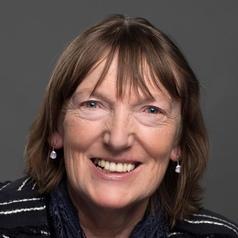
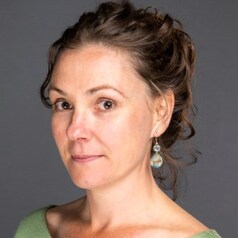
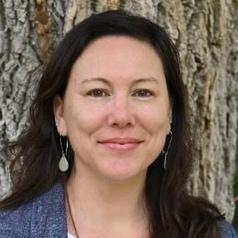
Director of Ireland's Great Hunger Institute, Quinnipiac University Christine Kinealy is the founding Director of Ireland’s Great Hunger Institute. A graduate of Trinity College, Dublin, Christine has published extensively on Ireland’s Great Hunger and, more recently, the Irish Abolition movement. This includes the award-winning This Great Calamity. The Great Hunger in Ireland, and a graphic novel entitled, ‘The Bad Times’, or ‘An Drochshaol’. In 1997, she spoke in the British Houses of Parliament and in the American Congress on the Famine. Christine is a Director of the African American Irish Diaspora Network. In 2018, she published Frederick Douglass and Ireland. In his own words. In 2020, Black Abolitionists in Ireland was published and a second volume is planned. This research led to the creation of Frederick Douglass Walking Trails in Belfast, Cork and Dublin. Christine has been named one of the top educators in Irish America. In 2014, she was inducted into the Irish America Hall of Fame and, in 2017, received an Emmy for ‘The Great Hunger and the Irish Diaspora’ documentary. In 2019, she was one of five historians who walked 100-miles from Roscommon to Dublin, following in the footsteps of tenants sent to Canada in 1847. This route now forms The National Famine Way.
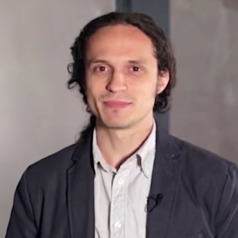
Assistant Professor of Anthropology, Université de Montréal Dr. Joseph Orkin studies the microbiomes and genomes of free-ranging primates. He completed Bachelor of Arts degrees in Anthropology and Philosophy from Penn State University in 2005, and earned his PhD in Anthropology from Washington University in St. Louis in 2014. He is currently a postdoctoral scholar in comparative genomics at the Universitat Pompeu Fabra in Barcelona on a Beatriu de Pinós Fellowship. Dr. Orkin's research examines how primates adapt to new and changing environments in China and Costa Rica. He also works with a wildlife conservation dog named Pinkerton to help track critically endangered apes.
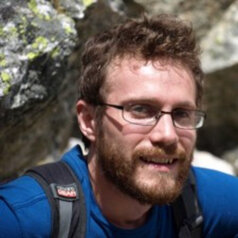
Associate Professor of Anthropology, Purdue University Dr. Andrew Flachs researches food and agriculture systems, exploring genetically modified crops, heirloom seeds, and our own microbiomes. Born and raised in rural Pennsylvania, he graduated from Oberlin College with dual Bachelor of Music and Bachelor of Arts degrees in 2010. He earned his PhD from Washington University in St. Louis in April 2016 and was a 2016-2017 Volkswagen Exchange Postdoctoral Research Fellow with the Heidelberg University Karl Jaspers Centre for Advanced Transcultural Studies. He is currently an associate professor of anthropology at Purdue University. Through more than 15 years of research with farmers in North America, the Balkans, and South India investigates ecological knowledge and technological change in agricultural systems spanning Cleveland urban gardens and Indian GM cotton fields. Andrew's research has been supported by public and private institutions including the Department of Education, the National Geographic Society, the American Institute of Indian Studies, and the Social Science Research Council, while his writing on agricultural development has been featured in numerous peer-reviewed publications as well as public venues including Sapiens, Salon, and the National Geographic magazine. Andrew's work has been recognized by eight international awards, including most recently as a finalist for the Society for Economic Anthropology Kate Browne Creativity in Research Award and the International Convention of Asia Scholars’ Book Prize. Outside of academia, he is an avid cook, cyclist, and musician who has performed in New York City, St. Louis, Asheville, and the San Francisco Bay Area.
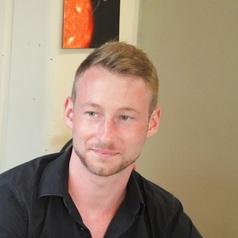
Postdoctoral Scholar in Earth and Space Sciences, University of Washington Fabian Klenner is a planetary scientist and astrobiologist at the University of Washington (UW). His research focus lies on the exploration of icy moons in the Solar System, in particular Saturn's moon Enceladus and Jupiter's moon Europa. He is interested in geochemical processes happening on these moons as well as the detection of potential life beyond Earth. Fabian is an affiliate of NASA's Europa Clipper mission and involved in the planning and design of a potential future Enceladus mission. He is Co-Investigator of BioSigN, an ESA-led experiment to be performed on the International Space Station. Fabian's work is also relevant to the past Cassini mission and he is involved in ESA's CALICO, a potential mission to dwarf planet Ceres. He is member of various learned societies, including his co-leadership of the Ocean Worlds and Icy Moons working group of the German Astrobiology Society. Before accepting his current position at UW in 2023, he was a Postdoctoral researcher at Freie Universität Berlin, the same university from where he received his Ph.D. in 2021. He studied Earth Sciences at Heidelberg University (M.Sc. and B.Sc.).
Associate Professor, School of Earth and Sustainability, Northern Arizona University With a political ecology lens and through use of multiple methods, I investigate river governance issues around the globe. Such research at the nexus of policy, discourse, and spatial analysis is a powerful platform for solving some of the most pressing environmental problems of our time related to the interconnected freshwater, biodiversity, and climate crises, as well as environmental justice and sustainability concerns. My current projects examine how the creation and application of protection and restoration policies on river systems around the globe can engender ecosystem service protection, climate adaptation, riverine ecosystem resilience, and social-ecological sustainability.
Assistant Professor of Sociology and Anthropology, Saint Louis University I study the intersection of Indigenous rights and hydropower development within the context of climate governance. I conduct mixed-methods ethnographic research across multiple levels of governance: at international climate-related conferences (where policy is produced) and in local Indigenous communities (where policy is enacted). I am an Assistant Professor of Anthropology at Saint Louis University, where I am also a primary investigator at the Water Institute. I am the regional co-chair of the Global River Protection Coalition.