Research Scientist, University of Arizona Riley Duren is a Research Scientist at the University of Arizona's Office of Research, Innovation and Impact and Chief Executive Officer for the non-profit organization Carbon Mapper. From 2008-2019 he served as Chief Systems Engineer for the JPL's Earth Science & Technology Directorate with a portfolio including spaceborne instruments and missions, airborne studies, research and analysis, and applied science. For over three decades he has worked at the intersection of science and engineering to deliver observational systems, including seven successful satellite missions ranging from earth-mapping radars to telescopes in deep space. He served as Chief Engineer for the Kepler mission that conducted a major survey of earth-size planets around other stars. Since 2008 he has worked to extend the discipline of systems engineering to the challenge of societal decision-making for climate change responses with a focus on greenhouse gas mitigation.
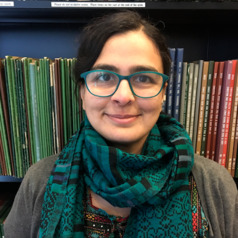
Associate Professor of Sexuality, Women's and Gender Studies, Amherst College I am a scholar and translator of Urdu poetry, and have written several publications on Urdu literature as well as scholarly translations. I published a translation of M.H. Ruswa’s Urdu novella "The Madness of Waiting" (Zubaan/University of Chicago Press, 2013; with Taimoor Shahid) and co-translated the poetry of the Urdu modernist poet Miraji. My research and teaching interests include Urdu, Bengali, Hindi and South Asian Anglophone literature and poetry, postcolonial literature and theory, feminist theory, and South Asian cinema. I'm currently working on a book project (under contract at Northwestern University Press) on the role of Urdu poetry in Indian public culture.
Assistant Professor of Political Science, Loyola University Chicago I am the Helen Houlahan Rigali Assistant Professor of Political Science at Loyola University Chicago. I previously received my Ph.D in Political Science from Northwestern University and my BA from the Ohio State University, summa cum laude in Political Science and Comparative Cultural Studies, with distinction in Political Science. My research draws from the history of political thought, particularly in the American tradition, to investigate the consequences of digital technologies for democratic practices. Much of our contemporary political activity occurs online; digital and social media are increasingly the spaces in which individuals create, share, and discuss content related to issues of public concern. The ways in which these sites organize users therefore have far-reaching consequences for how well we are able to engage in democratic practices--or whether we are able to at all. Using resources from political theory, physical architecture, and computer science, I study the effects of UX design, site governance structures, and software development processes on the potential for democratic engagements both with and through digital media. As a result, my work provides insights into the ways in which we can design, build, and maintain more democratic spaces using digital technologies. I am also actively engaged in scholarship of teaching and learning, particularly around questions of civic learning and engagement both in and outside of the classroom.
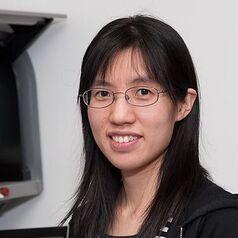
Ph.D. Candidate in Computer Science and Engineering, University at Buffalo I am a Ph.D. Candidate in the Department of Computer Science and Engineering at State University of New York at Buffalo, advised by Dr. Siwei Lyu. Before that, I got B.Eng. and M.Eng. from Xidian University in 2016 and 2019. My research interest lies in AI-Generated Content Detection and Protection, focusing on detecting AI-generated image/video, protecting privacy and fairness in generative AI.
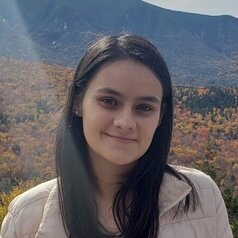
Ph.D. Candidate in Systems Biology, UMass Chan Medical School I graduated from the University of Buenos Aires with a B.Sc. in Biological Sciences with an emphasis in Molecular Biology. In Dr. Adali Pecci’s lab, my undergraduate thesis focused on studying the role of the glucocorticoid and the liver X receptors in the modulation of inflammation. Currently, I am a graduate student in the Bioinformatics and Computational Biology program at UMass Medical School. I joined the Mitchell lab where I’m using a genomic approach to uncover the metabolic interactions in microbial communities. I am also working with Brittany to systematically understand the impact of host-targeted drugs on bacterial growth. When I’m not in the lab, I love to spend my time dancing or climbing.
Assistant Professor of Physics, University of Tampa My research interests lie in understanding how the universe begins and evolves through the most energetic astrophysical explosions: gamma-ray bursts (GRBs), supernovae, merging neutron stars and black holes. My main research utilizes GRBs detected by the Neil Gehrels Swift Observatory, a multi-wavelength space telescope dedicated to studying GRBs and the transient sky. GRBs are seen from within our neighborhood of galaxies to the early universe when the rst stars were expected to form (Fig. 1). I use GRBs to explore the history of the universe, and study how nature can form these energetic bursts from either the collapse of massive stars or merging of compact objects like neutron stars and black holes.