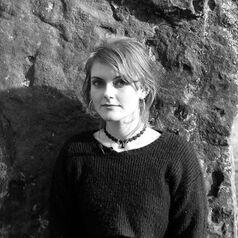
PhD Candidate, Associate Lecturer, Creative Writing, Aberystwyth University Mari is currently a PhD Candidate at Aberystwyth University, specialising in Early Modern Welsh Witch Trails. She is also a part time teacher for the university's School of Languages and Literature, currently teaching Introduction to Poetry, and a tutor within the School of Lifelong Learning. Mari's debut poetry collection, Salacia, was shortlisted for Wales Book of the Year 2019. She has since placed second in both the Lucent Dreaming Short Story Competition and the Sylvia Plath Poetry Prize. Her poetry collection Pearl and Bone was selected as Wales Arts Review’s Number 1 of 2022, and is available from Parthian. Mari lives on the west coast of Wales with her husband, their two sons, and their very adorable poochon. She is the founder of Pay for Poets, a free resource to help writers earn a living through their work.
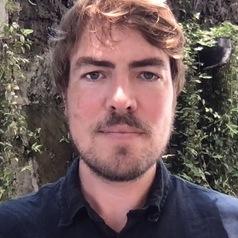
Honourary Lecturer, Department of History, UCL Nathaniel Morris is a historian of modern Mexico and Central America. He's particularly interested in Indigenous politics, rural rebellions, revolutionary movements, and drug production and trafficking. Before taking up his current post as an Associate Lecturer, he was a Leverhulme Early Career Research Fellow at UCL, where he carried out a three-year research project on the history of militias in Mexico. His current book project builds on this research by exploring the ties of history, memory, space and culture that link the armed ‘self defence’ forces active throughout the country today, to the popular paramilitary groups that helped to shape the Mexican Revolution of 1910-40. He has also written extensively about the roots of the modern Mexican drug trade, the contemporary cultural and political impacts of opium production and heroin trafficking on the Indigenous Náayari, Wixárika, O’dam and Mexicanero peoples of Mexico’s Gran Nayar region, and the participation of these same groups in the Mexican Revolution, which was the subject of his first book, Soldiers, Saints and Shamans (https://uapress.arizona.edu/book/soldiers-saints-and-shamans). You can find him on Twitter/X @MorrisInMexico. Learn more at www.nathanielmorris.co.uk
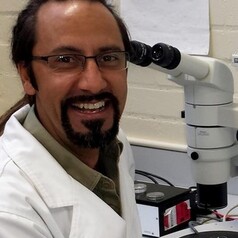
Associate Professor and Head of the Gamete and Embryology (GAME) Laboratory, James Cook University Dr Damien Paris is head of the Gamete and Embryology (GAME) Laboratory at James Cook University. He is a cross-disciplinary reproductive/molecular biologist passionate about developing assisted reproductive technologies for animal breeding and conservation, as well as understanding the impact of adverse environmental conditions on fertility. He and his team produced the first macropods by artificial insemination, developed an antioxidant diet to protect pig sperm from heat-induced DNA damage, and developed a sperm freezing technique suitable for sperm banking and artificial insemination in the endangered African wild dog. Moreover, he has worked with a diversity of other domestic and wild species including primates, marsupials, horses, fish, frogs and crayfish. His group uses sperm cryopreservation, artificial insemination, in vitro fertilization, hormones and behaviour coupled with gamete & molecular analysis tools to investigate the underlying mechanisms that affect gamete (sperm & egg) quality & embryo survival in both aquatic & terrestrial animals. Moreover, his group actively develops mitigation strategies that will ultimately improve breeding and conservation management of these species. Dr Paris has a BSc first-class honours degree in plant genetics/molecular biology (Monash University, Australia) and a PhD in mammalian reproduction (University of Melbourne, Australia), and was a Marie Curie Incoming International Fellow (University of Glasgow, UK) and postdoctoral research fellow (Universiteit Utrecht, Netherlands) before joining JCU in 2011. He has worked at several other prominent Australian and international research institutions throughout his career including the Monash Institute for Medical Research, Monash University, Murdoch Royal Children's Institute, Baker Medical Research Institute and CSIRO (Australia); Wildlife Breeding Resource Centre (South Africa); and Max Planck Institute (based in Ivory Coast).
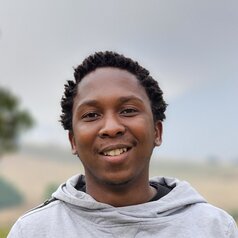
GENUS Postdoctoral Research Fellow, University of the Witwatersrand I am a palaeoentomologist: I study fossil insects. My fossil insects are dated to be 90 million years old and were recovered at Orapa Diamond Mine in Botswana.
PhD Candidate, Department of Music, University of Pittsburgh Josh Brew is an African and African diasporic music and sound scholar. His theoretical and practical approach to research focuses on how music and sound sustain humans and how humans, in turn, sustain music, the natural environment, and non-humans. Thus, his research is located within the discourses of music sustainability, sound studies, and economic ethnomusicology. His other areas of interest include music industries, Black studies, African indigenous knowledge systems, popular music fandom, and ecomusicology. Josh is currently a doctoral candidate at the University of Pittsburgh. His project, “Gifts from Nature,” is at the nexus of palmwine music, indigenous knowledge, economies, and ecological sustainability in Ghana. His project is a response to the Anthropocene, the current geological epoch characterised by human dominance over the planet and resulting in climate change and other environmental crises. His project aims to critically localise this global problem by examining the intersection of musical and ecological sustainability. As an applied ethnomusicologist, he is interested in extending his research to benefit the communities with whom he works. He has hosted workshops, worked with young musicians and bands in Ghana to explore music career strategies like contemporary music business models, and assisted in establishing their digital presence. He is currently collaborating with the Legon Palmwine Band In using music as a tool for ecological sustainability in Ghana. Josh is also a composer and performer of Afrobeats, highlife, jazz, and classical guitar.
Full Professor, University of Pretoria Prof Sonali Das holds a PhD in Statistics (University of Connecticut, USA), and is a Full Professor in the Department of Business Management, University of Pretoria. She is a C-rated SA NRF researcher, and an Elected Member of the International Statistical Institute. In 2020 Prof Das was the recipient of the Mujeres Por Africa (MxA) award from Spain to pursue collaboration with Spanish Universities. In 2018 she was the Chair of the Women in Science Without Borders conference. Her work is transdisciplinary in nature where her interest lies in deciphering the underlying data generating process to answer relevant questions. She publishes widely, and supervises a group of motivated post graduate and doctoral students.