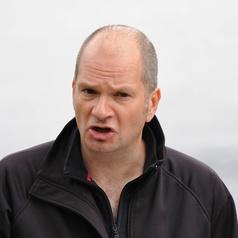
Clinical Professor, Psychiatry, McMaster University I have a fellowship in Psychiatry and have practised as a child psychiatrist and knowledge translator for many years. My special interest lies in brain development, and the crucial role relationships and connectedness play therein. I have also worked on research with many colleagues over these many years. I have authored a book, canadian best seller called Love Builds brains.
Lecturer at the National School of Architecture and Urbanism, Université de Carthage Dr Nourchen Ben Fatma is an architect. She holds a PhD and a Master’s degree in architecture from the Doctoral School in Architectural Sciences and Engineering of Tunis (Ed SIA). She has been a lecturer at the School of Architecture, Audiovisual and Design (ESAD) since 2013, and at the National School of Architecture and Urbanism of Tunis (ENAU) since 2020. Since her appointment as research partner in the Heritage Borders of Engagement Network (ENGAGE) in April 2021, her research has focused on heritage through the lens of building know-how, tectonics/ materiality and ecology. Through this affiliation, she has been involved in many international research programs and collaborations. She was also a postdoctoral fellow at the Virtual Fellowship Program of Heritage with the University of Liverpool (2022). Nourchen was the project manager for the Tunisian component of the Jusour project as well as the executive producer of the Tunis and Kairouan documentaries.
Associate Lecturer at the National School of Architecture and Urbanism, Université de Carthage Dr Asma Gharbi is associate lecturer at the Ecole Nationale d'Architecture et d'Urbanisme de Tunis (National School of Architecture and Urbanism), where, since 2018, she has been teaching architecture studios as well as delivering seminars. Since February 2022, she has been a member of Governance and Territorial Development research laboratory . She is a dedicated researcher specializing in architectural morphological dynamics and their social and cultural interactions. With a keen interest in the built environment, she pursued a fellowship with the University of Liverpool focusing on the preservation and valorization of cultural heritage and architectural form. Driven by a passion for understanding how architectural structures evolve and interact within societies, she has delved into the intricate relationship between urban morphology and cultural contexts. Her research delves into the nuanced layers of architectural evolution, exploring how built forms shape and are shaped by societal values, historical narratives, and cultural identities. Her interdisciplinary approach bridges the realms of architecture, sociology, and cultural studies, offering valuable insights into the intricate interplay between form, function, and social meaning in urban landscapes. Between 2010 and 2017, Asma taught urban studio at Institut supérieur des technologies de l’environnement de l’urbanisme et du bâtiment (ISTEUB) in. After obtaining her PhD in Architecture and Morphology from the Doctoral School in Architectural Sciences and Engineering of Tunis (EdSIA), she has been focusing on morphological regeneration in newly marginalized contexts. In addition to her academic work, Asma is a leading expert in the field of territorial development. Moreover, she serves as a volunteer architect with various Tunisia NGOs (Toit digne, JCI), into which she brings her expertise in heritage enhancement and territories promotion. Since her appointment as research partner in the Heritage Borders of Engagement Network (ENGAGE) in April 2021, Asma’s research has focused on morphological landscape transformations related to urban and architectural identity, heritage management in Tunisia, and the roles that government and civic stakeholders play in it. Asma’s current research revolves around cultural identities, territories and architectural forms. Her aim is to understand where existing strategies and mechanisms of cultural heritage management fail to take into account the local dynamics of territories that have been abandoned or marginalized. Asma’s research project for the University of Liverpool Virtual Fellowship Programme is entitled Decision-making and citizens participation in the management of El Kef’s heritage: barriers and opportunities. Asma aims to investigate, at both higher decision-making as well as grassroots level, the factors that currently hinder the exploitation of Kef’s economic and tourism potential. By interrogating current orientations in local development, heritage management and tourism promotion, and exploring El Kef people’s perceptions and aspirations with regard to the medina - the historic centre rich in Islamic, Christian and Jewish heritage - Asma aims to identify issues, requirements and opportunities that should crucially inform future decision-making for the city’s cultural heritage management and sustainable development. The methodologies used include regional-scale SWOT analysis, through which she will define the strengths, weaknesses, opportunities and threats for El Kef’s region, policy document review in order to understand planning strategies and decision-making orientations at various levels, and identify any misalignment or lack of alignment, interviews and questionnaires with key stakeholders, with the aim to record requirements and aspirations for the future, and participant observation, to observe and record user activities and life patterns.
Professor in English, Lancaster University Simon Bainbridge's main research interest is in the relationship between the writing of the Romantic period and its historical contexts. He is the author of 'Napoleon and English Romanticism' (Cambridge University Press, 1995) and 'British Poetry and the Revolutionary and Napoleonic Wars' (Oxford University Press, 2003) and the editor of 'Romanticism: A Sourcebook'. He has published widely on the evolution of mountaineering and its literature, particularly in the Romantic period, including the monograph 'Mountaineering and British Romanticism: The Literary Cultures of Climbing, 1770-1836' (Oxford University Press, 2020).
Senior Fellow, Health Services Management Centre, School of Social Policy, University of Birmingham Jo Ellins is Senior Fellow at the Health Services Management Centre, at the University of Birmingham. She is a sociologist by background, but these days most of her work involves evaluating new services and ways of working in healthcare. Over the years Jo has done research in many different fields of healthcare, including cancer services and general practice. Now, she is most interested in children's mental health and, in particular, in the role of schools in promoting emotional wellbeing and in helping children to access mental health support when they need it. She led an early national evaluation of mental health support teams in schools and colleges, and is now co-leading a second study to assess the impact and cost-effectiveness of the government's investment in schools-based mental health. Jo is strongly committed to working in partnership with people who have lived experience of ill-health and using health services. She's worked extensively in research collaborations with service users and carers, including currently with a group of young people with personal experience of, or interests in, mental health. When not at work, Jo works at a local foodbank in Birmingham, is a school governor, and tries (and usually fails) to paddle board without getting wet.